
Scroll Saw Blade Storage: Practical Guide
Scroll Saw Blade Storage: Practical Guide
Scroll saw blades come in bundles of a dozen, wrapped in paper or plastic. Left in the wrapper, they crumple and cambers appear within weeks. Dumped loose in a drawer, they bend from being pushed around and rust from workshop humidity. Neither is a good long-term home.
Good storage is not complicated. A rack, a divider box, or a purpose-built rack keeps blades straight, dry, and organized by size so you can find what you need without rummaging. Here is what works and what to skip.
What good blade storage does
Effective scroll saw blade storage accomplishes four things:
-
Keeps blades straight. Cambered blades break early. Straight blades cut clean.
-
Separates by size and geometry. No digging through a mixed collection for the size you need.
-
Protects from moisture. Rust ruins carbon steel blades in weeks in a damp workshop.
-
Sits near the saw. Reduces the friction of blade changes.
Any storage solution that hits these four criteria works. Fancy commercial systems and simple shop-built ones are equally effective.
Storage options
Original wrappers in a drawer. Free. Only works if you use blades quickly enough that they do not sit around for months.
Small plastic dividers in a drawer. Cheap. Label each compartment with size and geometry. Suitable for medium collections.
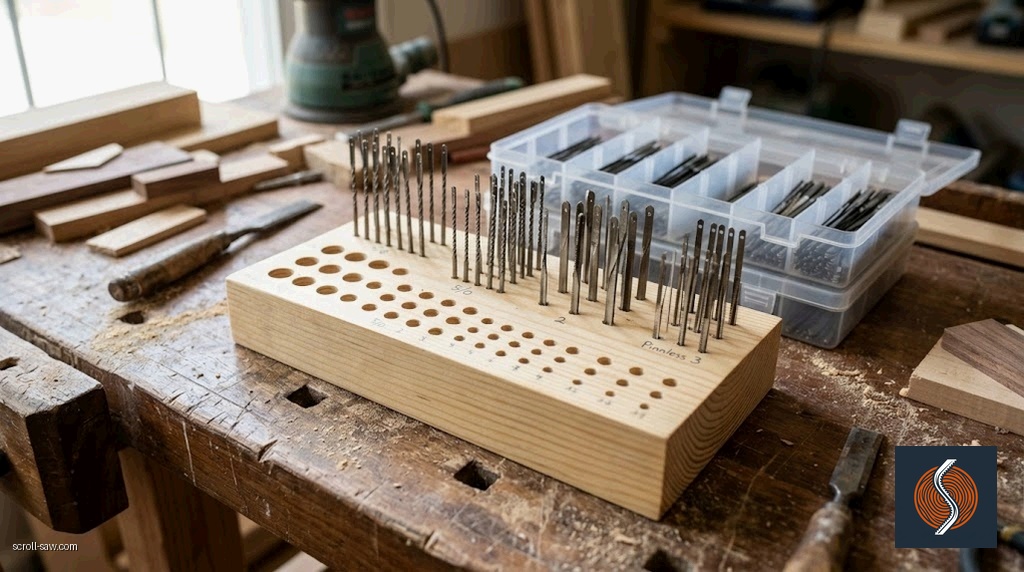
Vertical tube rack. Block of wood or plastic drilled with vertical holes, each holding one bundle. Cheap, visible, compact. Ideal for most hobby scrollers.
Magnetic strip. Blades stick by their teeth. Simple, near-the-saw, but blades can fall if bumped.
Commercial blade organizer boxes. Purpose-built plastic boxes with dividers labeled for common blade types. Convenient; costs more than DIY.
Small tackle box. Retail fishing tackle boxes with adjustable dividers. Works well for large collections.
For most hobby scrollers, a shop-built vertical tube rack is the best combination of cost, effectiveness, and workflow convenience.
DIY vertical tube rack
Build time under one hour, cost near zero from scrap wood:
-
Cut a block of hardwood to about 6 inches by 8 inches by 2 inches thick.
-
Mark hole positions on 1-inch centers. Enough holes for your current collection plus a few spare.
-
Drill 3/8-inch diameter holes to 1.5 inches deep.
-
Label each hole with the size and geometry (e.g., “#5 SK”, “#3 RV”).
-
Mount on a shelf or in a drawer near the saw.
-
Insert blade bundles into each hole, tips up.
A single 6x8x2 inch block holds around 18 blade types, enough for most collections.
Managing moisture
Carbon steel scroll saw blades rust in weeks in a damp workshop. Prevention:
Keep the storage area dry. Workshops in basements or garages benefit from a dehumidifier during humid months.
Silica gel packets in the storage container. Absorb ambient moisture. Replace or reactivate every few months.
Wipe blades with light oil before long-term storage. For bundles you buy in bulk and expect to store for years, a light wipe with 3-in-1 or gun oil delays rust.
Store in original wrappers if unused long-term. Manufacturer wrappers include oil-treated paper that protects the blades.
Rust removal is possible for lightly rusted blades (fine steel wool with light oil), but rusted blades never cut as cleanly as new ones. Prevention beats cleanup.
Labeling for fast access
Good labels save minutes over a project. Include:
Size number. #3, #5, #7, etc.
Tooth geometry. Skip (SK), reverse (RV), ground (PGT), spiral (SP).
End style. Plain (PL) or pinned (PN) if you use both.
Brand. If you use multiple brands and cannot tell them apart visually.
A label maker gives clean consistent labels. Permanent marker on white tape works too. Avoid handwriting directly on wood; sawdust obscures marks over time.
Separating new and used
A useful system: two holes per size, one for new blades and one for still-useful used blades. When you remove a blade mid-project because you needed a smaller size, if it is still sharp, put it in the “used” hole. Use those blades first for practice cuts.
Dead blades (bent, dull, chipped) go straight to a trash container. Empty and dispose in bulk.
Where to store the rack
Within arm’s reach of the saw. Every extra step increases the temptation to use whatever blade is already loaded.
Visible in your line of sight when you look up from the workpiece. Prompts you to change blades between sections.
Away from the direct sawdust path. Blades stored where sawdust settles on them collect fines that need cleaning before use.
In dry environment. No storage near shop sinks, water heaters, or leaky ceilings.
Buying in bulk vs. as-needed
Bulk buying (5 to 10 bundles at once) saves 20 to 40 percent compared to buying single bundles. Trade-off: storage space and eventual freshness.
Blades store well for two to three years in dry conditions. Longer than that, teeth may show early wear on the first cut even from a sealed package. Buy what you will use in two years; do not stockpile decades of blades.
When storage is not the fix
If blades keep bending, check whether:
-
The storage container is too small (blades pressed together bend under load)
-
Something heavy is placed on top of the storage container
-
The blades were cambered when purchased (some brand batches ship bent)
If blades rust despite good storage, the workshop is too humid overall; consider a dehumidifier for the whole space.
Bottom line
A vertical tube rack from scrap wood, labeled by size and geometry, mounted near the saw, in a dry area, holds most hobby blade collections effectively. Separate new and used blades if useful. Manage moisture with a dehumidifier or silica gel. Buy blades in bulk sizes matched to two-year use, not decades of stockpiling.
FAQ
How should I store scroll saw blades? In a rack or divider box, labeled by size and geometry, in a dry area near the saw.
Do scroll saw blades rust? Yes, carbon steel rusts in humid conditions. Keep storage dry and consider silica gel packets in the container.
How long can I store blades? Two to three years in dry conditions with no loss of quality. Longer storage sometimes leads to early tooth wear.
Should I keep blades in original wrappers? For long-term unused storage, yes. Manufacturer wrappers include oil-treated paper that protects the blades.
Can I make my own blade storage rack? Easily. Drill holes in a scrap wood block, label each hole, and insert bundles.
Where should the storage rack sit? Within arm’s reach of the saw, in your line of sight, in a dry area away from direct sawdust flow.
Is a magnetic strip a good storage option? Simple and near-the-saw, but blades can fall if bumped. Consider for occasional use.
References
-
Steve Good, Scroll Saw Workshop on shop organization, scrollsawworkshop.blogspot.com
-
Bear Woods scroll saw accessories, bearwood.com
-
Olson Saw Company blade care recommendations, olsonsaw.com
-
Pegas Scroll Saw storage guide, pegas-swiss.com


