
Scroll Saw Blades for Ceramic Tile: Guide
Scroll Saw Blades for Ceramic Tile: Guide
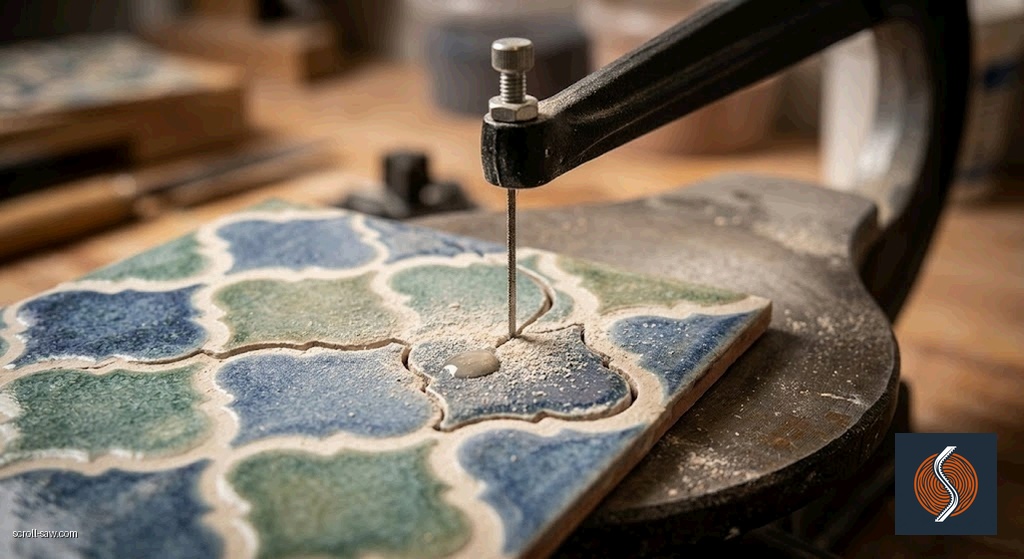
Cutting ceramic tile on a scroll saw is possible but limited. Standard scroll saws are not designed for stone or ceramic. The reciprocating action and the vibration transferred to a hard, brittle material like ceramic risks cracking the tile. That said, small ceramic pieces (mosaic tiles, glass tile edges, thin ceramic ornaments) can be cut with the right diamond or abrasive blade, water lubrication, and very slow feed.
Here is a realistic look at scroll saw ceramic cutting: what blades work, what limits exist, and when a different tool is a smarter choice.
When a scroll saw makes sense for tile
Use a scroll saw on ceramic tile only for:
-
Small mosaic pieces (under 4 inches per side)
-
Thin tiles (under 3/16 inch)
-
Curved cuts that a straight tile cutter cannot make
-
Fine detail in soft ceramic or glazed pieces
For larger tiles, straight cuts, or floor tile thicknesses, use a wet tile saw. Scroll saws cannot compete with wet saws on those tasks.
Blade type: diamond or carbide grit
Standard scroll saw blades (steel with cut teeth) cannot cut ceramic. The tile is harder than the blade steel. What you need is an abrasive blade that grinds through the ceramic rather than cutting it:
Diamond wire blades. Round-cross-section blades with diamond grit bonded to the surface. Cuts in any direction like a spiral blade. Cost around 10 to 20 dollars per blade.
Carbide grit blades. Steel blades with tungsten carbide grit brazed to the cutting edge. Cheaper than diamond; shorter life.
Diamond-coated flat blades. Flat blades with diamond grit along one edge. Cut in one direction like a standard scroll saw blade.
Good sources: Rio Grande (jewelry supply), Bear Woods, specialty stone-cutting suppliers. Not usually stocked at general woodworking stores.
TPI, kerf, and turning radius on tile blades
Diamond and carbide grit blades do not have discrete teeth. Instead, the entire cutting edge is coated with abrasive grit.
-
Grit size. Fine (100 to 200 mesh) for finish cuts, coarser (60 to 80 mesh) for faster material removal.
-
Kerf. Depends on the wire diameter or grit thickness. Typically 0.020 to 0.040 inches.
-
Turning radius. Diamond wire blades turn in any direction (like spiral blades). Flat diamond-coated blades follow the same size scale as wood blades.
Water lubrication is essential
Ceramic dust is harmful to lungs and abrasive to the saw. Water lubrication:
-
Suppresses dust
-
Keeps the blade cool
-
Extends blade life
-
Reduces cracking risk in the tile
Methods:
Drip bottle. Squeeze bottle of water positioned to drip on the cut line during cutting.
Sponge bath. Soak the tile in water before cutting; keep a wet sponge on the workpiece between cuts.
Water tray. Set the workpiece in a shallow tray with water covering the bottom.
Avoid submerging the saw itself; motor and bearings do not tolerate water spray.
Saw speed for ceramic
Run the saw at low SPM. Fast speeds vibrate the tile and increase cracking risk. Diamond and carbide grit blades cut effectively at slow speeds.
Feed rate
Feather-light. Ceramic cuts by abrasion, not by cutting force. Pushing accomplishes nothing except cracking the tile.
Expected feed rate: 1 to 3 inches per minute in 1/8 inch ceramic tile. Very slow compared to wood.
Supporting the tile
Ceramic must be supported to prevent flexing and cracking:
Foam backing. Place the tile on a piece of foam board. Foam absorbs vibration.
Rubber pad. Adhesive rubber shelf liner cut to size.
Sacrificial wood base. Cut through both tile and thin plywood base.
Hold-downs. Small clamps or fingers on both sides of the cut line.
Without support, tile flexes under blade pressure and cracks.
The cut process
-
Layout the pattern on the tile using a china marker or permanent marker.
-
Support the tile on foam, rubber, or a sacrificial base.
-
Apply water lubrication at the cut line.
-
Start the saw at low SPM.
-
Feed very slowly with no pressure beyond the tile’s weight.
-
Keep the cut line wet throughout.
-
Do not force the blade if it slows.
-
Sand or file cut edges after cutting to remove sharp glaze fragments.
Common problems and fixes
Tile cracks during cutting. Support inadequate, feed too heavy, or saw speed too high. Add backing, feed lighter, slow down.
Blade wears out fast. Grit blade dulling is normal. Diamond blades outlast carbide.
Cut wanders. Grit blades track less precisely than toothed blades. Guide the workpiece carefully.
Water sprays into the saw. Reduce water flow. Use drip method rather than spray.
Dust in the air despite water. Increase water flow. Wear a dust mask as backup.
Chipped glaze on the surface. Score the pattern line on the glaze first with a tile scoring tool, then cut. Reduces surface chipping.
Finish and edge quality
Diamond and carbide grit blades leave a slightly rough, abraded edge on ceramic. Post-cut finishing:
Wet sandpaper. 220 to 400 grit wet sandpaper smooths cut edges.
Diamond files. Small diamond files clean up edges and refine curves.
Rubber wheel with polishing compound. For finished-piece polishing.
Most decorative ceramic scroll work needs some edge finishing after cutting.
Safety considerations
Wear safety glasses. Ceramic chips are sharp and fly.
Wear a dust mask. Ceramic dust is harmful to lungs. Water lubrication reduces but does not eliminate dust.
Ventilate the workspace. Airborne ceramic dust needs to leave the area.
Keep water contained. Do not let water spray into the motor or electrical components.
Clean the saw after ceramic work. Ceramic dust is abrasive and shortens saw life if left on moving parts.
Where ceramic scrolling works well
Mosaic art. Custom-shaped tesserae for mosaic panels.
Small ornaments. Ceramic Christmas ornaments, name tags.
Custom coasters. Small ceramic coasters with cut edges.
Repair work. Cutting replacement pieces for damaged decorative tile.
Fine detail in glazed ceramic where a wet saw cannot follow.
For structural tile work, floor tile cutting, or larger straight cuts, a wet tile saw is the right tool.
When to use a different saw
Switch tools when:
-
Tile is thicker than 3/16 inch
-
Cuts are straight and long
-
Volume is high (dozens of pieces)
-
Precision is critical
Wet tile saws (available for around $80 to $200 at home improvement stores) handle bulk ceramic work much better than scroll saws.
Bottom line
Cutting ceramic tile on a scroll saw is possible with diamond or carbide grit blades, water lubrication, and very slow feed. It works for small mosaic pieces, thin decorative tiles, and curved cuts. For anything larger or straighter, a wet tile saw is the right tool. Expect grit blades to wear faster than wood blades and cut speeds to be slow.
FAQ
Can a scroll saw cut ceramic tile? Yes, small thin pieces with diamond or carbide grit blades and water lubrication.
What blade cuts ceramic on a scroll saw? Diamond wire blades or carbide grit blades. Not standard steel blades.
Do I need water when cutting ceramic? Yes. Reduces dust, cools the blade, and lowers cracking risk.
How thick of ceramic can I cut? Up to 3/16 inch practically. Thicker belongs on a wet tile saw.
Why did my tile crack? Usually inadequate support, heavy feed, or high saw speed. All three should be corrected.
Where do I buy diamond scroll saw blades? Jewelry supply stores (Rio Grande), specialty scroll saw retailers, or stone-cutting suppliers.
Are ceramic cut edges sharp? Yes. File or wet-sand after cutting.
References
-
Rio Grande diamond blade catalog, riogrande.com
-
Bear Woods specialty blades, bearwood.com
-
Steve Good, Scroll Saw Workshop on unusual materials, scrollsawworkshop.blogspot.com
-
Ceramic cutting technique guides from general tile industry sources


