
Scroll Saw Blades for Stainless Steel: Guide
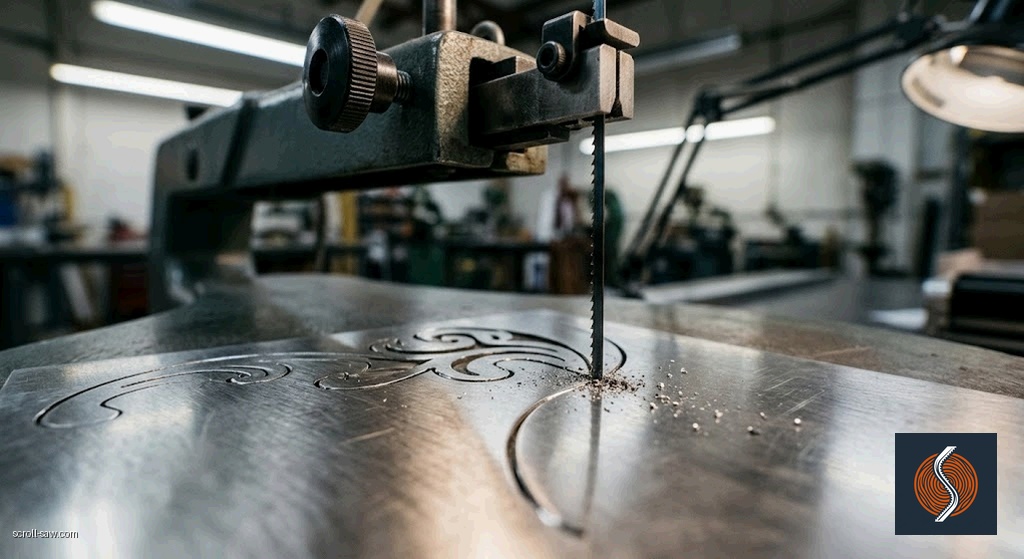
Scroll Saw Blades for Stainless Steel: Guide
Stainless steel is the hardest of the common metals scroll saws are asked to cut. Not just harder than brass or aluminum, but work-hardening (it gets harder as you cut it if you go too slow or dwell in one spot). This makes it the material where blade selection, saw speed, and technique matter most. Get any one wrong and you dull a blade in under a foot of cutting.
Here is how to select a scroll saw blade for stainless steel and set up for clean cuts that do not eat blades.
When a scroll saw makes sense for stainless
A scroll saw handles thin stainless steel (up to about 1/16 inch) for small parts:
-
Watch parts and jewelry findings
-
Small brackets and clips
-
Ornamental plates and etched panels
-
Instrument components
-
Model parts
For thicker stainless, higher volume, or long straight cuts, use a band saw with a bi-metal metal-cutting blade or a plasma cutter. Scroll saws cannot compete on those.
Blade type: metal-cutting only
Standard wood blades cannot cut stainless. Even standard skip-tooth in a fine size will dull within a few inches. You need dedicated metal-cutting blades, preferably with high-speed steel or bi-metal construction:
High-speed steel (HSS) metal-cutting blades. Standard for stainless. Widely available.
Bi-metal blades. Body of one steel with harder tooth material welded on. Longer life; higher cost.
Diamond-coated blades. For very thin stainless with fine detail. Cost 10 to 20 dollars each.
Brands to look for:
-
Olson metal-cutting HSS
-
Pegas metal-cutting
-
Flying Dutchman FD-Ultra metal
-
Niqua metal-cutting
Avoid generic carbon-steel “metal blades” for stainless. They dull too fast.
Blade size for stainless
Stainless is dense; size up slightly compared to aluminum:
| Stainless thickness | Blade size |
|---|---|
| 1/64 in (foil, very thin sheet) | #2/0 metal |
| 1/32 in (thin sheet) | #1 or #3 metal |
| 1/16 in (medium sheet) | #3 or #5 metal, slow feed |
| 3/32 in (heavy sheet) | #5 metal, very slow feed |
| 1/8 in and thicker | Not practical; use band saw |
Saw speed for stainless
Run the saw at low SPM. This is critical for stainless because:
-
Fast speeds cause heat buildup that work-hardens the metal
-
Fast speeds dull HSS teeth quickly
-
Slow, steady cutting produces cleaner edges
Start at the lowest SPM the saw offers. Do not speed up.
Cutting fluid is not optional
Stainless steel demands cutting fluid throughout the cut:
Cutting oil for stainless. Sold by machinist supply houses; specifically formulated for stainless.
General cutting oil. Trefolex, Rapid Tap, or similar. Better than nothing.
Bostik Trim-Free. Wax-based; works for lighter cuts.
Kerosene as backup. Cheap; effective; smells strong.
Apply liberally before starting and reapply every 3 to 6 inches of cutting. Never cut stainless dry; the blade will dull within inches.
Feed rate
Feather-light. Stainless work-hardens if you dwell in one spot, so feed must be:
-
Steady. Do not stop and start.
-
Very slow. 2 to 6 inches per minute in 1/32 inch stainless.
-
Very light on pressure. Fingertip contact only.
If the blade slows or stops cutting, do not push. Change the blade or add more fluid.
Supporting the stainless
Thin stainless vibrates aggressively under the blade. Support options:
Sandwich board. Place the stainless between two thin plywood pieces. Cut through all three.
Rubber pad backing. Adhesive rubber shelf liner absorbs vibration.
Hold-down clamps. Small clamps or fingers hold the stainless firmly.
Wax paper between metal and plywood. Prevents sticking during long cuts.
Without support, stainless flexes and the blade catches, breaks, and can throw fragments.
The cut process
-
Layout the pattern on the stainless using a fine permanent marker or paper pattern with rubber cement.
-
Sandwich the stainless between two pieces of thin plywood.
-
Apply cutting fluid liberally to the cut line.
-
Start the saw at the lowest SPM.
-
Feed steadily and slowly with fingertip pressure.
-
Reapply cutting fluid every 3 to 6 inches.
-
Change blades at the first sign of dulling. Do not push a dull blade.
-
File and finish edges thoroughly after cutting. Stainless burrs are hard and sharp.
Common problems and fixes
Blade dulls within a few inches. Not using cutting fluid, or saw speed is too high, or using a carbon-steel blade instead of HSS. Fix all three.
Blade breaks quickly. Feed too heavy, or stainless not supported, or tension too low. Correct all three.
Blade cannot penetrate the stainless. Blade dull, or stainless too thick for the blade. Change blade; consider a larger blade or thinner stock.
Cut wall shows heat discoloration (blue or purple). Speed too high or feed too slow. Slow the speed; speed up the feed slightly.
Stainless work-hardens along the cut. Feed is too slow and dwelling in one spot. Feed steadily without pausing.
Cut edge tears. Blade dull, feed heavy, or wrong blade type. Fix all three.
Blade life expectations in stainless
Even with correct setup, expect:
-
HSS blade in 1/32 in stainless: 6 to 18 inches of cut per blade
-
HSS blade in 1/16 in stainless: 3 to 8 inches of cut per blade
-
Bi-metal blade: roughly double the HSS life
Buy blades in bundles. Do not attempt to save money by pushing dull blades; the resulting work is worse and the risk of breakage higher.
Safety considerations
Wear safety glasses. Stainless chips are sharp and fly.
Watch for burrs. Stainless burrs are hard, sharp, and dangerous. File smooth immediately after cutting.
Ventilate the area. Cutting fluid vapors and metal dust need to leave.
Keep fluid away from motor. Wipe the table and around the blade throat after each session.
Vacuum stainless chips. Do not blow with compressed air; chips can lodge in bearings.
Do not touch cut edges until filed. Stainless burrs cut skin easily.
Where stainless scrolling makes sense
Watch making and jewelry. Small precise parts in thin stainless.
Instrument repair. Small brackets and springs.
Custom hardware. Small stainless plates, brackets, keeper rings.
Model making. Miniature stainless parts.
Prototype work. One-off stainless components.
For larger stainless work, use a band saw with a bi-metal blade or send to a laser or waterjet service.
Blade recommendations
Starter kit for stainless steel cutting on a scroll saw:
-
HSS metal-cutting blades in #3 and #5 (Olson, Pegas, or Flying Dutchman)
-
Stainless-specific cutting oil or Trefolex
-
Backing board (1/8 inch plywood)
-
Small files for edge cleanup
-
Bundle of extras (stainless kills blades fast)
Budget: about 25 to 40 dollars for a proper setup.
Bottom line
Stainless steel is the hardest common material scroll saws are asked to cut. Use HSS or bi-metal blades, cut with fluid, run the saw slow, feed steadily and lightly, support thin material with a sandwich board. Change blades at the first sign of dulling. Expect blade life to be short and the process to be slow. For anything thicker than 1/16 inch or longer than short cuts, use a band saw with a bi-metal blade.
FAQ
Can a scroll saw cut stainless steel? Yes, thin stainless (up to 1/16 inch) with HSS or bi-metal metal-cutting blades and cutting fluid.
Which blade for stainless? HSS or bi-metal metal-cutting blades in fine sizes (#1 through #5).
Do I really need cutting fluid? Yes. Cutting stainless dry dulls the blade within inches.
How thick of stainless can I cut? Up to 1/16 inch practically. Anything thicker belongs on a band saw or plasma cutter.
Why does my blade dull so fast? Check: HSS or bi-metal blade (not carbon steel), cutting fluid applied liberally, saw at lowest SPM, feed slow and steady. Any one wrong shortens blade life.
Why is my cut edge blue? Heat discoloration from too-fast speed or too-slow feed. Slow speed, speed up feed slightly.
Are stainless cut edges dangerous? Yes. File burrs immediately after cutting. Stainless burrs are hard and cut skin easily.
References
-
Olson Saw Company metal-cutting HSS blade guide, olsonsaw.com
-
Pegas Scroll Saw metal blades, pegas-swiss.com
-
Flying Dutchman metal cutting, mikesworkshop.com
-
Trefolex product information from Rocol
-
Bostik Trim-Free product page
-
Steve Good, Scroll Saw Workshop on metal cutting, scrollsawworkshop.blogspot.com


