
Scroll Saw Candle Holder: Failure and Replacement
Scroll Saw Candle Holder: Failure and Replacement
Scroll saw candle holders are a category of decorative wood pieces that hold tea lights or pillar candles. They range from simple flat bases with a candle recess to elaborate fretwork panels that surround the candle with cutout patterns that project shadows when lit. Designed and finished well, they last decades. Designed poorly or made from the wrong material, they crack, char, or fail structurally within months.
Here is what to watch for in candle holder failure and when to replace or repair the piece.
Typical scroll saw candle holder designs
Flat base with tea light recess. Simplest design. A flat piece of hardwood with a 1.5 inch diameter, 1/2 inch deep pocket in the top for a metal-cased tea light.
Layered panel. Two or three fretwork panels stacked or grouped around a central candle position. Light passes through the cutouts and casts patterns on nearby surfaces.
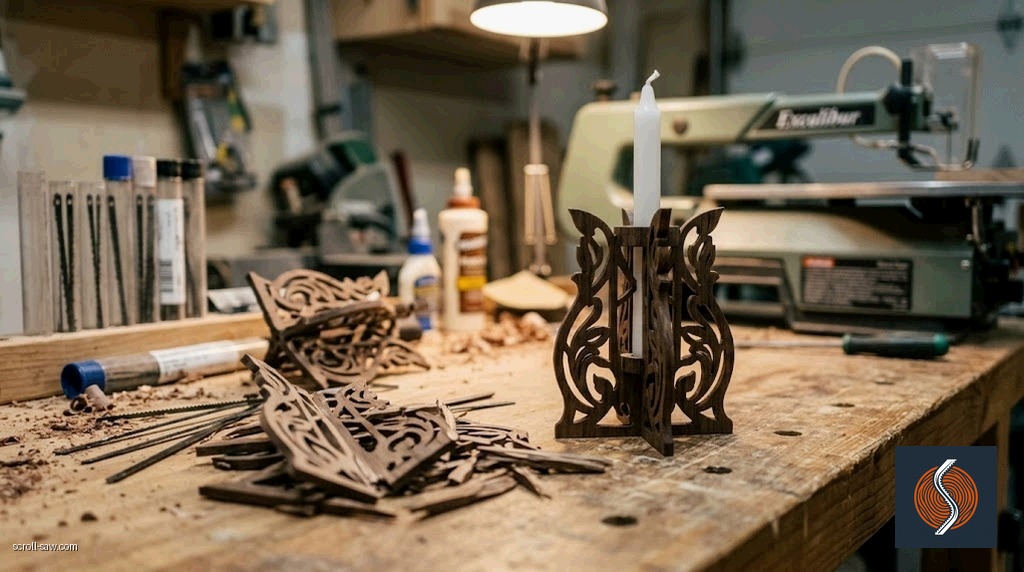
Lantern-style. Four fretwork panels joined at the corners to form a box that surrounds a candle.
Silhouette scene. A flat fretwork panel with a scene (winter forest, city skyline, angel) that projects a shadow scene when backlit.
Pillar candle stand. A larger base and side pieces holding a pillar candle in the center.
Common failure modes
Charring around the candle
Cause. Candle flame too close to wood surface. Heat scorches or ignites the wood over time.
Symptom. Black or brown discoloration on wood near the candle position. Sometimes visible flame damage if flare-up occurred.
Replacement criteria. Any visible charring means the design is unsafe. Redesign with more clearance, or convert to LED tea light candles (no heat, no flame).
Cracked base
Cause. Wood expansion and contraction from candle heat, or drying stress from thin base wood.
Symptom. Visible crack across the base or through the candle recess.
Replacement criteria. Structural cracks compromise safety. Replace the piece.
Fretwork bridges broken
Cause. Bridges too narrow for wood grain, dropped or bumped, or thermal stress from candle heat.
Symptom. Detached fretwork elements, gaps in what was a continuous pattern.
Replacement criteria. Cosmetic issue for decorative pieces; can sometimes glue back. If multiple bridges break, redesign with thicker bridges.
Finish deterioration around candle
Cause. Heat softens finish. Wax spills leave marks.
Symptom. Cloudy or gummy finish around candle position. Wax deposits.
Replacement criteria. Cosmetic; refinish the affected area or accept the patina.
Warping
Cause. Thin wood exposed to varying humidity or one-sided heat.
Symptom. Base or panels no longer flat. Assembled pieces no longer square.
Replacement criteria. Minor warping is cosmetic. Severe warping affects candle stability and requires replacement.
Structural joint failure
Cause. Glue joints fatigued from heat cycling or moisture changes.
Symptom. Panels separating, corners loose, base wobbling.
Replacement criteria. Reglue if possible; replace if repeated failure.
Preventing candle holder failure
Design for heat management
Minimum clearance: 2 inches between candle flame and any wood surface.
Use metal candle inserts. Tea light cups already have metal. For pillar candles, add a small metal or ceramic tray.
Consider LED candles. Battery-powered LED tea lights and pillar candles produce no heat. Great for elaborate fretwork designs.
Avoid closed lantern designs unless you know how to vent them properly. Trapped heat is the fastest way to start a fire.
Material selection
Cherry, walnut, oak, maple. Standard hardwoods handle candle heat well.
Baltic birch plywood. Fine for decorative pieces with LED candles. Adhesive layers can be affected by real candle heat.
Avoid pine, poplar, softwoods for real candles. More flammable; scorch faster.
Avoid MDF. Toxic smoke if it burns; softens with heat.
Avoid finishes with waxy components on high-heat surfaces. Standard shellac and lacquer are fine at typical distances.
Construction
Use 1/4 inch minimum thickness for structural elements.
Grain oriented for stability. Cross-grain assemblies crack under expansion.
Reinforce fretwork bridges perpendicular to the grain.
Use quality wood glue (Titebond III or similar) for water-resistant joints.
Allow proper curing time before use.
Finishing
Sealing the wood protects against wax spills. Shellac, lacquer, or polyurethane all work.
Multiple thin coats rather than one thick coat. Cures more completely and looks better.
Avoid oil finishes on high-heat surfaces. Some oils can ignite.
Refinish periodically if the piece is used regularly with real candles.
When to repair vs replace
Repair worthwhile:
-
Cosmetic finish damage (refinish)
-
One or two broken fretwork bridges (glue back)
-
Minor joint separation (reglue)
-
Light wax buildup (clean and refinish)
Replace instead:
-
Structural cracks in load-bearing elements
-
Visible charring near candle position
-
Multiple broken bridges (redesign needed)
-
Warping affecting candle stability
-
Repeated failure at the same joint
Converting an unsafe design
If you own a candle holder that shows signs of heat damage:
-
Stop using real candles. Substitute LED tea lights or pillar candles immediately.
-
Assess the damage. Charring means the wood is compromised. Replace.
-
Redesign if making a new one. Add clearance; use fireproof metal inserts.
-
Consider ventilation. For lantern designs, add ventilation openings in the top.
LED candles have improved to the point that most decorative candle holders can convert without much loss of ambiance.
Safety considerations for real candles
Never leave burning candles unattended.
Keep candles away from flammable materials.
Use candle holders sized for the candle. Pillar candles in tea light cups tip over.
Trim wicks to 1/4 inch before lighting. Longer wicks produce larger flames.
Extinguish candles before they burn to less than 1/2 inch. Wax pools get hot enough to ignite nearby materials.
Check the holder periodically during use. Wood should not be uncomfortably warm to touch.
Have a fire extinguisher nearby. Not paranoid; basic shop safety.
When a scroll saw candle holder is a gift or sale item
Disclose heat considerations. Include a note recommending LED candles for fretwork designs.
Test the design with real candles before selling to confirm safety.
Include tea light cups if the design uses them; ensures the recipient has the correct size.
Consider LED-only versions for very intricate fretwork.
Photograph the piece backlit for online listings; shows the shadow pattern effect.
Bottom line
Scroll saw candle holders can last decades with good design and material choice. Watch for charring, cracks, broken bridges, and warping. Repair minor issues; replace structural or safety issues. For elaborate fretwork designs, use LED candles to eliminate heat concerns entirely. When designing new pieces, allow 2 inches minimum clearance from flame to wood; use hardwood; and pair with metal candle inserts or LED alternatives.
FAQ
How thick should scroll saw candle holder wood be? 1/4 inch minimum for structural elements. Thicker for pieces that will be handled.
Which wood for candle holders? Cherry, walnut, oak, maple. Avoid pine, poplar, MDF for real candles.
Are scroll saw candle holders safe with real candles? Yes with proper clearance (2 inches from flame to wood) and non-flammable candle inserts. LED candles are safer.
How do I fix a broken fretwork bridge? Glue back with fresh wood glue if the break is clean. Redesign if multiple bridges break.
Can I refinish a candle holder? Yes. Sand off old finish, clean thoroughly, apply new finish in thin coats.
Why does my candle holder crack? Wood expansion from heat or humidity, or wrong wood species. Replace with hardwood.
When should I replace a candle holder? Structural cracks, charring, multiple failures, or warping that affects candle stability.
References
-
Steve Good, Scroll Saw Workshop candle holder patterns, scrollsawworkshop.blogspot.com
-
Pegas Scroll Saw project catalog, pegas-swiss.com
-
Bear Woods scroll saw patterns, bearwood.com
-
Fire safety guidelines for candle use from local fire authorities


