
Scroll Saw Chuck: Complete Guide
Scroll Saw Chuck: Complete Guide
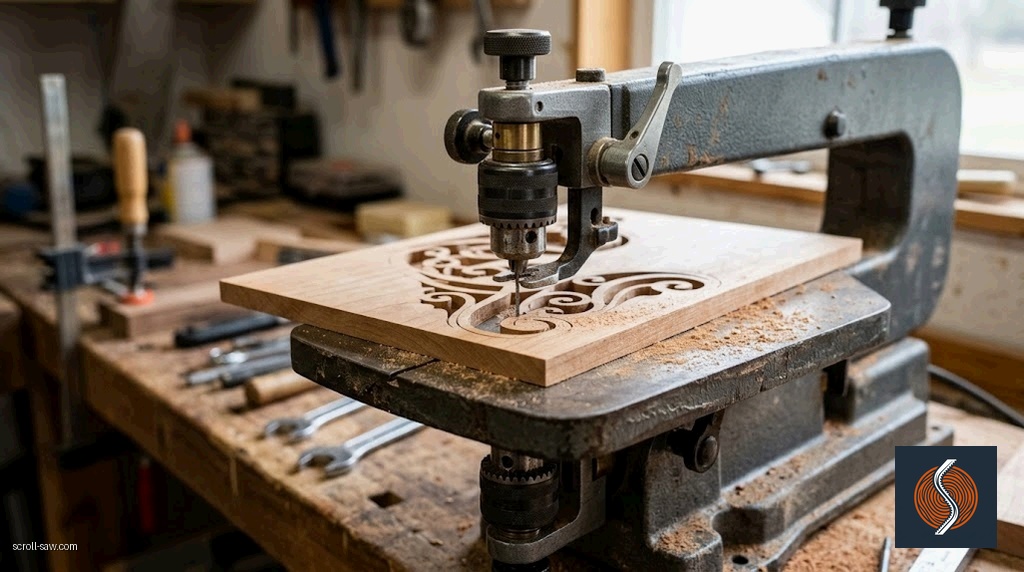
The chuck (or clamp) on a scroll saw is the mechanism that grips each end of the blade. Two chucks: one on the upper arm, one on the lower arm. Both have to grip firmly enough to hold the blade under tension without slipping, but release quickly enough to make blade changes practical. When chucks work well, blade changes take under a minute. When they slip, break, or wear out, cutting becomes impossible.
Here is what to check when buying, installing, adjusting, or replacing scroll saw chucks.
What a scroll saw chuck does
Each chuck has three jobs:
-
Grip the blade end firmly so it does not slip under cutting load.
-
Align the blade vertically so cuts are square to the table.
-
Release quickly for blade changes, especially between interior cutouts that require rethreading.
Good chucks accomplish all three. Poor chucks slip, misalign, or take too long to change.
Chuck types
Thumbscrew clamp. Manual thumbscrew tightens a jaw against the blade end. Simple and reliable. Slower to operate than lever clamps.
Lever clamp (quick-release). A lever lifts to release the blade, drops to clamp. Fast operation. Common on premium saws (Excalibur, Hegner, Pegas).
Setscrew clamp. Hex or Allen wrench tightens a setscrew. Reliable but slow.
Split clamp. Two-part clamp bolted together with the blade sandwiched. Very secure; slowest to operate. Rare on modern saws.
Pinned socket. For pinned blades only. The pin drops into a slot; no clamping needed. Very fast for pinned blades. Not compatible with plain-end blades without an adapter.
Most modern quality saws use lever quick-release clamps. Entry-level saws often use thumbscrew or setscrew.
Compatibility check
1. Blade end style
Plain-end blades fit chucks designed for plain ends. Most modern saws.
Pinned-end blades fit chucks with a pin socket. Older or entry-level saws.
Some saws accept both with an adapter or interchangeable chuck. Read the manual.
Blades and chucks must match. Plain blades do not fit pinned sockets without an adapter, and vice versa.
2. Blade thickness range
Chucks are rated for a range of blade thicknesses. Common range:
Standard chucks: #2/0 (0.008 in) through #12 (0.024 in). Covers the full scroll saw blade range.
Some entry-level chucks: #3 through #9 only. Cannot grip very fine or very thick blades.
Confirm your chuck handles the sizes you use.
3. Blade orientation
Some chucks require the blade to be inserted at a specific orientation (teeth facing a certain direction, or the flat side against a specific jaw). Confirm the chuck design.
4. Saw model
Replacement chucks are usually saw-specific. A DeWalt DW788 chuck does not fit a Delta P20. Order chucks from the manufacturer or a supplier that lists compatibility.
Adjustment checks
1. Clamping force
Too loose:
-
Blade slips out during tensioning
-
Blade slips during cutting
-
Blade end may deform from repeated slippage
Too tight:
-
Blade end deforms (bends or crushes)
-
Chuck jaws or threads strip
-
Blade cannot be released easily
Adjust to the manufacturer’s specification. If no spec is given, tighten until the blade cannot be pulled out by hand pull, but no more.
2. Blade alignment
Blade must be vertical and centered in both chucks. Misalignment causes:
-
Cuts not square to the table
-
Blade breakage from twisting stress
-
Wandering during cutting
Check alignment by:
-
Loading a fresh blade
-
Applying moderate tension
-
Sighting down the blade from above; should be perfectly vertical
-
Adjusting chuck position if misaligned
Some saws have chuck adjustment screws; others have fixed chucks and require careful blade loading.
3. Blade insertion depth
Both chucks should grip the blade at the same distance from the blade ends. Uneven insertion causes:
-
Uneven tension
-
Alignment problems
-
Blade breakage at the shorter end
Most chucks have a depth stop or reference mark. Insert blade until it seats against the stop.
Installation checks
Before installing a replacement chuck
-
Unplug the saw.
-
Confirm the chuck matches your saw model.
-
Have the correct tools ready. Usually a small Allen wrench or screwdriver.
-
Take photos of the old chuck before removal for reference during reinstall.
During installation
-
Remove the old chuck using the manufacturer’s method.
-
Clean the mounting area on the saw arm.
-
Position the new chuck exactly as the old one sat.
-
Tighten mounting screws to manufacturer torque spec (or firm hand-tight if no spec).
-
Install a blade and check alignment.
-
Test tension. Should hold firmly without slipping.
After installation
-
Cut a scrap and verify smooth cutting.
-
Check for alignment issues during cutting.
-
Adjust chuck position if needed.
-
Confirm quick-release works if applicable.
Common chuck problems
Blade slips during tensioning. Chuck too loose, or jaws worn. Tighten or replace.
Blade slips during cutting. Feed too heavy or chuck slipping. Reduce feed; if problem persists, replace chuck.
Blade deforms at the clamp. Chuck too tight. Loosen slightly. Or blade end already damaged from previous slippage; replace blade.
Blade breaks at the clamp. Chuck misaligned or over-tight. Realign; loosen clamping.
Chuck lever hard to operate. Debris in the mechanism; clean and lubricate. Or spring failing; replace lever.
Chuck loose on the saw arm. Mounting screws backing out. Retighten. If chronic, add thread locker.
Chuck cannot grip small blades. Chuck rated for larger blades only. Some saws have interchangeable jaw sets.
When to replace a chuck
Replace if:
Jaws worn smooth. Grip becomes unreliable.
Threads stripped. Cannot tighten.
Lever mechanism broken. Quick-release no longer works.
Alignment cannot be maintained. Chuck body distorted or worn.
Manufacturer parts still available. Verify before ordering.
Replacement cost: $20 to $80 depending on saw model. Some saws (Hegner, Excalibur) have expensive proprietary chucks; others (DeWalt, Delta) have cheaper standard parts.
Aftermarket chuck upgrades
Some scrollers upgrade from thumbscrew or setscrew factory chucks to quick-release levers:
Pegas Chuck Head for DeWalt DW788. $50 to $70. Lever quick-release replaces stock thumbscrew. Widely regarded upgrade.
Custom chuck heads from small suppliers for other saws. Check compatibility carefully.
Upgrade decision: if you change blades often (fretwork with many interior cuts), the time saved by quick-release pays back within a few projects.
Chuck maintenance
Clean jaws periodically. Sawdust buildup reduces grip.
Lubricate lever mechanisms. Small amount of light oil on pivot points. Do not lubricate jaw surfaces (grip suffers).
Check mounting screws every few months. Tighten if backing out.
Replace worn springs. Quick-release springs weaken over time.
Inspect for cracks. Distorted chucks can break under tension.
Safety considerations
Never operate the saw with a poorly clamped blade. A blade released mid-cut can fly with dangerous force.
Wear safety glasses. Broken blades and released blades are eye hazards.
Verify tension before each cutting session. Blades can settle after tensioning; retest by plucking.
Unplug the saw before adjusting chucks. Do not risk motor engagement during blade handling.
Bottom line
Scroll saw chucks grip the blade ends for stable, secure cutting. Check compatibility with your blade end style (plain or pinned) and thickness range. Adjust for correct clamping force and alignment. Install carefully; verify with a test cut. Upgrade thumbscrew factory chucks to quick-release levers if you change blades often. Maintain jaws and lever mechanisms periodically. Replace when grip becomes unreliable or alignment cannot be maintained.
FAQ
What is a scroll saw chuck? The clamp that grips each end of the blade. One on the upper arm, one on the lower.
What types of chucks are there? Thumbscrew, lever quick-release, setscrew, split clamp, pinned socket.
Do plain-end and pinned-end blades use the same chucks? No. Different chuck designs for each. Some saws accept both with adapters.
How tight should a scroll saw chuck be? Firm enough that the blade does not pull out by hand. Not so tight that the blade end deforms.
When should I replace a chuck? When jaws are worn smooth, threads are stripped, lever mechanism is broken, or alignment cannot be maintained.
Can I upgrade a factory chuck? Some saws have aftermarket quick-release upgrades (Pegas Chuck Head for DeWalt DW788).
Why does my blade keep slipping? Chuck too loose, worn jaws, or blade end damaged. Fix by tightening, replacing chuck, or using a fresh blade end.
References
-
DeWalt DW788 owner’s manual and parts catalog, dewalt.com
-
Pegas Chuck Head product page, pegas-swiss.com
-
Excalibur scroll saw documentation
-
Hegner scroll saw documentation, hegner.us
-
Steve Good, Scroll Saw Workshop on saw maintenance, scrollsawworkshop.blogspot.com


