
Scroll Saw Chuck Heads: Selection and Upgrade
Scroll Saw Chuck Heads: Selection and Upgrade
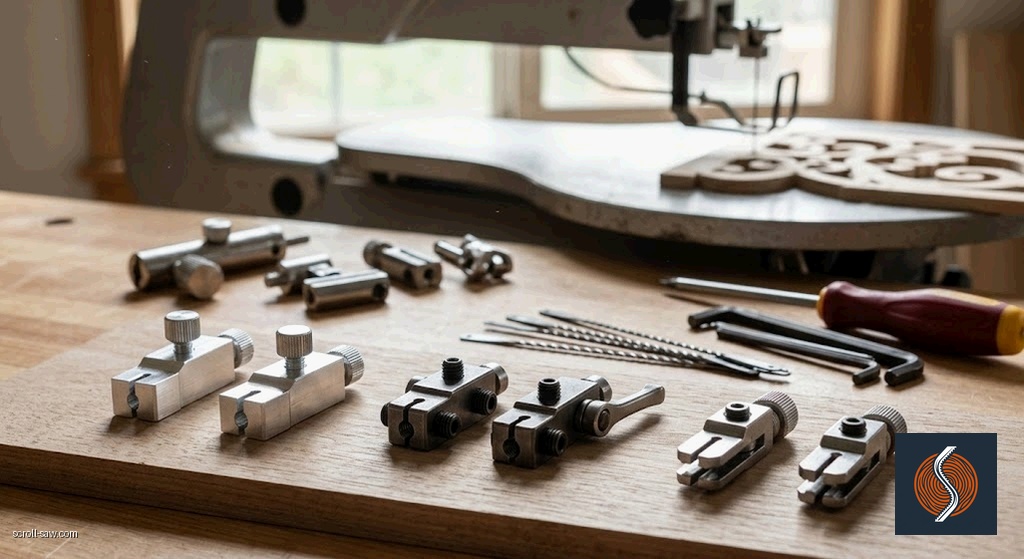
Chuck heads are the small clamps at each end of a scroll saw blade. On saws with factory quick-release clamps, they are barely noticed; on saws with thumbscrew or setscrew clamps, they can be upgraded for a significant workflow improvement. The Pegas Chuck Head for the DeWalt DW788 is the most famous example, but similar upgrades exist for other saws and custom builds.
Here is how to choose chuck heads that fit your saw and speed up your workflow.
What chuck heads do
Chuck heads grip each end of the scroll saw blade. Both upper and lower chucks together:
-
Hold the blade firmly under tension
-
Align the blade vertically
-
Allow blade removal and installation for changes and threading through interior cutouts
A good chuck head grips firmly, aligns automatically, and releases with a single motion.
Types of chuck heads
Thumbscrew. Manual thumbscrew tightens a jaw. Reliable; slow to operate. Common on older or entry-level saws.
Setscrew (Allen or hex). Similar to thumbscrew but requires a wrench. Reliable; slower than thumbscrew. Rare on modern saws.
Lever quick-release. A lever lifts to release the blade, drops to clamp. Fast operation. Common on premium saws (Excalibur, Hegner, Pegas Ultra).
Cam-lock. A cam mechanism grips the blade when the lever is turned. Fast; secure. Less common.
Split clamp with knurled thumbnut. Two-part clamp with a knob tightened by hand. Traditional; slow.
For scrollers who change blades often (fretwork with many interior cuts), lever quick-release is the significant upgrade.
Compatibility factors
1. Saw model
Most aftermarket chuck heads are designed for specific saw models. Common upgrade paths:
DeWalt DW788. Pegas Chuck Head. Widely available. $50 to $70.
Delta P20 or 40-series. Some aftermarket options; less common than DeWalt.
Excalibur EX-16 or EX-21. Already ships with quick-release; upgrades rare.
Hegner. Ships with proprietary quick-release; upgrades not common.
Older or off-brand saws. Universal or DIY options; more challenging.
Confirm compatibility before ordering. Cross-reference tables at Pegas and other manufacturers list which models are supported.
2. Blade end style
Chuck heads must match blade end style:
Plain-end. Standard for modern saws. Most quick-release chucks handle plain ends only.
Pinned-end. Requires chuck heads designed for pins. Some saws have interchangeable pinned/plain chuck heads.
Both. A few saws (some Delta models) have chuck heads that accept both with a slot for the pin or an adapter.
3. Blade thickness range
Chuck heads have a specified blade thickness range:
Standard range: #2/0 (0.008 in) through #12 (0.024 in). Full scroll saw blade range.
Reduced range: #3 through #9. Cannot grip very fine or very thick blades.
Confirm your chuck handles the sizes you use.
4. Mounting hardware
Aftermarket chuck heads mount to the saw’s existing chuck body. Confirm:
-
Bolt or setscrew size matches
-
Mounting hole pattern matches
-
Overall footprint fits without interference
Read installation instructions before ordering to confirm your saw is supported.
Workflow considerations
Blade change frequency
Rarely change blades (once per project or less). Any chuck type works fine. Upgrade not necessary.
Change blades a few times per project. Quick-release saves time; upgrade worthwhile.
Change blades constantly (fretwork with many interior cuts). Quick-release is essential; upgrade pays back within a few projects.
Threading blades through starter holes
For interior cutouts, blade threading requires:
-
Loosen tension
-
Remove blade from upper chuck
-
Thread through starter hole
-
Reinsert into upper chuck
-
Retension
With a thumbscrew chuck, this cycle takes 30 to 60 seconds.
With a lever quick-release, this cycle takes 5 to 15 seconds.
For a pattern with 50 interior cutouts, that difference adds up to 40+ minutes saved per project.
Alignment consistency
Some chuck heads self-align the blade; others require careful insertion. Quick-release chucks generally self-align, which reduces the risk of misaligned blades causing wandering or breakage.
Grip reliability
Under high tension, poorly designed chuck heads can allow the blade to slip. Premium chuck heads use hardened jaws with textured or serrated grip surfaces that resist slippage even under high tension.
Installation checks
Before installing an aftermarket chuck head
-
Unplug the saw.
-
Confirm compatibility with your saw model.
-
Have the required tools ready (usually a small Allen wrench).
-
Take photos of the factory chuck for reference.
-
Read the aftermarket manufacturer’s installation instructions.
During installation
-
Remove the factory chuck head using the manufacturer’s method.
-
Clean the mounting area.
-
Install the aftermarket head per the manufacturer’s instructions.
-
Tighten mounting hardware to specified torque.
-
Test operation with a fresh blade.
After installation
-
Cut a scrap and verify smooth cutting.
-
Check blade alignment. Adjust if needed.
-
Verify quick-release operation works smoothly.
-
Test grip under high tension. Blade should not slip.
Common upgrade paths
Pegas Chuck Head for DeWalt DW788
The most popular scroll saw upgrade. Replaces the factory thumbscrew clamp with a Pegas-designed quick-release lever.
Cost: $50 to $70.
Install time: 30 to 60 minutes.
Benefits: Faster blade changes, better alignment, more reliable grip.
Widely available: Amazon, Sloan’s Woodshop, Bear Woods, PS Wood, Seyco.
Custom chuck heads
Some small suppliers make chuck heads for less common saws. Check scrollers’ forums (Scroll Saw Village, Reddit r/scrollsaw) for community-vetted options.
DIY chuck head modifications
Some scrollers make their own chuck heads from scratch. Requires machining capability. Not recommended unless you have the tools and skills.
Alternative approaches
If your saw does not have an aftermarket chuck head option:
Improve factory chuck operation. Clean, lubricate lever mechanisms, replace worn springs.
Switch to pinned-end blades. Pinned blades install and remove faster than plain-end with a thumbscrew chuck. Sacrifices blade size selection.
Buy a saw with quick-release already. If you scroll professionally or as a serious hobby, a saw with factory quick-release (Excalibur, Hegner) may be a better investment than upgrading a lesser saw.
When aftermarket chuck heads make sense
-
You change blades often (fretwork, portrait scrolling)
-
Your saw uses thumbscrew or setscrew factory chucks
-
Your saw has aftermarket options (DeWalt DW788, some others)
-
You will use the saw for years
When aftermarket chuck heads do not make sense
-
You change blades rarely
-
Your saw already has factory quick-release
-
No aftermarket options for your saw
-
You are considering upgrading the whole saw soon anyway
Common installation problems
Chuck head does not seat properly. Wrong model for your saw. Verify compatibility.
Grip is worse than factory chuck. Check jaw surfaces for damage; check tension of mounting hardware.
Blade wanders after upgrade. Alignment problem. Recheck chuck position and blade orientation.
Lever does not operate smoothly. Debris in mechanism or over-tightened mounting hardware.
Chuck head loose on saw arm. Mounting hardware not tight enough. Retighten to manufacturer spec.
Bottom line
Scroll saw chuck heads determine how fast and reliably you can change blades. Factory thumbscrew or setscrew clamps work but are slow. Aftermarket quick-release lever clamps (like the Pegas Chuck Head for DeWalt DW788) speed blade changes dramatically. Check compatibility with your saw model, blade end style, and blade thickness range. Install carefully; verify grip and alignment before serious cutting. Upgrade if you change blades often; skip if your saw already has quick-release or you rarely change blades.
FAQ
What is a scroll saw chuck head? The clamp that grips each end of the blade. One on the upper arm, one on the lower.
Can I upgrade my saw’s factory chuck heads? Some saws have aftermarket options. Pegas Chuck Head for DeWalt DW788 is the most common upgrade.
How much does an aftermarket chuck head cost? $50 to $70 for popular options.
Is a quick-release chuck worth upgrading to? Yes if you change blades often (fretwork, portrait scrolling). No if you rarely change blades.
Can I install a chuck head from a different saw model? No. Chuck heads are saw-specific. Cross-reference compatibility before ordering.
Where do I buy scroll saw chuck heads? Amazon, Sloan’s Woodshop, Bear Woods, PS Wood, Seyco, or manufacturer direct.
How long does chuck head installation take? 30 to 60 minutes for most upgrades.
References
-
Pegas Chuck Head product page, pegas-swiss.com
-
DeWalt DW788 parts catalog, dewalt.com
-
Sloan’s Woodshop chuck upgrades, sloanswoodshop.com
-
Bear Woods scroll saw upgrades, bearwood.com
-
Steve Good, Scroll Saw Workshop on saw upgrades, scrollsawworkshop.blogspot.com


