
Scroll Saw Stand with Wheels: Buying Guide
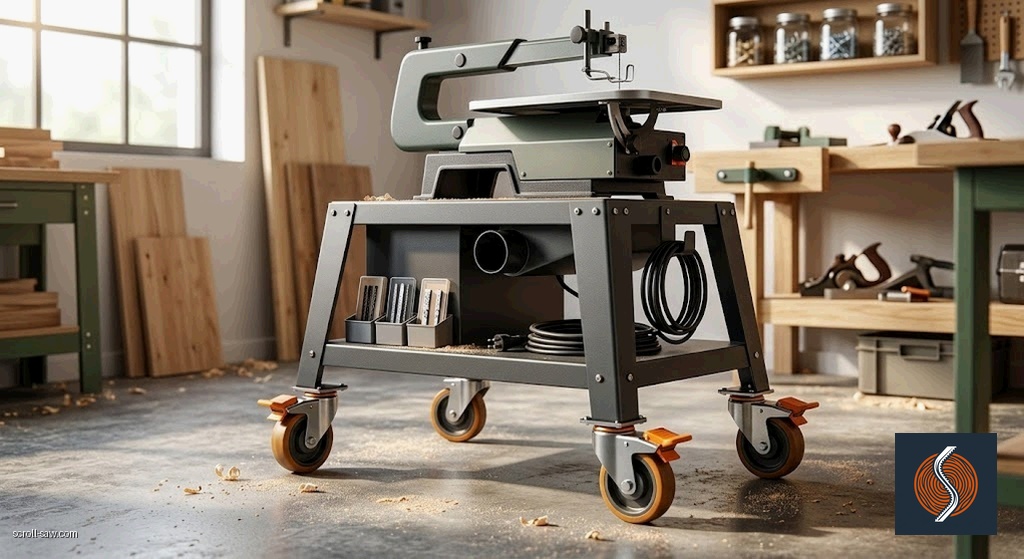
Scroll Saw Stand with Wheels: Buying Guide
A wheeled scroll saw stand solves a specific problem: you have a scroll saw and limited floor space. When you use the saw, it needs to be in a good working position. When you are not using it, it needs to be out of the way. A wheeled stand rolls between the two positions in seconds.
Here is how to choose a wheeled stand that fits your saw, your shop, and your working style.
When a wheeled stand makes sense
Shared shop space. Saw needs to move so other tools can be used.
Small garage or basement shop. Saw stores against a wall when not in use.
Class or workshop teaching. Saw moves between tables or rooms.
Home shop with other uses. Space converts between hobby and other functions.
Cannot commit to a permanent saw location. Renter, first shop, or transitional setup.
When a wheeled stand is not the best choice
Dedicated permanent shop space. Fixed stand is cheaper and more stable.
Extremely heavy scroll saw (Hegner or industrial). Wheels rated for lighter loads may struggle.
Uneven floor. Wheels roll unpredictably; leveling harder.
Precision work priority. Fixed stands vibrate less; may improve cut quality slightly.
Budget-limited. Wheeled stands cost more than fixed equivalents.
Key features to look for
1. Wheel type
Rubber caster wheels. Standard. Smooth rolling; some vibration transmission.
Rubber caster with brake. Recommended. Locks in place during use.
Total-lock casters. Lock both rotation and swivel. Best stability during use.
Retractable wheels. Wheels lift off the floor when the stand is in use. Best stability; more complex mechanism.
Air-filled wheels. For very heavy saws on rough surfaces. Rare for scroll saws.
Most scroll saw stands use rubber caster wheels with brake or lock.
2. Wheel diameter
Small (2 to 3 inches). Compact; hard to roll on carpet or over cords.
Medium (4 to 5 inches). Standard for shop stands. Rolls well on hard floors.
Large (6 inches or more). Best for rough floors; more portable.
Medium diameter is the sweet spot for most home shops.
3. Weight capacity
Scroll saws range from 30 to 100 pounds. Stand capacity should exceed the saw weight plus any accessories:
Small saws. 100+ pound capacity stand.
Medium saws. 150+ pound capacity stand.
Heavy Hegner or industrial. 200+ pound capacity stand.
Overbuilding by 50% ensures stability and long life.
4. Stability features
Wide base. Stability increases with base footprint. Minimum 16 inches per side.
Low center of gravity. Stand top no more than 34 inches; heavier saw on top raises the center of gravity.
Locking mechanism. Wheels must lock securely; no drift during use.
Leveling feet. For rough floors, leveling feet supplement wheels.
5. Mobility features
Handle. Some stands have a lift handle to steer.
Push bar. Bar across one side for pushing.
All-swivel casters. Roll in any direction; best for tight spaces.
Fixed-plus-swivel casters. Two swivel and two fixed wheels; roll straight easily.
6. Storage features
Lower shelf. Storage for accessories, blades, patterns.
Drawers. Dedicated small parts storage.
Tool hangers. Hooks or holders for common accessories.
Pattern holder. Flat storage for scroll patterns.
Some combined workbench/stand designs include significant storage.
7. Saw compatibility
Bolt pattern. Must match saw base holes.
Top size. Large enough to support saw base with room for adjustment.
Top material. MDF, plywood, or metal. All work; MDF may sag under heavy saws over years.
Vibration damping. Some stands include rubber pads between saw and stand top to reduce vibration transmission.
Compatibility check before buying
1. Saw bolt pattern
Measure the mounting holes on the bottom of your saw. Common patterns:
DeWalt DW788. 11.5 x 10 inches, four 5/16 inch holes.
Delta P20. Slightly different; verify before ordering.
Excalibur EX-16. Different again.
Hegner. Proprietary; often use Hegner-specific stands.
Universal wheeled stands often have slotted holes to accommodate multiple saw models.
2. Saw weight
Stand rated capacity should exceed saw weight by at least 50%. Overloaded stands wobble and fatigue over time.
3. Space constraints
Measure your shop floor:
Stand footprint in use.
Stand footprint in storage (against wall).
Aisle clearance for rolling between positions.
Door width if rolling between rooms.
4. Floor type
Concrete or vinyl. Any wheel type rolls fine.
Wood floor. Rubber or urethane wheels; avoid metal wheels.
Carpet. Large diameter wheels; may still be difficult.
Rough or uneven floor. Larger wheels; consider leveling feet.
5. Wheel lock mechanism
Test before buying if possible. Locks should:
-
Engage with light foot pressure
-
Hold securely without drift
-
Release with light foot pressure
-
Not require reaching under the stand
Common wheeled stand options
Rockler All-Terrain Mobile Base
Adjustable footprint for different tool sizes.
Retractable wheels. Wheels lift when stand is set on locking pads.
Cost: $80 to $120.
Best for: Shops with multiple tools needing occasional mobility.
Bora PM-3550 mobile base
Adjustable to fit various tool footprints.
500 pound capacity.
Rubber caster wheels with locking.
Cost: $80 to $100.
Best for: Medium to heavy scroll saws needing mobility.
HTC HRT-Series mobile bases
Various sizes for different tools.
Retractable wheel design.
Cost: $100 to $200.
Best for: Serious shop use with mixed tools.
Dedicated wheeled cabinets
Combines wheeled stand with cabinet storage.
Higher stability from cabinet weight.
Cost: $150 to $400.
Best for: Dedicated scroll saw setup with accessory storage.
DIY wheeled workbench
Custom built to your dimensions.
Wheels from Home Depot or Amazon.
Cost: $75 to $200 in materials.
Best for: Scrollers who want a specific design.
Installation checks
Before installation
-
Unpack all parts. Verify against inventory.
-
Assemble the stand per instructions.
-
Attach wheels with lock mechanisms outward for easy access.
-
Test rolling and locking before mounting the saw.
During installation
-
Position stand on intended floor location.
-
Lock wheels.
-
Verify stability. Push each corner; should not shift.
-
Mount saw to the stand top with matching bolts.
-
Torque bolts to firm hand-tight.
-
Verify saw is level using a bubble level on the saw table.
After installation
-
Test cut a scrap. Assess vibration.
-
Roll the stand to storage position and back. Verify wheels roll smoothly.
-
Confirm locks engage at both positions.
-
Adjust as needed.
Common problems
Stand rolls during use. Locks not engaged or worn. Verify locks; replace if worn.
Excessive vibration. Wheels transmitting vibration. Add rubber pad between saw and stand; consider retractable wheel design.
Stand tips when saw runs. Base too narrow or wheels too small. Add ballast to lower shelf; upgrade stand.
Wheels do not roll smoothly. Debris in wheel bearing; replace wheel.
Cannot lock wheels reliably. Lock mechanism worn; replace wheels.
Stand top sags under saw weight. Underrated stand; replace with heavier duty.
Reducing vibration on wheeled stands
Wheeled stands transmit more vibration than fixed stands. Reduce with:
Rubber pads between saw and stand top. Small foam or rubber sheets.
Add weight to lower shelf. Sandbags, tool storage, or ballast bar.
Retractable wheel design. Best solution; wheels lift off during use.
Anti-vibration mat under wheels. Doubles as anti-fatigue for the scroller.
Firm floor. Vibration is worse on flexible floors (thin plywood on joists).
Bottom line
A wheeled scroll saw stand solves the space problem of a shared shop. Choose one with locking wheels rated for your saw’s weight, wide enough base for stability, and adequate storage if desired. Compatibility with your saw’s bolt pattern is essential; verify before ordering. Install carefully; test stability and locks before use. Reduce vibration with rubber pads or a retractable wheel design if the standard wheels transmit too much.
FAQ
When should I get a wheeled scroll saw stand? When you need the saw to move between working and storage positions, or when shop space is shared.
Do wheeled stands vibrate more than fixed stands? Yes, slightly. Reduce with retractable wheels, rubber pads, or added weight.
What wheel type is best? Rubber casters with locking mechanism. Retractable wheel designs are the most stable.
How much weight can a wheeled stand hold? Common capacities: 100 to 500 pounds. Choose 50% more than your saw weight.
Are wheeled stands universal? Many are adjustable to fit various tool footprints. Verify bolt pattern compatibility.
How much do wheeled stands cost? $60 to $200 for commercial; under $75 for DIY.
Do wheeled stands work on carpet? Hard rolling. Large diameter wheels help. Better on hard floors.
References
-
Rockler mobile base product line, rockler.com
-
Bora tool mobile base, boratool.com
-
HTC mobile base product line
-
Steve Good, Scroll Saw Workshop on shop setup, scrollsawworkshop.blogspot.com


