
Scroll Saw Name Plaques: Material Thickness, Blade Size, and Finishing Notes
Scroll Saw Name Plaques: Material Thickness, Blade Size, and Finishing Notes
A scroll saw name plaque is a wooden sign displaying a person’s name (or a family surname) that hangs on a wall, door, or shelf. It’s one of the most-requested gifts scroll saw hobbyists get asked to make: new baby nursery signs, kids’ bedroom doors, wedding welcome signs, retirement gifts, memorial plaques, and dorm room decor. Every version follows the same basic technique with variations in style, size, and finish for the intended recipient.
What separates a name plaque that becomes a lifelong keepsake from one that ends up in a drawer: proportion, wood choice, and finish quality.
What name plaques typically include
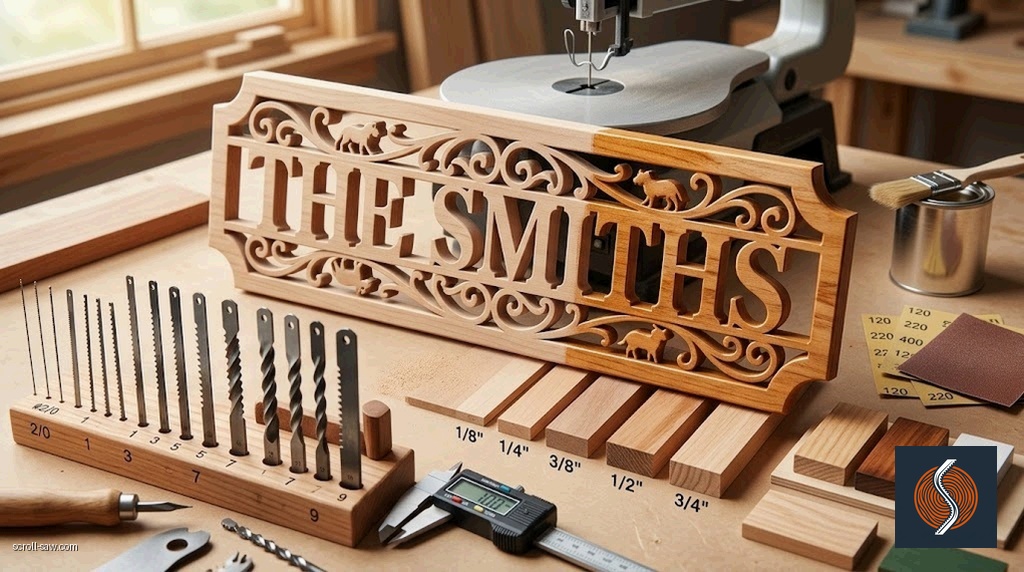
Most scroll saw name plaques fall into three categories. A cut-out name plaque (the name cut as a single connected script piece, no backer). An applied-name plaque (individual letters or a connected name glued to a plain wooden backer). A pierced-panel name plaque (the name pierced through a rectangular or shaped panel).
Quick answer: cut from 1/2 to 3/4 inch cherry, walnut, or basswood. Use a #5 skip-tooth for outer perimeter and #3 reverse for pierced detail. Choose a bold script or serif font with strokes at least 3/16 inch thick. Cut interior counters before outer perimeter. Finish with wipe-on oil or sealed acrylic paint.
Material thickness
Half-inch stock for standard wall-hung name plaques (up to 18 inches wide).
Three-quarter inch stock for larger family name plaques (over 18 inches wide) or plaques mounted outdoors.
Three-eighths inch stock for lightweight applied-letter plaques.
Stay away from stock thinner than 3/8 inch for stand-alone name plaques; the piece feels flimsy and cracks over time.
Wood choice
Half to 3/4 inch quartersawn cherry for warm oiled name plaques. The reliable default.
Half to 3/4 inch walnut for formal or dark-tone plaques.
Half to 3/4 inch basswood for painted name plaques in specific colors (wedding white and gold, nursery pastel, kids’ room bright).
Half to 3/4 inch maple for pale plaques that take stain or paint.
Half to 3/4 inch exterior-grade cedar for outdoor plaques.
Blade size
A #5 skip-tooth blade for outer perimeter cuts on 1/2 to 3/4 inch stock.
A #3 reverse-tooth blade for pierced decorative detail or fine script counters.
A #1 blade for the finest detail on ornate script or fine flourishes.
Fresh blades for every plaque. Dulled blades tear fine script detail.
Layout planning for a name plaque
Before cutting:
-
Print the name at final size and verify it reads clearly at intended viewing distance.
-
Check letter proportions across the whole name. Some fonts have irregular letter spacing.
-
Identify fragile spots: connecting strokes on script fonts, thin serifs on classic serif fonts, decorative flourishes.
-
Verify grain orientation runs along the name’s dominant horizontal axis.
Cut sequence for a cut-out name plaque
-
Sand both faces of the panel to 220 grit before cutting.
-
Apply the pattern with painter’s tape and spray adhesive.
-
Drill entry holes for every closed counter with a 1/32 inch bit.
-
Cut interior counters smallest to largest.
-
Cut the outer name perimeter last in one continuous cutting path.
Cut sequence for a pierced-panel name plaque
-
Sand both faces of the rectangular panel to 220 grit.
-
Apply the pattern showing the pierced name.
-
Drill entry holes for every letter and every closed counter.
-
Cut each letter’s outer perimeter and interior counters through the panel.
-
Cut any decorative border pierce.
-
Cut the outer panel perimeter last if the panel isn’t a standard rectangle.
Cut sequence for an applied-name plaque
-
Cut the plain rectangular backer from 1/2 or 3/4 inch stock.
-
Cut individual letters or a connected name from matching stock.
-
Test-arrange the letters or connected name on the backer.
-
Glue the letters or connected name to the backer with Titebond II.
-
Weight while drying for 24 hours.
Where scroll saw name plaques fail
Name reads uneven or too small. Font choice mismatched to plaque size. Print at final size to verify readability before cutting.
Connecting stroke breaks (script names). Stroke drawn thinner than 3/16 inch. Thicken on the pattern.
Serif tail shears off. Serif drawn thinner than 3/16 inch. Thicken.
Applied letters don’t align on the backer. Test-arrangement skipped. Always test-arrange before gluing.
Plaque cracks over time. Grain runs across a thin section, or wood species too brittle. Use straight-grained hardwood with grain along the plaque’s longest axis.
Outdoor plaque fades. Interior finish used on exterior piece. Use exterior spar urethane on cedar or white oak plaques.
Finishing notes
Wipe-on boiled linseed oil for cherry, walnut, and maple. Two coats over two days.
Oil-varnish blend for slightly more protection.
Painted plaques (wedding white, nursery pastel, room decor color): shellac sanding sealer, acrylic craft paint in specific color, matte water-based polyurethane top coat.
Gold leaf accents on wedding or heirloom plaques. Apply gold leaf over sizing adhesive after sealing the wood.
Exterior spar urethane for outdoor plaques on cedar or white oak. Three coats, reapplied annually.
Mounting hardware
Wall-mounted: keyhole slot cut into the back before finishing, or picture-frame hanger attached after finishing.
Door-mounted (for a child’s bedroom door): two small brass hooks screwed to the top edge of the plaque, plaque hangs on the door via ribbon or cord.
Freestanding: cut a small rectangular base from the same stock, glue to the plaque’s bottom.
Applied to a wall backer: glue the plaque to a larger contrasting-wood backer for a framed look.
Personalization options
First name only: for a child’s room or nursery.
Full name: first and last, or first middle last, for formal wedding or memorial plaques.
Family name (surname only): for a family entryway.
Couple’s names with wedding date: for wedding welcome signs or anniversary gifts.
Name with decorative flourish: a starting or ending flourish for ornamental effect.
Name with pierced decorative border: a decorative pierced border around the pierced name.
Comparing three name plaque projects
Simple bold script child’s name plaque (six to eight letters) in 1/2 inch cherry, oiled, mounted with keyhole slot. The reliable first name plaque. Cuts and finishes in a weekend.
Wedding welcome plaque with couple’s names in bold script and wedding date in serif numerals, 3/4 inch walnut, oiled, mounted on a contrasting maple backer. The mid-range piece.
Heirloom family name plaque with gold-leafed script name and pierced decorative border, 3/4 inch cherry with gold leaf accents, oiled, mounted on a burl walnut backer with hidden French cleat. The signature piece.
Conclusion
A scroll saw name plaque works when the font is chosen with strokes at least 3/16 inch thick, the wood species and thickness match the intended display use, and grain runs along the plaque’s longest axis. Half to 3/4 inch cherry, walnut, basswood, or exterior cedar. A #5 skip-tooth outline with #3 reverse for pierced or interior detail. Wipe-on oil for interior, exterior spar urethane for outdoor, sealed acrylic paint for specific colors. Wall-mounted with keyhole slot or applied to a contrasting-wood backer. Do those and the finished plaque becomes a lifelong keepsake, which is why name plaques keep getting requested as gifts.
Frequently asked questions
What thickness works for a scroll saw name plaque? Half-inch for standard wall-hung plaques, 3/4 inch for larger or outdoor plaques, 3/8 inch for lightweight applied-letter plaques. Stay above 3/8 inch for stand-alone pieces.
What wood works best? Half to 3/4 inch quartersawn cherry for warm interior plaques, walnut for formal, basswood for painted, exterior cedar for outdoor.
Which blade cuts script name detail cleanest? A fresh #3 reverse-tooth blade for most script names, dropping to a #1 for hair-thin flourishes.
How large should a name plaque be? Name plaques for kids’ rooms: 12 to 18 inches wide. Family entryway plaques: 18 to 30 inches wide. Wedding welcome plaques: 18 to 24 inches wide.
How thin can I safely draw a stroke on a script name? Minimum 3/16 inch on the pattern at final size for connecting strokes and thin serifs.
How do I keep an outdoor name plaque from fading? Exterior spar urethane, three coats initially, reapplied annually. Or exterior latex paint with oil-based clear top coat.
Should the plaque be a cut-out name or a pierced panel? Cut-out name for a clean silhouette look. Pierced panel for a framed look. Applied letters on a backer for a dimensional look.
References
-
Steve Good, Scrollsaw Workshop pattern archive: scrollsawworkshop.blogspot.com
-
Sue Mey, Scroll Saw Artist: scrollsawartist.com
-
Scroll Saw Woodworking & Crafts, Fox Chapel Publishing: foxchapelpublishing.com


