
Ultra Reverse Scroll Saw Blades: Sizing and Cut Guide
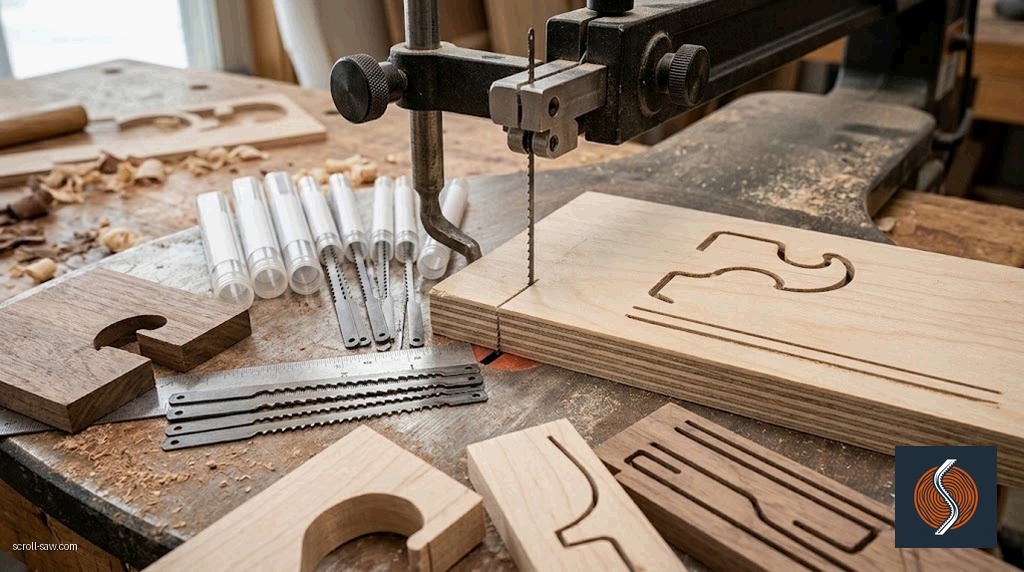
Ultra Reverse Scroll Saw Blades: Sizing and Cut Guide
The first time a fuzzy underside ruined a portrait cutting, I stopped mid-project, flipped the piece over, and understood why serious scroll sawyers keep talking about ultra reverse blades. The top face looked clean. The bottom looked like it had been chewed. That’s what a standard blade does on the exit side of a cut, and it’s exactly what an ultra reverse blade is built to stop.
An ultra reverse blade is a scroll saw blade with a longer run of upward-facing teeth at the bottom of the blade than a standard reverse blade. Where a reverse tooth blade might flip two or three teeth upward, an ultra reverse flips a longer stack, sometimes a third of the blade. That extra upward-cutting length is what gives you a portrait, an intarsia inlay, or a fretwork panel with two show faces instead of one.
If you are here to figure out what size to buy, what wood it fits, and whether it will actually save you sanding time: yes, in the right setup, it will, and the size chart below is where most people go wrong.
What ultra reverse actually changes on the cut
A standard downward-tooth scroll saw blade slices on the downstroke. Fibers on the bottom of your workpiece get pushed away from the cut, tear out, and leave that fuzzy underside. A reverse tooth blade flips a few teeth at the bottom so the upstroke cleans that face. An ultra reverse extends that clean-cut section so more of the bottom of the workpiece is being cut by upward teeth as the blade travels.
The tradeoff is real and worth naming out loud. Because more of the blade is cutting upward, the workpiece wants to lift with each upstroke. You feel it as a hopping or chatter if your hold-down isn’t set or your hands are light on the stock. On thin plywood the piece can walk. On dense hardwood the effect is milder because the wood weighs more and cuts slower. The fix is not to abandon ultra reverse — it’s to press the workpiece flat, slow the feed, and let the blade do the work.
The second tradeoff is heat. Ultra reverse blades run a touch warmer through hardwood at the transition zone where downward and upward teeth meet. On 3/4 inch walnut at a fast feed you can scorch the exit. Slower feed, cleaner cut.
Sizing an ultra reverse blade to the wood
Size on scroll saw blades is a number, not a dimension. Bigger number, wider and thicker blade, coarser teeth, faster and rougher cut. Smaller number, finer blade, tighter radius, slower and cleaner.
A workable starting map:
-
#2/0 to #1 for 1/8 inch plywood, thin veneer, and marquetry. Fragile, breaks if you push, and worth it for the finish.
-
#3 to #5 for 1/4 to 1/2 inch hardwood, most portrait cutting, most fretwork. This is the range where ultra reverse earns its money.
-
#7 to #9 for 3/4 inch hardwood, intarsia blanks, thick softwood. Faster cutting, larger radius, still clean bottoms with ultra reverse.
-
#12 for stock over an inch, stack cutting, or long straight-ish runs where you want speed.
The rule most beginners miss: the wood’s thickness dictates the blade size before the pattern’s detail does. A hair-fine pattern in 3/4 inch walnut is not a #2/0 job. It is a #5 job with patient turns, because a #2/0 will drift, wander, and snap under the load of that much material.
Real blades that hold up
For everyday scroll saw work I keep two lines on the bench.
Flying Dutchman Ultra Reverse blades in a #3 pack are the ones I reach for most for portrait work in 1/4 to 1/2 inch hardwood. They cut aggressively for their number, the bottom face comes off the saw ready for a light sanding rather than a full recovery job, and they last long enough that I’m not changing mid-panel. The honest complaint: at that aggressive cut, they scorch cherry if you slow down for a turn and stop feeding. Keep the piece moving through the curve or lift.
If you’re not sure yet which size you’ll settle on, the Flying Dutchman 60-piece variety pack is a smarter first buy than a single size. You get a dozen each of five useful blade styles including the ultra reverse, so you learn what your saw and your wood actually want before committing to a bulk pack.
For readers who already know they need one size in bulk, the Ultra Reverse #5 pack of 72 is the general-purpose workhorse for 1/2 to 3/4 inch hardwood.
Who should skip these: if you’re only cutting soft pine puzzles for a kids’ craft table, ultra reverse is overkill. A basic skip tooth like the Olson FR49400 assortment will do the job faster and cheaper, and the fuzzy bottom won’t matter.
Tooth geometry beyond “more or fewer teeth”
TPI (teeth per inch) tells part of the story. Gullet depth and tooth set tell the rest.
Ultra reverse blades typically have a milled tooth rather than a stamped one, which means the tooth is ground into the steel rather than punched. Milled teeth are sharper out of the pack and stay sharp longer, but they are also more brittle at the tip. A ground tooth that bounces off a knot will chip; a stamped tooth will just dull.
Gullet depth matters because a scroll saw blade cutting hardwood needs somewhere for the chips to go. Shallow gullets on a fine blade in thick hardwood pack with dust, and the blade stops cutting and starts burning. This is the invisible reason a #3 that worked beautifully in poplar suddenly scorches its way through oak. It’s not the wood being harder. It’s the gullet packing.
Material choices: carbon steel is not one thing
“High carbon steel” on a scroll saw blade package covers a wide range. The German and Swiss blades most premium lines use are drawn from a harder, more consistent alloy than the entry-level packs. You feel it as a blade that cuts predictably from the first turn to the last and breaks at the end of its life rather than randomly halfway through.
Bimetal ultra reverse blades exist but are uncommon on the consumer side and usually not worth the price for wood work. Save the money and buy more of the mid-tier carbon steel blades — you’ll burn through them faster, learn faster, and end up with better cuts.
Setup that lets ultra reverse do its job
Tension is the single biggest lever. A well-tensioned ultra reverse blade cuts straighter and stays truer through a long curve. Pluck it. A properly tensioned scroll saw blade should ring at a musical pitch, not thud. If it thuds, tighten.
Speed matters second. Hardwood likes slower speeds around 800 to 1200 strokes per minute for an ultra reverse in the #3 to #5 range. Softwood tolerates faster. If the blade is smoking or the piece is smoking, drop the speed before you blame the blade.
Hold-down pressure matters third. With more upward cutting action, an under-supported workpiece will bounce. Set your hold-down foot low enough to prevent lift but not so tight that you can’t turn the piece freely.
Zero-clearance table inserts help ultra reverse more than any other blade type. That upward cut wants a clean exit; a table with a wide slot lets the fibers tear out around the blade regardless of how clean the tooth is.
When ultra reverse is the wrong call
Intricate corner turns in thick hardwood with an ultra reverse blade will fight you. The upward-cutting length that gives you a clean bottom face also makes the blade less willing to pivot in place. For sharp interior corners in 3/4 inch material you may want a standard skip tooth or a spiral blade for the tight turn, then a fresh ultra reverse for the smooth runs.
Spiral cuts in any material do not want an ultra reverse. Use a spiral blade.
Metal or plastic work: ultra reverse is a wood blade. Go elsewhere.
The takeaway
Ultra reverse is not a universal upgrade. It is a specific answer to a specific problem: the fuzzy exit face. If you cut a lot of portrait work, fretwork, intarsia, or anything that will be viewed from both sides, keep a full range on the bench and start most cuts with one. If your work is one-sided craft cutting, skip tooth is faster, cheaper, and honest about what it is.
Get the sizing right first, get the tension right second, and the blade choice becomes the smallest variable in your finish quality.
FAQ
What’s the difference between reverse tooth and ultra reverse scroll saw blades? A reverse tooth blade flips two or three teeth at the bottom to cut on the upstroke. An ultra reverse extends that upward-cutting section over a longer part of the blade, giving you a cleaner exit face on more of your cut. The tradeoff is more workpiece lift and slightly more heat.
What size ultra reverse blade should I use for 3/4 inch hardwood? Start with a #5 for most patterns. Move to a #7 if you’re cutting long, gentle curves and want speed. Drop to a #3 only if the pattern demands very tight radii and you are willing to feed slowly.
Why does my ultra reverse blade keep breaking? Usually one of three things: tension is too low, feed rate is too aggressive through a tight turn, or the blade is undersized for the material. Milled ultra reverse blades are sharper but more brittle than stamped standard blades, so they punish forcing.
Can I use ultra reverse blades on any scroll saw? Yes, as long as your saw takes pinless (plain end) 5-inch blades, which is the standard for premium blade lines. Pin-end saws are limited to a much smaller range of blades and generally cannot use ultra reverse patterns from the major makers.
Do ultra reverse blades cut slower than standard blades? Slightly, because the upward-cutting teeth are working against gravity on the piece. In practice the difference is small in the #3 to #7 range and worth the finish improvement on any two-sided work.
Will an ultra reverse blade leave a truly sand-free surface? No blade does, but a well-tensioned ultra reverse in the right size will get both faces close enough that a light sanding with 220 grit finishes the piece. Standard blades will require heavier sanding of the bottom face.
Are ultra reverse blades worth the price over standard reverse? For two-sided work, yes. For one-sided craft cutting, no. The best test is your own workflow: if you’re spending real time cleaning up the underside of your cuts, ultra reverse pays for itself in sanding time saved.
References
-
Flying Dutchman Ultra Reverse product specifications, Flying Dutchman / Mike’s Workshop
-
Olson Saw Company blade catalog and TPI reference charts
-
Pégas Swiss-made scroll saw blade technical documentation


