
Universal Scroll Saw Blades: TPI, Kerf, Radius, Finish
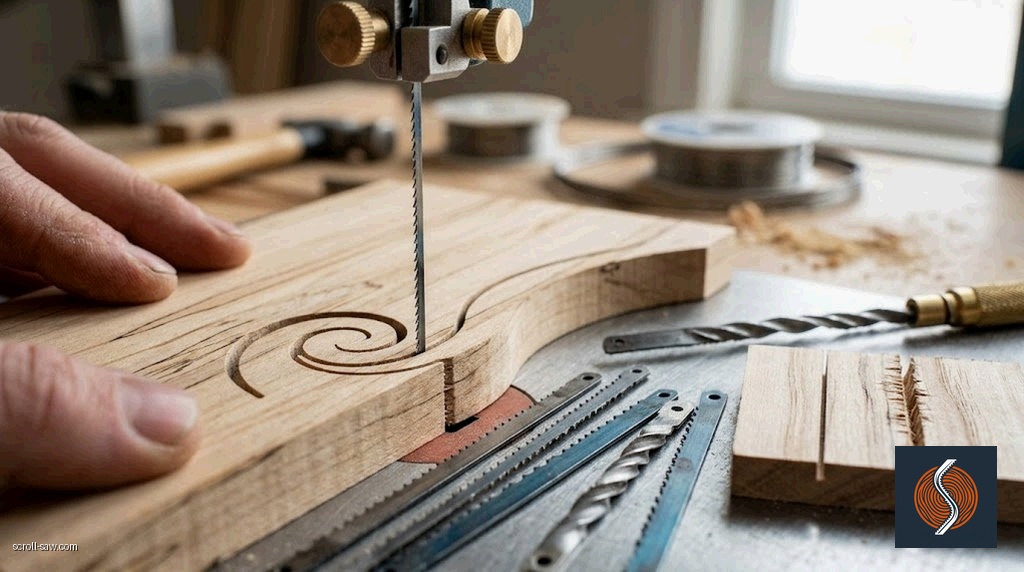
Universal Scroll Saw Blades: TPI, Kerf, Radius, Finish
“Universal” on a blade package almost always means one thing: pinless, 5-inch, plain-end blades that fit the majority of modern scroll saws. That includes DeWalt, WEN, Delta, most Hegner, most Excalibur, and most cast-off saws you’d find at a garage sale. What it doesn’t mean is that every 5-inch plain-end blade cuts the same, and that’s where a lot of frustrating cutting sessions come from.
Here’s what actually varies inside the “universal” label, and how each variable shows up in your finish.
TPI and what it really controls
Teeth per inch decides how fast the blade cuts and how rough it leaves the edge. Fewer teeth per inch means bigger, hungrier teeth: fast in thick stock, ugly in thin stock. More teeth per inch means small teeth: slow, clean, and easily clogged.
A workable read:
-
25 to 30 TPI on a #2/0 blade for veneer and 1/8 inch plywood.
-
15 to 20 TPI on a #3 to #5 for the meat of pattern work.
-
9 to 12 TPI on a #7 to #9 for 3/4 inch hardwood.
-
6 to 9 TPI on a #12 for stack cuts or long runs.
The critical detail: TPI is not the whole blade personality. Two #5 blades at 15 TPI from different manufacturers can cut very differently depending on tooth geometry, set, and gullet.
Kerf: the width of what you’re removing
Kerf is the width of the slot the blade cuts. A wider kerf clears chips faster and reduces burning, but it also means less precision on inlay joints and less tolerance for pattern lines. A narrower kerf gives you a tighter fit on marquetry and a cleaner cut in thin stock, but packs faster in thick hardwood.
Most “universal” blades sit in the 0.010 to 0.025 inch kerf range. Spiral blades run wider because they cut in all directions. Ultra reverse and modified geometry blades often run tighter than their number suggests, which is one reason they finish so cleanly.
Radius: the tightest turn the blade can make
Every blade has a minimum radius before it starts to wander or twist. The number roughly correlates: a #3 turns tighter than a #7, which turns tighter than a #12. A spiral blade turns in place because it cuts in every direction, at the cost of a much rougher edge.
If your pattern has a 3/16 inch inside radius and you’re using a #9 blade, the blade will fight you. Drop to a #3 for that section, or use a spiral to pivot.
Finish: what the blade leaves on the wood
A universal blade cuts on the downstroke, which means the top face of your workpiece is the clean face and the bottom is where tearout lives. Reverse tooth blades flip a few teeth at the bottom to clean the underside. Ultra reverse extends that section.
Finish also depends on tension. A hard-tensioned blade tracks straighter and leaves a smoother edge than a loose blade of the same size and TPI.
Blades that hold up on the universal spec
The Pégas Modified Geometry #12 pack is the cleanest-cutting universal blade I’ve used for 3/4 inch hardwood at speed. The modified tooth pattern reduces chatter and leaves an edge that needs only a light sanding.
For everyday work across a range of thicknesses, the Flying Dutchman 60-piece variety pack covers ultra reverse, super reverse, precision skip, and new spiral in one buy. It’s the best way to learn which universal profile your saw and your wood want before you commit.
For pattern work with a slightly aggressive cut, the Olson FR49202 Reverse Tooth three-size assortment is the honest workhorse.
Who should skip “universal”: if your saw is pin-end only, the universal pinless spec doesn’t apply. Look at pin-end blades or an adapter.
Setup that matters more than the blade
Tension the blade until it pings when plucked. Set the speed to the wood, not the pattern: hardwood at 800 to 1200 SPM, softwood at 1200 to 1600. Use a zero-clearance insert if your saw allows one, especially for thin stock.
The takeaway
“Universal” is a fit specification, not a quality one. Match the TPI to your thickness, understand what kerf and radius will do to your pattern, and buy from a maker whose geometry you can trust. The rest is tension, speed, and feed.
FAQ
Are all pinless scroll saw blades universal? They fit universal-mount pinless saws, yes. They don’t all cut the same. Brand and tooth geometry vary widely inside that fit standard.
What TPI should I use for 1/2 inch hardwood? Start with 12 to 15 TPI on a #5 blade. Move up if you want faster, down if you need cleaner.
How do I know my blade’s kerf? Check the package specs. Most premium makers list kerf in inches; entry-level packs often don’t.
Can I use a universal blade on a pin-end saw? Only with an adapter, and adapters vary in how well they hold the blade square. Prefer a saw that natively fits the blade type you want to use.
Why is my finish rough on the bottom even with a fine blade? Because a standard blade cuts down. Switch to a reverse tooth or ultra reverse blade of the same number.
Do universal blades work on Hegner saws? Yes, Hegner uses 5-inch pinless blades and the universal spec fits.
Does spiral count as universal? Mechanically, yes — spirals fit universal-mount saws. Cut-wise, they behave completely differently. Don’t rely on TPI or radius rules for spirals.
References
-
Pégas Sawblades technical documentation
-
Flying Dutchman / Mike’s Workshop blade specifications
-
Olson Saw Company universal blade catalog


