
Wide Scroll Saw Blades: TPI, Kerf, Radius, and Finish
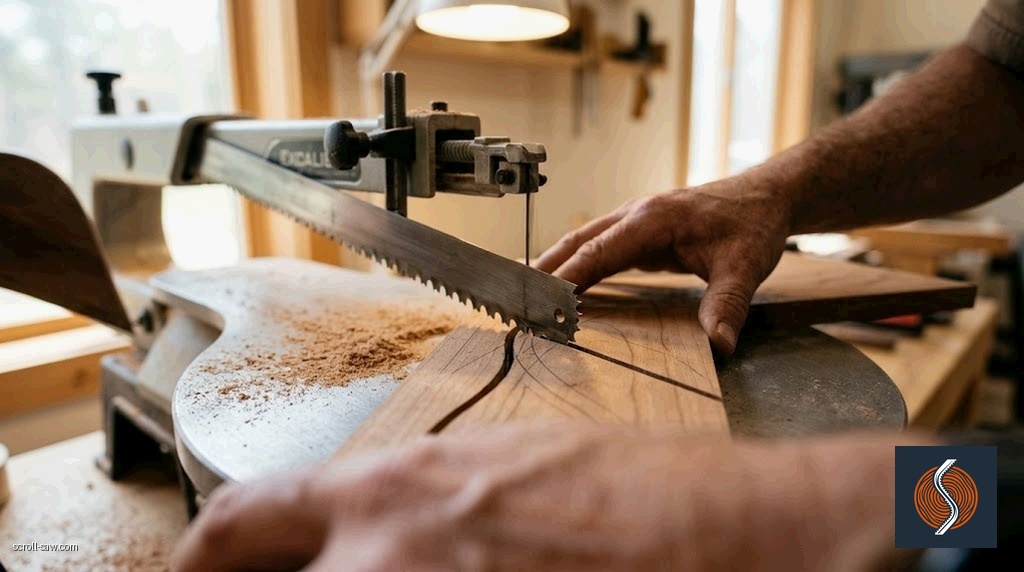
Wide Scroll Saw Blades: TPI, Kerf, Radius, and Finish
Wide blades sit at the high end of the size chart, roughly #9 through #12. They exist for a real job: cutting thick stock, doing stack cuts, and running long, gentle curves fast. If you’ve been trying to muscle a #5 through 1 inch pine, a wide blade will feel like a different tool.
Here’s what wide blades change in the cut, and where they’re the wrong choice.
What “wide” actually means
Wide scroll saw blades are simply the coarser end of the standard 5-inch blade lineup. Width, thickness, tooth spacing, and gullet size all scale up with the blade number. A #12 might be roughly twice as wide and half as many teeth per inch as a #5.
Wider blades cut faster because each tooth removes more material per stroke, and the larger gullet clears chips instead of packing them.
TPI on wide blades
At the wide end, TPI drops:
-
#9: 10 to 12 TPI
-
#11: 8 to 10 TPI
-
#12: 6 to 9 TPI
Fewer teeth per inch, bigger bites, more chip clearance. The tradeoff is a rougher finish and a much larger minimum radius.
Kerf: the width of the slot
Wide blades cut a wider kerf, roughly 0.020 to 0.030 inches on a #12 depending on brand and set. That extra kerf helps in three ways: it clears chips faster, it reduces friction and heat in thick stock, and it makes long straight-ish runs easier to steer.
The downside: wide kerf ruins inlay joints, marquetry, and any precision-fit work. If your project depends on a hairline joint, wide blades are the wrong tool.
Radius: the minimum turn
A #12 blade needs roughly a 3/8 to 1/2 inch inside radius to turn cleanly. Anything tighter and the blade twists, drifts, or binds. If your pattern has fine details along with straight runs, use a wide blade for the runs and switch to a #3 or spiral for the details.
Finish on wide blades
Rough. Wide blades leave visible tooth marks, especially in softwood. Plan on sanding after the cut, or on painting rather than staining if the edge will show.
Modified geometry wide blades leave a cleaner edge than stamped skip tooth wide blades. Worth the premium for intarsia blanks and anything that will be finished natural.
When wide blades earn their keep
Stack cutting. Multiple pieces of thin stock stacked and cut together. Wide blade goes through the whole stack fast without wandering.
Thick softwood plaques or signs. 3/4 to 1 inch pine with simple silhouettes. A wide blade cuts in a fraction of the time.
Intarsia blanks. Rough-cutting the shapes before refining with hand tools or a smaller blade for details.
Long straight-ish runs. Gentle curves in thick stock. Wide blades track straighter than fine blades.
When wide blades are the wrong call
Anything with tight turns. Anything with fine detail. Any inlay or marquetry work. Any project where the edge will show and won’t be sanded or painted.
Blades that hold up in the wide range
Pégas Modified Geometry #12 is the cleanest-cutting wide blade I’ve used. The milled teeth reduce chatter and leave an edge that finishes easily.
Olson FR49400 Skip Tooth assortment covers three sizes including the wider end, and the skip tooth pattern clears chips well in thick softwood.
Who should skip wide blades: if your projects are pattern work in 1/4 to 1/2 inch stock, a #5 covers your range. Wide blades add speed at the cost of finish and radius.
Setup for wide blades
Tension still matters. A wide blade at low tension wanders as badly as any other. Ping test.
Speed: keep it moderate. High speed on a wide blade in thick stock builds a lot of heat.
Hold-down: firm. Wide blades kick harder and lift the workpiece more.
Zero-clearance insert: helps a lot with tearout on the exit face.
The takeaway
Wide blades are the right tool for thick stock, stack cuts, and long runs. They cut fast, leave a rough edge, and turn in a wide arc. Match them to jobs that need speed and clearance, not jobs that need finish or precision.
FAQ
What is a wide scroll saw blade? The coarser end of the size lineup, roughly #9 through #12. Wider blade, wider kerf, fewer teeth per inch, faster cut.
When should I use a wide scroll saw blade? Thick stock, stack cutting, long gentle curves, and rough-cutting intarsia blanks.
What’s the biggest downside of wide blades? Minimum radius. A #12 can’t make a 3/16 inch inside turn.
Do wide blades leave a rougher edge? Yes. Plan on sanding or painting the cut edge.
Are wide blades better for hardwood or softwood? Both, in their appropriate thicknesses. Wide blades in 3/4 inch oak cut faster than a fine blade, and wide blades in 3/4 inch pine cut very fast.
Can I use a wide blade for detail work? No. Match wide blades to jobs without fine detail, or switch blades mid-pattern.
How does kerf on a wide blade affect my pattern? Wider kerf removes more material. If your pattern has thin bridges or fragile connectors, wide blades may cut through them.
References
-
Pégas Sawblades technical documentation
-
Olson Saw Company blade catalog
-
Scroll Saw Association of the World best practices


