
3D Scroll Saw Art: Compound Cutting and Segmented Work
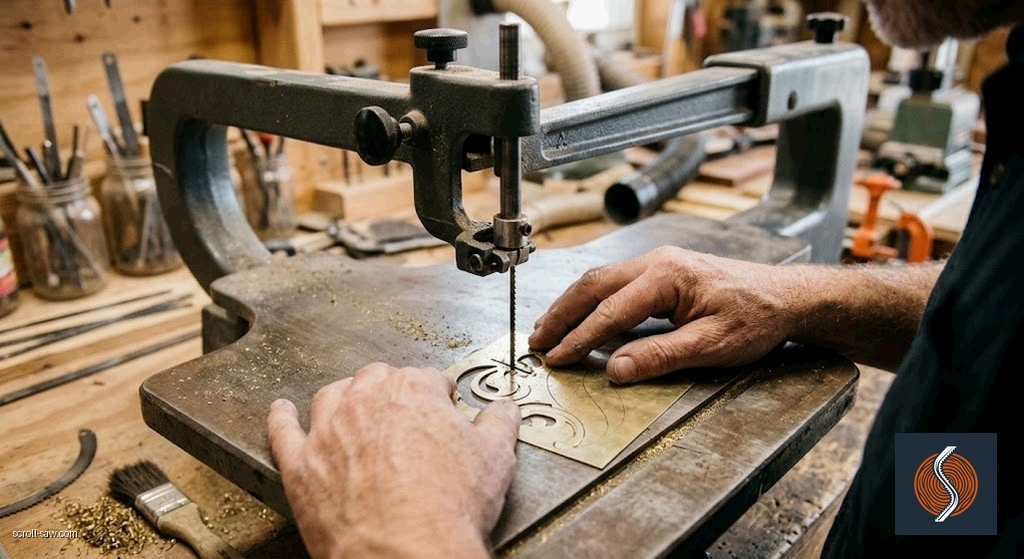
3D Scroll Saw Art: Compound Cutting and Segmented Work
Most people think of scroll saw work as flat pattern cutting — fretwork, portraits, silhouettes. Then someone shows them a compound-cut horse or a segmented Christmas tree carved entirely on a scroll saw, and the whole idea of what a scroll saw can do shifts.
3D scroll saw art is real. It takes patience, the right blades, and a shift in how you think about pattern layout. Here’s what actually works.
Two main approaches
Compound cutting starts with a rectangular block of wood. You attach two patterns to adjacent faces (front and side), then cut one pattern completely through. The waste falls away; you retape it back on and cut the second pattern from the other face. When you’re done, the intersection of the two cuts is a 3D silhouette.
Segmented / stacked work uses thin layers of wood cut individually and stacked to create depth, like a topographic map turned into a sculpture. Christmas trees, layered landscapes, and dimensional wall art use this method.
Both start with a scroll saw and end with something that reads as sculpture.
Blades for compound cutting
Compound cutting demands blades that cut clean bottom faces because both sides of the block will show. Reverse tooth or ultra reverse is essential.
Block stock is often 2 to 4 inches thick, which pushes the blade sizing up:
-
2 inch stock: #7 or #9 reverse tooth
-
3 inch stock: #9 or #12 reverse tooth
-
4 inch stock: #12 skip tooth (finish will need cleanup)
Good picks:
Flying Dutchman Ultra Reverse #3 for thinner compound blocks in the 1 to 2 inch range.
Pégas Modified Geometry #12 for thick blocks where cut speed matters.
Flying Dutchman variety pack if you want to try multiple sizes before committing.
Blades for segmented work
Segmented work uses thin stock (1/8 to 1/2 inch) cut with fine pattern-work blades. Reverse tooth #3 to #5 is the standard.
Multiple identical layers can be stack-cut. Tape or brad-nail the layers together, then cut through the whole stack with a slightly larger blade. Saves hours on Christmas tree ornaments and layered landscapes.
Compound cutting technique
-
Print or trace two patterns for adjacent faces. Front-view and side-view of the same subject.
-
Attach the front pattern to one face of the block. Attach the side pattern to the adjacent face.
-
Cut the front pattern completely through. The waste (front pattern’s negative space) falls off.
-
Reattach the waste back to the block with painter’s tape. This restores the block to a full rectangle.
-
Cut the side pattern completely through. When you remove the tape, the finished 3D piece is inside.
-
Sand and finish.
The trick to compound cutting: the two patterns must be sized correctly relative to each other and the block. Follow published compound-cut patterns until you understand the geometry, then design your own.
Segmented technique
-
Design or find a pattern with multiple layers, each layer smaller or shaped differently than the one below.
-
Cut each layer from thin stock.
-
Sand each layer smooth.
-
Stack and glue in sequence, sometimes with color contrast between layers.
-
Finish the whole assembly.
The artistry is in the layering choices. A Christmas tree might have 5 or 6 layers, each rotated slightly to catch light differently.
Wood choice
Compound cutting wants clear, straight-grained hardwood. Cherry, walnut, and maple all work. Avoid knotty stock — a knot will destroy the cut.
Segmented work is more forgiving. Any stable, flat stock in 1/8 to 1/2 inch thickness works. Contrast species (walnut and maple stacked) create striking layered pieces.
Where 3D scroll saw work shines
Gift pieces, holiday ornaments, wildlife sculptures, custom keepsakes. The finished pieces have a hand-carved quality without the years of carving practice.
Where it’s frustrating
Compound cutting with poor blade choice or thin blades in thick stock leaves burned, wavy cuts that need too much cleanup. Match the blade to the block thickness. Segmented work with bad layer alignment reads as sloppy — take the time to sand and align.
The takeaway
3D scroll saw art is a legitimate sculptural technique. Compound cutting for solid figures, segmented for dimensional landscapes and ornaments. Match blades to stock thickness, use reverse tooth for clean bottom faces, and be patient with the geometry.
FAQ
What is compound cutting? Cutting two patterns from adjacent faces of a block so the intersection creates a 3D silhouette.
Can I do compound cutting with any scroll saw? Any saw with enough throat depth for the block. The DW788 and comparable saws handle 2 to 3 inch blocks comfortably.
What’s the best blade for compound cutting? Reverse tooth or ultra reverse in the size range matched to the block thickness. #7 to #12 depending on stock.
How is segmented work different from marquetry? Segmented stacks layers to create depth. Marquetry inlays veneers into a flat surface for image contrast.
Do I need special patterns for 3D work? Compound-cut patterns are a specific format. Segmented patterns can be adapted from any layered design.
Can I stack cut for segmented work? Yes. Tape or brad-nail multiple thin layers, cut through the stack with a slightly larger blade.
What wood is best for 3D scroll saw art? Cherry, walnut, and maple for compound cutting. Baltic birch or contrasting hardwoods for segmented work.
References
-
Scroll Saw Association of the World compound-cutting patterns
-
Steve Good scroll saw patterns catalog
-
Pégas Sawblades technical documentation


