
Antique Treadle Scroll Saw: History and Practical Use
Antique Treadle Scroll Saw: History and Practical Use
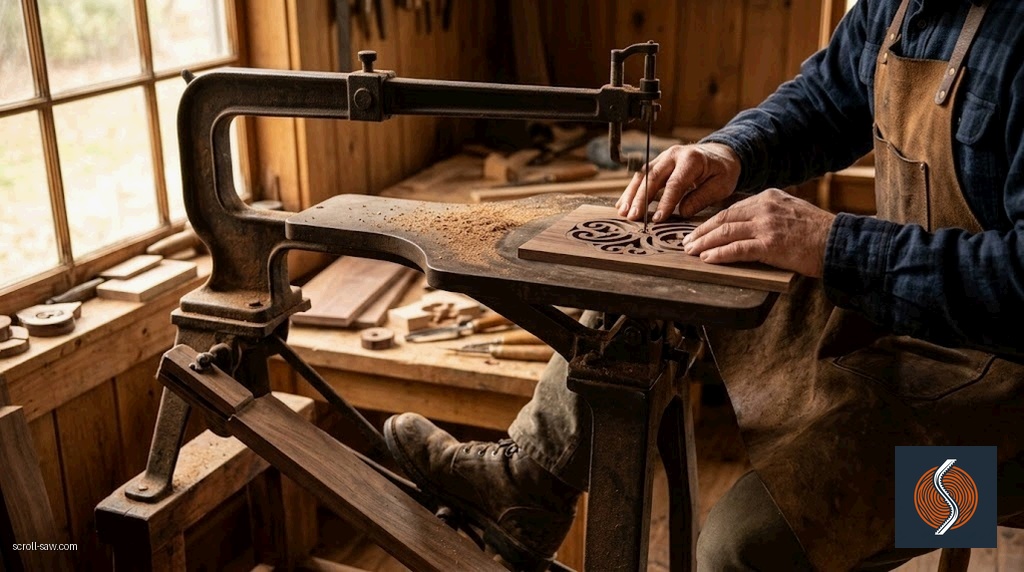
A treadle scroll saw is a scroll saw powered by a foot pedal instead of an electric motor. The operator rocks the treadle rhythmically, and a linkage converts that motion to the reciprocating blade action at the top of the saw. Every stroke is your foot’s stroke; the saw goes as fast or as slow as you pedal.
Treadle scroll saws were common in home shops and small commercial shops from roughly 1870 to 1930, before affordable electric motors made them obsolete. Today they’re antiques — sometimes restored, sometimes decorative, occasionally still cutting wood.
What they are
A classic treadle scroll saw has:
-
A cast iron frame, often ornate with Victorian design elements
-
A large flywheel that stores momentum between treadle strokes
-
A wooden or cast iron table
-
A top arm with a spring return for the blade
-
A pin-end blade clamp system
-
A treadle at floor level connected by a rod or belt to the flywheel
Major makers included Barnes, Millers Falls, New Rogers, Delta (early years), and various smaller American and European brands.
Why anyone still uses one
Historical interest. Restored treadle saws are beautiful objects and connect the user to woodworking traditions.
No electricity required. Off-grid workshops or historical demonstration settings.
Quiet operation. No motor noise, just the rhythmic clack of the mechanism.
Complete control. Blade speed exactly matches your treadle rhythm. Precision cuts feel different than motor-driven work.
Meditative pace. The treadle enforces a rhythm that many owners find satisfying.
What they’re not good for
Production cutting. Long stack cuts. Fast pattern work. Anything where consistent high speed matters.
A treadle scroll saw is a craft tool for people who enjoy the process. For serious pattern-work output, use a modern electric scroll saw.
Restoration basics
Frame cleaning. Wire brush surface rust, treat with rust converter, prime and paint (or clear coat if preserving patina).
Flywheel. Inspect for cracks. Remove and clean bearings. Lubricate with modern machine oil.
Arm mechanism. Disassemble carefully, clean each component, replace worn pivots or bushings.
Blade clamp system. Often the most worn part. Rebuild or source replacement clamp bodies from vintage tool communities.
Treadle linkage. Inspect the connecting rod for wear. Replace bushings and pivot pins as needed.
Table. If wooden, refinish. If cast iron, clean and wax.
Spring. The top arm’s return spring may have weakened over the decades. Replace if the blade doesn’t return smartly on the upstroke.
Blades for treadle saws
Most treadle scroll saws use pin-end 5-inch blades. Standard modern pin-end blades fit.
FOXBC pin-end 48-pack fits most treadle scroll saws.
Delta #7 Super Sharps for hardwood.
Some very old treadle saws use pin-end blades in a longer format (up to 6 inches). Verify blade length before ordering.
Setup for cutting
-
Mount the saw firmly to the floor or a heavy base. A treadle saw that rocks with the treadle is unusable.
-
Install a blade, teeth down and forward.
-
Tension the blade via the spring mechanism. Pluck the blade; it should ring.
-
Test the treadle motion at slow rhythm to confirm the mechanism runs smoothly.
-
Begin cutting with steady rhythmic treadle strokes. Let the momentum of the flywheel carry the blade between strokes.
Where treadle saws shine as tools
Detailed fretwork where you want deliberate slow cuts. Small delicate projects. Demonstration and teaching. Historical accuracy for period furniture reproduction.
Where they don’t
Anything requiring hours of continuous cutting. Your legs give out before the wood is done.
Modern alternatives
If you love the treadle aesthetic but want practical daily use, consider a modern scroll saw with variable speed set very low, which gives you meditative slow cutting with modern conveniences.
DeWalt DW788 with variable speed runs at very low SPM for a similar deliberate feel.
Who should skip a treadle saw: anyone who wants to cut a lot of wood. Treadle saws are for slow deliberate craft, not production.
The takeaway
Antique treadle scroll saws are beautiful historical machines that still cut wood. They demand restoration effort, treadle discipline, and a tolerance for slow output. For the right owner, they’re deeply satisfying. For output-focused work, a modern electric saw is the honest tool.
FAQ
What is a treadle scroll saw? A scroll saw powered by a foot pedal (treadle) instead of an electric motor.
When were treadle scroll saws common? Roughly 1870 to 1930, before affordable electric motors displaced them.
Can I still buy a new treadle scroll saw? Essentially no. Vintage saws are the only source.
Are treadle scroll saws practical for modern woodworking? For slow deliberate craft, yes. For production, no.
What blades fit a treadle scroll saw? Most use pin-end 5-inch blades. Some older ones use longer pin-end blades. Verify before ordering.
How do I find a treadle scroll saw to buy? Antique tool auctions, estate sales, vintage tool forums, and occasionally on eBay.
Is it hard to restore a treadle scroll saw? Mechanically straightforward. Time-intensive due to cleaning, painting, and sourcing worn parts.
References
-
OWWM vintage tool community archives
-
Historical scroll saw documentation from Barnes, Millers Falls, and Delta
-
Modern scroll saw operating principles


