
Big Book of Scroll Saw: What
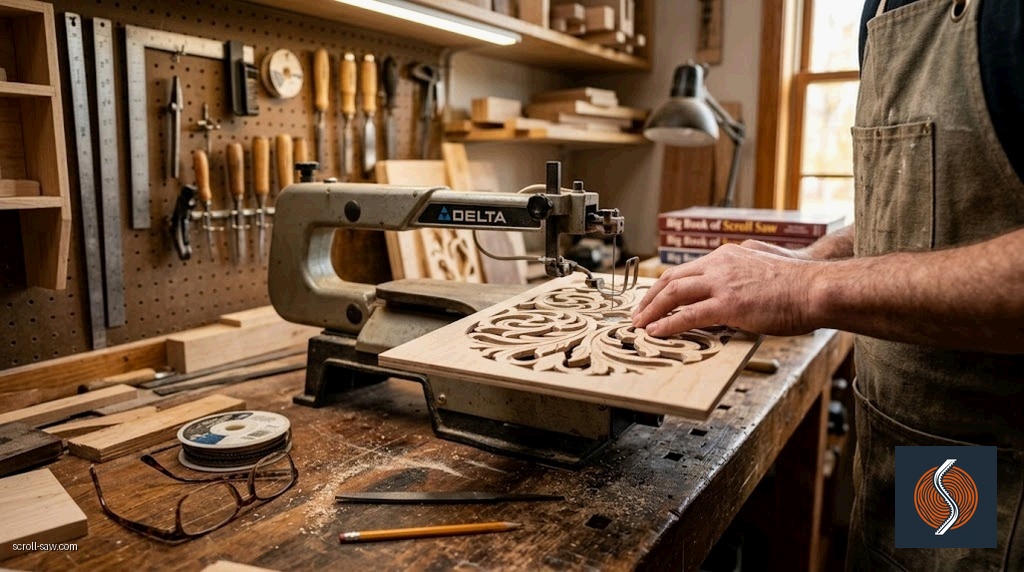
Big Book of Scroll Saw: What
Every scroll saw enthusiast eventually accumulates a shelf of pattern books, and the “big book of” scroll saw genre — anthology books collecting dozens or hundreds of patterns — sits at the center of that collection. Some are genuinely useful references. Some are pattern padding sold by weight.
Here’s the honest read on scroll saw pattern books and what belongs on your shelf.
What makes a scroll saw book worth owning
Diverse pattern range. Not just holiday ornaments or just animals. A good book covers multiple project types and difficulty levels.
Good pattern quality. Clean line work, appropriate scale for typical stock, and clear indication of interior cuts vs outer profile.
Technique instruction alongside patterns. Books that teach you something about blade selection, wood choice, or finishing along with providing patterns.
Reference value beyond one-time use. A book you’ll open again in five years, not one you’ll strip-mine for patterns and shelve.
Real author expertise. Scroll saw books by working scrollers (Steve Good, Rick and Karen Longabaugh, Judy Gale Roberts) have depth. Anonymous or ghostwritten books often don’t.
Categories to consider
General pattern anthologies. Broadest use, most patterns per dollar. Look for authors with reputations.
Technique-specific books. Intarsia, compound cutting, portrait, fretwork. If you’re focused on one technique, deep-dive books are better than anthology entries.
Beginner introduction books. Combine basic technique instruction with starter patterns. Good first purchase.
Historical fretwork and Victorian patterns. Classic designs with real design value. Longer shelf life than trend-driven books.
Seasonal/holiday pattern books. Useful if you make holiday ornaments regularly; forgettable otherwise.
What to skip
Books with patterns clearly repurposed from other sources. Books padded with 200 near-identical silhouettes. Trendy books that will look dated in three years.
Authors and publishers worth trusting
Steve Good’s pattern archives (many available free online at his site). Rick and Karen Longabaugh (extensive published pattern catalog). Judy Gale Roberts (intarsia authority). Fox Chapel Publishing (a major woodworking-book publisher with quality control).
Blades to have when working from a book
A good starter blade shelf that handles most book-pattern projects:
Flying Dutchman 60-piece variety pack covers the range of blade styles you’ll encounter across most patterns.
Flying Dutchman Ultra Reverse #3 is the everyday pattern-work blade.
Pégas Modified Geometry for thick hardwood pattern projects.
Flying Dutchman New Spiral #1 for interior cuts that pivot in place.
Saws that handle book-pattern projects
Most published patterns work on any capable scroll saw. Practical picks:
WEN 3922 16-inch for entry-level work through medium patterns.
DeWalt DW788 20-inch with DW7881 work light for serious pattern work across the full range.
How to actually use a scroll saw book
-
Read the introduction and technique sections before jumping to patterns.
-
Photocopy or scan patterns rather than cutting from the book directly.
-
Trace or transfer patterns to the workpiece using carbon paper, spray adhesive, or transfer methods.
-
Match blade selection to the pattern’s finest interior cuts and thickest stock.
-
Adjust scale if needed; some book patterns are printed to fit a page rather than to a working scale.
The takeaway
A good scroll saw pattern book covers diverse projects, teaches technique alongside patterns, and comes from a trusted author or publisher. Steve Good, Longabaugh, and Fox Chapel Publishing are reliable names. Skip anthology padding and trendy books with short shelf life.
FAQ
What’s the best scroll saw pattern book for beginners? Beginner-focused books with technique instruction alongside patterns. Fox Chapel Publishing has several in this category.
Are Steve Good’s patterns free? Many are available free on his site. Some are collected in paid pattern books.
Do I need multiple pattern books? One good general anthology plus one technique-specific book (intarsia, compound cutting, portrait) covers most needs for years.
Can I sell projects made from published patterns? Depends on the book’s license terms. Many patterns allow personal and small-scale sale; verify the specific book.
How do I transfer a pattern from a book to wood? Carbon paper, spray adhesive on a photocopy, or graphite transfer methods. Photocopy first, don’t cut from the book.
What size stock do most pattern books assume? Usually 1/4 to 1/2 inch. Check the pattern’s instructions for recommended thickness.
Are old pattern books still useful? Often yes. Classic fretwork and Victorian patterns from decades-old books remain excellent designs.
References
-
Fox Chapel Publishing scroll saw catalog
-
Steve Good pattern archive
-
Rick and Karen Longabaugh pattern documentation


