
Can You Cut Plexiglass With a Scroll Saw? Yes, Cleanly
Can You Cut Plexiglass With a Scroll Saw? Yes, Cleanly
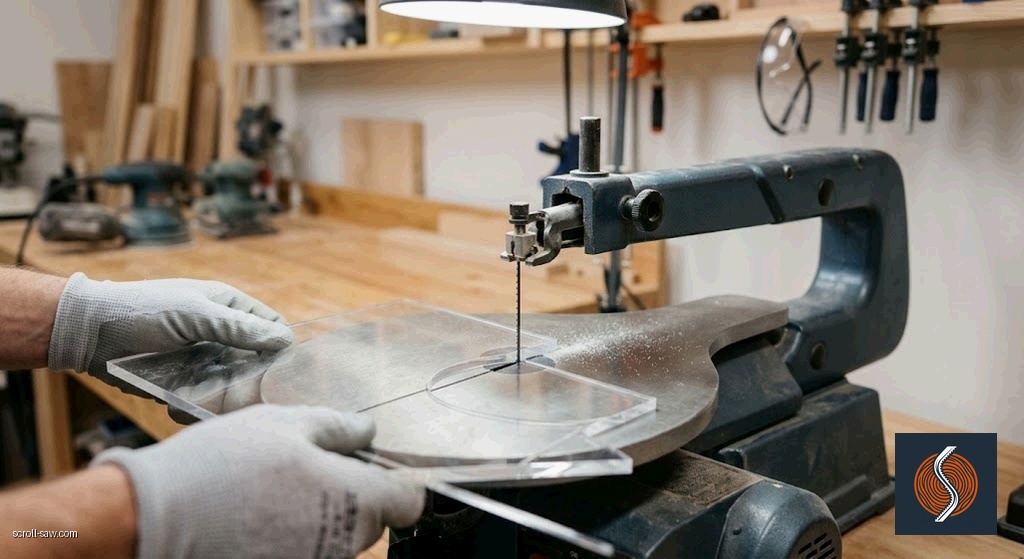
Plexiglass (acrylic) is one of the materials scroll saws handle surprisingly well when you get the setup right. The wrong blade turns the material into a cracked, melted mess. The right blade produces clean pattern cuts with edges that need almost no finishing.
Here’s how to actually do it.
What plexiglass wants from a scroll saw
Plexiglass is a thermoplastic. Under heat, it melts and re-fuses in the kerf, gumming up the blade and ruining the cut. Any blade running too fast or dwelling in one spot generates enough heat to cause melting.
The goals of good plexiglass cutting:
-
Keep the blade cool
-
Clear chips quickly
-
Maintain steady continuous feed
-
Prevent the sheet from vibrating (which causes cracking)
The right blade
For plexiglass, look for:
-
Fine to medium TPI (15 to 20)
-
Skip tooth pattern for chip clearance
-
Some scroll saw blade lines specifically marketed for plastic
Good picks:
Olson FR49400 Skip Tooth in medium sizes (#5 to #7) cuts plexiglass cleanly at slow speed.
Pégas Regular Scroll 25 TPI for thin plexiglass detail work.
Flying Dutchman variety pack lets you test which blade in your setup works best.
Wood-cutting reverse tooth blades often work poorly on plexiglass because the reverse teeth heat the plastic and cause melting.
Setup
-
Install a skip tooth or plastic-appropriate blade.
-
Tension firmly and ping to verify.
-
Set the slowest variable speed setting (400 to 800 SPM). Slow speed prevents melting.
-
Apply masking tape to both faces of the plexiglass along the cut line. Reduces chipping and gives you a surface to draw the pattern on.
-
Use firm hold-down pressure to prevent vibration.
-
Feed continuously and slowly. Don’t pause.
What ruins plexiglass cuts
Cutting too fast. High feed + high speed melts the plastic.
Pausing on the cut. Heat builds up at the pause point and melts the plastic to the blade.
Sharp cornering without slowing. Cracks propagate from stress points.
Wrong blade. Reverse tooth blades often cause melting.
Under-tension. Vibrating blade causes cracked cuts.
Cracks starting at drill holes. For interior cuts, drill starter holes at very slow speed with a sharp bit; don’t force the drill.
Thickness considerations
1/16 to 1/8 inch plexiglass. Cuts cleanly with fine blades at slow speed. Ideal for scroll saw work.
1/4 inch plexiglass. Cuttable but slower. Requires patience and steady feed.
3/8 to 1/2 inch plexiglass. Marginal on a scroll saw. Cuttable but heat management becomes difficult.
Thicker than 1/2 inch. Use a bandsaw with a fine-tooth blade or a proper plastic-cutting saw.
After the cut
Plexiglass edges from a scroll saw are usually clean enough for most uses. For a polished edge:
-
Sand progressively with 220, 400, 600, 1000 grit wet-or-dry paper.
-
Buff with plastic polish or automotive polishing compound.
-
Some plexiglass edges can be flame-polished with a small torch for a clear glass-like finish (advanced technique, practice on scrap first).
Applications
Plexiglass scroll saw work is common for:
-
Signs and displays
-
Custom picture frames
-
Model building parts
-
Light diffusers and lamp components
-
Craft projects with a modern aesthetic
Saw picks
Any scroll saw with variable speed low enough for plexiglass:
WEN 3922 variable speed range covers plexiglass work.
DeWalt DW788 with wide variable speed range handles plexiglass and other plastics well.
Who should use a different tool: for bulk plexiglass cutting, a laser cutter or CNC router produces cleaner edges faster. For occasional pattern cuts, a scroll saw is honest.
The takeaway
A scroll saw cuts plexiglass well with a skip tooth blade, slow speed, firm hold-down, and continuous steady feed. Tape the surface to prevent chipping. Keep the blade cool with slow feed. For thick plexiglass or bulk cutting, use a different tool.
FAQ
Can a scroll saw cut plexiglass? Yes, cleanly, with the right blade and slow speed.
What blade for plexiglass on a scroll saw? Skip tooth in medium sizes (#5 to #7), or fine blades for detail. Avoid reverse tooth.
Why does my plexiglass melt when I cut it? Too much speed or too aggressive feed. Slow down both.
Should I tape plexiglass before cutting? Yes. Masking tape on both faces reduces chipping.
How thick plexiglass can a scroll saw cut? Up to 1/2 inch is workable. Thicker material needs a bandsaw or plastic-cutting saw.
Do I need to lubricate plexiglass cuts? Not required. Slow feed prevents heat buildup on its own.
How do I get a clean edge on plexiglass? Sand progressively fine, then buff with plastic polish. Flame polishing gives a glass-like finish (advanced).
References
-
Plexiglass / acrylic cutting guides from major suppliers
-
Flying Dutchman / Mike’s Workshop material compatibility
-
Pégas Sawblades plastic cutting guidance


