
Detroit Electric Scroll Saw: Vintage Machine Guide
Detroit Electric Scroll Saw: Vintage Machine Guide
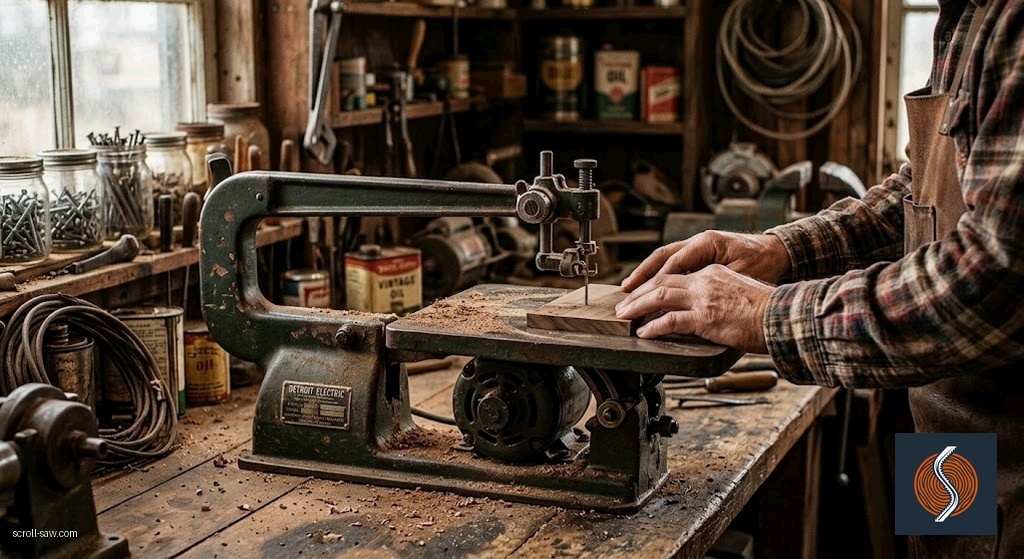
Detroit Electric was one of many mid-20th century American brands that produced benchtop woodworking tools including scroll saws. These machines show up in estate sales, garage sales, and vintage tool auctions. If you have one or you’re considering buying, here’s the honest guide.
What Detroit Electric scroll saws typically are
Mid-century American benchtop tools, generally:
-
Cast-iron or heavy-steel base for a benchtop machine
-
Small to medium throat depth (12 to 16 inches was common)
-
Pin-end blade format
-
Single speed operation
-
Modest fractional HP motor
-
Solid vintage construction that has often outlasted the manufacturer
Many Detroit Electric scroll saws are still functional decades after production because the mechanical simplicity holds up well.
Identification
Check the nameplate for a specific model number and date if legible. Detroit Electric produced various models over its history.
Photographs help identify the specific vintage. Vintage tool communities can often confirm identification from a nameplate image.
The vintage appeal
Simplicity. Mechanical design without electronic complications. Every part is diagnosable and often repairable.
Solid construction. Cast components and heavier weight than modern entry-level saws.
Low cost of entry. Vintage Detroit Electric scroll saws at estate sales are often very affordable.
Character. A working vintage tool has appeal beyond pure function.
The vintage frustrations
No manufacturer support. Detroit Electric hasn’t produced tools in decades. All parts come from donor machines, universal hardware, or fabrication.
Pin-end blade format only. Limits blade selection compared to modern pinless machines. Aftermarket adapters exist but affect squareness.
Single speed. Modern variable speed lets you tune blade rate to material. Single speed is a compromise.
Vibration and noise. Vintage machines often vibrate more than modern designs. Livable but noticeable.
Missing safety features. Modern blade guards and hold-downs may not be present. Add aftermarket where possible.
Parts sourcing
Universal hardware. Blade clamp screws (M4 or M5), belts, brushes, cords, switches. Available at any hardware or industrial supply retailer.
Vintage tool communities. Old Woodworking Machines forum and similar sites sometimes have members with donor parts or documentation.
eBay and estate sales. Occasionally have complete parts or working donor machines at reasonable prices.
Fabrication. Small parts (brackets, springs, custom clamp components) can be shop-made with basic skills.
Blades for Detroit Electric
Most Detroit Electric scroll saws use pin-end 5-inch blades.
FOXBC pin-end 48-pack is the honest working blade for pin-end vintage saws.
Delta #7 Super Sharps for hardwood work.
For pinless conversion with an aftermarket adapter, premium blades open up:
Flying Dutchman Ultra Reverse #3.
Setup for a vintage Detroit Electric
-
Inspect the electrical system. Old cords and switches are common failure points and safety hazards. Replace if in doubt.
-
Clean the mechanism. Decades of accumulated wood dust and grease need to come out.
-
Check the blade clamps for wear. Damaged clamps affect tension and squareness.
-
Bolt the saw to a heavy bench. Vintage saws especially benefit from stable mounting.
-
Test the motor briefly before installing a blade. Listen for unusual sounds.
-
Install a fresh pin-end blade with teeth down and forward.
-
Tension per the mechanism (some vintage designs use different tensioning than modern saws).
-
Test cut on scrap.
When to keep vs replace
Keep: if you value vintage character, do occasional craft cutting, and are comfortable with occasional repair. A working Detroit Electric is a nice conversation piece and functional tool.
Replace: if you want fine detail work, variable speed, premium blade compatibility, or modern reliability. Modern entry-level saws exceed vintage capability at reasonable prices.
Modern alternatives
WEN 3922 16-inch variable speed is a modern entry-level saw with capabilities beyond vintage Detroit Electric.
DeWalt DW788 20-inch is the near-professional standard for serious work.
Add DW7880 stand and DW7881 work light for a full setup.
Who should keep the Detroit Electric: vintage tool enthusiasts, casual craft cutters who value the mechanical simplicity, or hobbyists who enjoy tool restoration.
Safety considerations
Old electrical components are the biggest safety concern. Replace worn cords and switches. Add a GFCI outlet in the shop for extra protection.
Blade guards may be absent or damaged. Reproduce or purchase aftermarket where possible.
Eye protection when cutting. Vintage saws don’t have modern blade guards.
The takeaway
Detroit Electric scroll saws are vintage American benchtop tools with solid mechanical simplicity and no manufacturer support. Fine for occasional craft cutting if you’re comfortable with vintage tool maintenance. For serious pattern work, modern saws (WEN 3922, DeWalt DW788) exceed vintage capability at reasonable prices.
FAQ
Are Detroit Electric scroll saws still made? No. Detroit Electric hasn’t produced tools in decades.
Where can I get Detroit Electric parts? Vintage tool communities, eBay, estate sales, or universal hardware for wear items.
What blades fit a Detroit Electric scroll saw? Most use pin-end 5-inch blades.
Is a Detroit Electric worth restoring? Simple repairs (blades, wiring, cleaning): yes. Extensive part hunting: depends on how much you value the vintage character.
Can I convert a Detroit Electric to pinless? With an aftermarket adapter, yes. Some loss of squareness.
Is it safe to use a vintage Detroit Electric? With wiring inspected and updated, yes. Old electrical components are the primary safety concern.
What’s a modern alternative to a Detroit Electric? WEN 3922 for entry-level, DeWalt DW788 for serious pattern work.
References
-
Old Woodworking Machines forum
-
Vintage tool identification resources
-
WEN and DeWalt scroll saw specifications


