
DIY Scroll Saw: Realistic Options and Alternatives
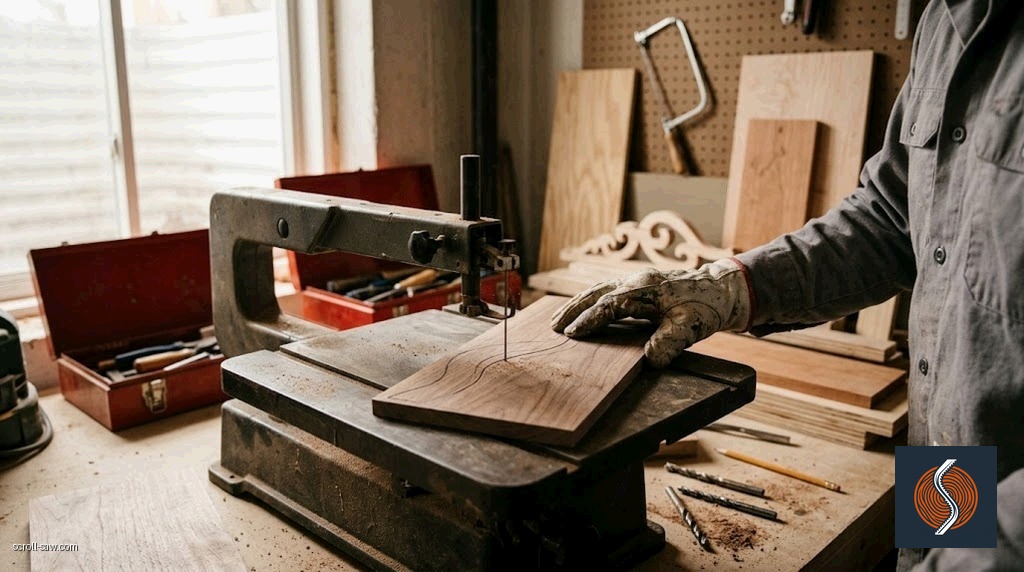
DIY Scroll Saw: Realistic Options and Alternatives
Building a scroll saw from scratch is a classic DIY tool project. The appeal is real: custom design tailored to your shop, engineering learning, potentially saving money. The reality is more nuanced. Here’s the honest guide.
What DIY scroll saw options look like
Full ground-up build. Design and fabricate a frame, drive mechanism, tension system, and clamp assembly from scratch. Real engineering project, weeks to months of work.
Jigsaw-under-table conversion. Mount a handheld jigsaw upside down under a table. Simple, cheap, limited to rough curve cutting.
Kit build. Purchase plans or a partial kit and complete the build yourself. Middle ground.
Restoration of a vintage saw. Not strictly DIY building, but similar in spirit — rebuild a vintage machine with new parts.
Sewing machine conversion. Historical DIY approach using a repurposed sewing machine mechanism.
What each produces
Ground-up build: Depends entirely on execution. Can match commercial entry-level saws with careful engineering; usually doesn’t.
Jigsaw conversion: Rough curve cutting in wood and thin plastic. Not fine pattern work.
Kit build: Better outcomes than winging it. Weeks of work.
Vintage restoration: Often produces excellent working saws with real character.
Sewing machine conversion: Interesting historical project, rarely practical for real cutting.
The economics
A modern entry-level commercial scroll saw is often cheaper than the parts alone for a DIY build.
Count the cost of:
-
Motor (with variable speed control)
-
Frame steel or heavy stock
-
Linkage components and bearings
-
Blade clamp hardware
-
Table material and finishing
-
Table hole finishing
-
Tension mechanism
-
Switch and wiring
-
Consumables during build (drill bits, welding rod, etc.)
Add time value at even a modest labor rate, and DIY loses on pure economics compared to buying commercial.
When DIY makes sense
Learning objective. Understanding mechanical engineering by building a functional machine.
Extreme customization. Requirements no commercial saw meets: unusual throat depth, unusual power source, special table configuration.
Historical replication. Building a treadle scroll saw as period-accurate reproduction.
Off-grid or remote context. Commercial tools not available.
Restoration. Rebuilding a vintage saw you already own or acquired inexpensively.
When commercial makes sense
Production use. You need a working saw immediately for real projects.
Reliability requirements. Consistent performance over years without troubleshooting.
Time efficiency. Commercial is ready out of the box; DIY is weeks of work.
Fine detail requirements. Commercial saws generally handle fine pattern work better than DIY due to vibration control and precision.
Warranty and support. Commercial saws come with warranties and parts support.
Recommended commercial alternatives
WEN 3922 16-inch variable speed is a real scroll saw at entry-level pricing. Often cheaper than DIY parts alone.
WEN 3923 with two-direction blade capability at mid-tier.
DeWalt DW788 20-inch at near-professional. Add DW7880 stand and DW7881 work light.
Blades: Flying Dutchman variety pack, Flying Dutchman Ultra Reverse #3, Olson FR49202 Reverse Tooth, Pégas Modified Geometry.
For those committed to DIY
Start with clear plans from experienced builders. Ground-up designs published by makers who’ve completed the project are better starting points than winging it.
Invest in the frame. Vibration control comes from frame rigidity and mass.
Use a real motor with variable speed control. Underpowered or inconsistent motors doom the project.
Source commercial blade clamps if possible. Fabricated clamps are the hardest part to get right.
Plan for iteration. Your first build will teach you what your second build needs.
The compromise: modify commercial
Buy a commercial saw and customize it for your specific capabilities:
-
Add aftermarket dust collection below the table
-
Install a Pégas quick-release chuck
-
Fabricate a custom stand with height and pitch adjustment
-
Add a work light for pattern visibility
-
Build a custom table extension for large workpieces
Commercial + custom modifications delivers the best of both worlds at less total effort.
The takeaway
DIY scroll saw building is real engineering work rarely more economical than buying commercial. Makes sense for learning, extreme customization, or historical replication. For practical scroll saw work, buy a commercial entry-level saw (WEN 3922) and add modifications if needed.
FAQ
Can I build a scroll saw myself? Yes, but it’s real engineering work. Usually more expensive and time-consuming than commercial.
Is DIY cheaper than buying? Usually not, once you count parts and time.
What plans are available for DIY scroll saws? Maker community sites and vintage tool books have plans. Quality varies.
Can DIY match commercial quality? Rarely, without significant engineering experience.
Should I convert a jigsaw to a scroll saw? Only for rough curve cutting. Not a scroll saw substitute for pattern work.
What if I already have a broken vintage scroll saw? Restoration is often practical. Combines DIY satisfaction with commercial engineering quality.
What’s the best commercial alternative to DIY? WEN 3922 at entry-level; DeWalt DW788 for serious work.
References
-
Maker community DIY tool projects
-
Vintage tool restoration resources
-
WEN and DeWalt scroll saw specifications


