
Scroll Saw Portraits: A Project Plan That Anticipates Fragile Cuts
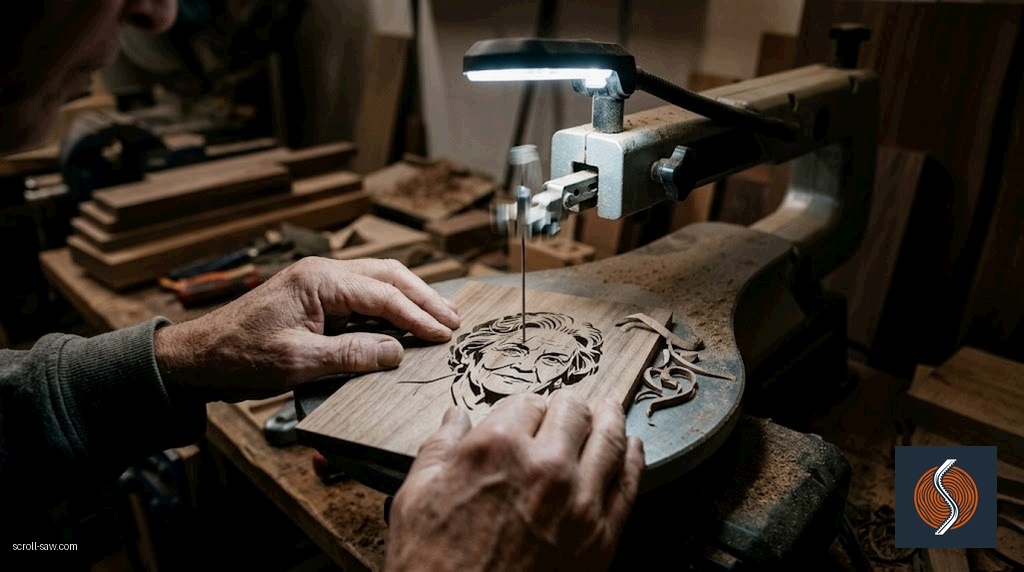
Scroll Saw Portraits: A Project Plan That Anticipates Fragile Cuts
Scroll saw portraits are the signature achievement of many hobbyists. A pierced portrait of a family member, a beloved pet, or a public figure carries a visual weight that no other scroll saw project matches. The finished piece, mounted on a contrasting backer and hung on a wall, reads as the intended subject in wooden form and often becomes the piece that visitors ask about first.
What makes portrait work harder than any other scroll saw project: the density of fine pierced detail. A moderately-detailed portrait contains 150 to 300 pierced areas. Each pierce needs an entry hole, a controlled cutting path, and a clean release. Each pierce is also fragile enough that dulled blades, workpiece flex, or too-fast feed rate can shear off a detail and ruin the portrait.
Where scroll saw portraits typically fail
Common failure points on portraits, ranked by frequency:
-
Fine pierced detail near facial features (eyelashes, hair strands, subtle shading pierces). Densest concentration of small pierces on the pattern.
-
Outer perimeter chipping where the portrait’s edge follows a subtle curve. Cut too fast, blade tears.
-
Missed entry holes on small pierces read as solid rather than as pierced.
-
Workpiece flex during long cutting sessions causes pierces to shear.
-
Blade dulling mid-cut without swap causes tearing of subsequent pierces.
Anticipating fragile cuts in the pattern review
Before starting to cut:
-
Highlight every pierced area smaller than 1/16 inch on the pattern. These are the highest-risk sections.
-
Verify every closed pierce has a marked entry hole location.
-
Estimate total pierced area count. Portraits with over 300 pierces need at least a week of scheduled cutting sessions rather than an all-at-once attempt.
-
Plan cutting sessions of 2 to 3 hours max. Long sessions cause both blade dulling and cutter fatigue that lead to mistakes.
Wood choice
Quarter to 1/2 inch quartersawn cherry for warm oiled portraits. Cherry ages to a warm amber that reads well as a face’s warm tone.
Quarter to 1/2 inch walnut for formal or dark-tone portraits. Walnut reads dramatic against a pale backer.
Quarter to 1/2 inch maple for pale portraits mounted against a dark backer.
Avoid pine (grain fights fine pierced detail) and thin plywood (edge chipping ruins the outer perimeter).
Blade choice
A #5 skip-tooth blade for outer portrait perimeter cuts.
A #3 reverse-tooth blade for the majority of pierced portrait detail.
A #1 blade for the finest detail (individual eyelashes, hair strands, subtle facial shading pierces).
A #2/0 blade for the very finest detail on heirloom-grade portraits.
Blade budget: stock 30 to 50 blades for a moderately-detailed portrait. Change blades every 30 to 60 minutes of active cutting or whenever any tearing or scorching appears.
Cut sequence anticipating fragile spots
-
Sand both faces of the panel to 220 grit.
-
Apply the pattern with painter’s tape and light spray adhesive.
-
Drill every entry hole in one dedicated session (typically 1 to 2 hours for a moderately-detailed portrait).
-
Cut smallest pierces first: the eyelash and hair strand pierces near facial features.
-
Cut medium pierces: facial shading and hair mass pierces.
-
Cut largest pierces: broad shadow and background pierces.
-
Cut the outer portrait perimeter last with a slow feed rate to prevent edge chipping.
-
Peel the pattern paper carefully after all cutting is complete.
Where scroll saw portraits fail (and how to prevent)
Fine pierced detail shears off during cutting. Prevention: Fresh blade for every fine detail session. Firm workpiece support (workpiece rests flat on the scroll saw table with fingers positioned to prevent flex). Slow feed rate through fine pierces (5 to 10 seconds per pierce, not the speed used on outlines).
Outer perimeter chips. Prevention: Fresh #5 skip-tooth blade for the final outer perimeter cut. Slow feed rate. Follow the curve rather than forcing the blade through.
Missed entry holes. Prevention: Drill every entry hole in one session before starting to cut. Check the pattern for any pierce without a corresponding entry hole. Drill missed holes before starting cutting.
Workpiece flex during long sessions. Prevention: 2 to 3 hour cutting sessions max. Reposition hands frequently to prevent workpiece from tilting under pressure.
Blade dulling mid-cut. Prevention: Change blades every 30 to 60 minutes of active cutting. Swap immediately if any tearing appears.
Fixing broken sections after cutting
On a portrait with 200+ pierces, some detail may break during cutting or handling. Options:
-
Save the broken detail. Glue back with a small drop of Titebond II wood glue. Cure 24 hours. Sand joint smooth.
-
If the broken detail is lost or too small to recover, the portrait can still read as the subject if the missing detail is not a critical facial feature. Test at final display distance.
-
If the broken detail is a critical facial feature (an eye pierce, a mouth pierce), reprint the pattern for that section and re-cut on a matching piece of stock. Attach as a small inlay.
Breaks happen on portrait work. Portraits are the most detail-dense scroll saw projects; some detail loss is expected on complex portraits.
Finishing
Wipe-on boiled linseed oil for cherry, walnut, and maple. Two coats over two days.
Oil-varnish blend for slightly more protection.
Avoid heavy polyurethane on portraits with fine pierced detail. Film thickness can obscure fine detail.
Seal both faces of the portrait to prevent warp over time.
Backer for display
Portraits are displayed against a contrasting backer:
-
Cherry portrait against walnut backer: warm contrast.
-
Walnut portrait against maple backer: dark subject against pale backer.
-
Maple portrait against walnut backer: pale subject against dark backer.
-
Any wood portrait against black fabric backer: dramatic contrast for a signature piece.
Mount the portrait to the backer with small brass tacks or brass fastener screws. Position tacks at edges where they won’t obscure pierced detail.
Framing
Mounted portraits are typically framed in a wooden picture frame. Frame width: 1 to 2 inches. Frame wood species: matching the backer or the portrait, or a contrasting third species for a formal look.
Alternative: no frame, just the portrait-and-backer assembly mounted with a keyhole slot cut into the back of the backer.
Comparing three portrait projects, ranked by difficulty
Simple pet portrait (dog or cat face) from a high-contrast photograph, 100 to 150 pierces, 1/4 inch cherry portrait against walnut backer, oiled, wall-mounted framed. The reliable first portrait. Reserve 10 to 15 hours of active cutting.
Family-member portrait (single person from waist up) from a professional-quality photograph, 200 to 300 pierces, 1/2 inch walnut portrait against maple backer, oiled, framed. The mid-range portrait. Reserve 25 to 40 hours of active cutting.
Heirloom-grade portrait of a public figure or family memorial portrait, 400 to 700 pierces, 1/2 inch cherry portrait against black fabric backer, oiled, wooden picture frame. The signature portrait. Reserve 50 to 100 hours across a month of evenings.
Conclusion
A scroll saw portrait anticipates its fragile cuts when the pattern is reviewed for detail density, every pierced area has a drilled entry hole, blades stay fresh throughout cutting, and cutting sessions stay under 3 hours to prevent fatigue-driven mistakes. Quarter to 1/2 inch cherry, walnut, or maple. A #3 reverse-tooth blade for the majority of pierced detail. Slow feed rate through fine sections. Contrasting-wood or fabric backer with wooden picture frame. Wipe-on oil finish. Do those and the finished portrait becomes the piece that visitors ask about first, which is what makes portrait work the signature achievement of the scroll saw craft.
Frequently asked questions
What is the most common failure point on a scroll saw portrait? Fine pierced detail near facial features (eyelashes, hair strands, subtle shading pierces). Densest concentration of small pierces on the pattern.
How long does a portrait take to cut? Simple pet portrait: 10 to 15 hours. Family-member portrait: 25 to 40 hours. Heirloom-grade portrait: 50 to 100 hours across a month.
Which blade cuts fine portrait detail cleanest? A fresh #3 reverse-tooth for most detail, dropping to a #1 or #2/0 for hair-thin heirloom detail.
How many blades will a portrait consume? Thirty to 50 blades for a moderately-detailed portrait. Change every 30 to 60 minutes of active cutting.
How do I prevent detail from shearing off during cutting? Fresh blades, firm workpiece support, slow feed rate through fine sections. Cut smallest pierces first when the workpiece is fully supported by surrounding wood.
Can I repair broken detail after cutting? Yes. Save the broken detail, glue with Titebond II, cure 24 hours, sand smooth. If the broken detail is a critical facial feature that can’t be recovered, re-cut that section from matching stock and attach as an inlay.
What backer works behind a portrait? Contrasting wood species backer or black fabric backer. Mount portrait to backer with small brass tacks positioned at edges where they don’t obscure pierced detail.
References
-
Steve Good, Scrollsaw Workshop portrait pattern archive: scrollsawworkshop.blogspot.com
-
Scroll Saw Woodworking & Crafts, Fox Chapel Publishing: foxchapelpublishing.com
-
Sue Mey, Scroll Saw Artist: scrollsawartist.com


