
Excelsior Scroll Saw: Vintage Brand Guide
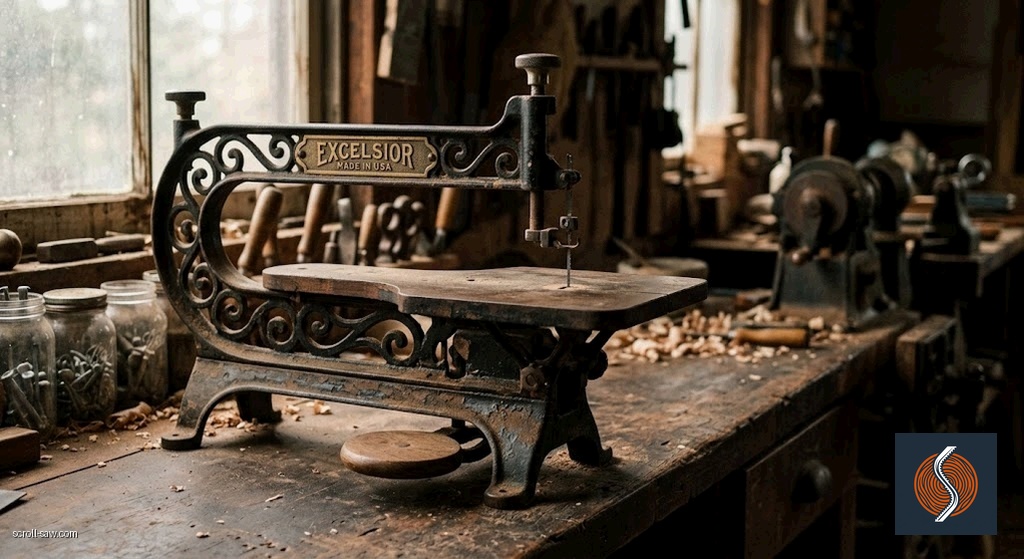
Excelsior Scroll Saw: Vintage Brand Guide
Excelsior was one of many mid-20th century American tool brands that produced benchtop scroll saws. Excelsior tools show up in estate sales, garage sales, and vintage tool auctions regularly. If you have or are considering one, here’s the honest guide.
About Excelsior scroll saws
Excelsior was one of several American manufacturers producing entry-level benchtop woodworking tools mid-century. Excelsior scroll saws are typically:
-
Cast-iron or heavy-steel benchtop machines
-
Small to medium throat depth (12 to 16 inches was common)
-
Pin-end blade format
-
Single speed operation
-
Modest fractional HP motor
-
Solid vintage construction that often outlasts the manufacturer
Many Excelsior scroll saws are still functional decades after production because the mechanical simplicity holds up.
Identifying your Excelsior
Check the nameplate for:
-
Specific model number
-
Manufacturing date if legible
-
Any additional manufacturer or distributor information
Excelsior branding was used by various small importers and tool distributors, so the exact origin can vary. Vintage tool communities can help identify from nameplate photos.
Parts sourcing
Universal hardware. Blade clamp screws (M4 or M5), belts, brushes, cords, switches. Available at any hardware store.
Vintage tool communities. Old Woodworking Machines forum (OWWM.org) and similar sites sometimes have members with donor parts or documentation.
eBay and estate sales. Complete parts or working donor machines at reasonable prices.
Fabrication. Small parts can be shop-made with basic skills.
No manufacturer support. Excelsior isn’t a current manufacturer. All parts come from donor machines, universal hardware, or fabrication.
Blades for Excelsior scroll saws
Most Excelsior scroll saws use pin-end 5-inch blades.
FOXBC pin-end 48-pack is the honest working blade for pin-end vintage saws.
Delta #7 Super Sharps for hardwood work.
For pinless conversion with an aftermarket adapter, premium blades open up:
Flying Dutchman Ultra Reverse #3.
Setup for a vintage Excelsior
-
Inspect the electrical system. Old cords and switches are common failure points and safety hazards. Replace if in doubt.
-
Clean the mechanism. Decades of accumulated wood dust and grease reduce performance.
-
Check blade clamps for wear. Damaged clamps affect tension and squareness.
-
Bolt the saw to a heavy bench. Vintage saws especially benefit from stable mounting.
-
Test the motor briefly before installing a blade.
-
Install a fresh pin-end blade with teeth down and forward.
-
Tension per the mechanism (vintage designs vary).
-
Test cut on scrap.
Common maintenance
Clean the mechanism. Wood dust and grease accumulate over decades. Full cleaning restores performance.
Replace electrical. Old cords and switches age poorly.
Lubricate bearings. Light machine oil on pivots and bearings.
Retighten fasteners. Vibration loosens hardware over years.
Restore blade clamps. Worn clamps need replacement or rebuild for reliable operation.
When to keep vs replace
Keep: if you value vintage character, do occasional craft cutting, and are comfortable with maintenance. A working Excelsior is a conversation piece and functional tool.
Replace: if you want fine detail work, variable speed, premium blade compatibility, or modern reliability. Modern entry-level saws exceed vintage capability at reasonable prices.
Modern alternatives
WEN 3922 16-inch variable speed is a modern entry-level saw with capabilities beyond vintage Excelsior.
DeWalt DW788 20-inch is the near-professional standard for serious work.
Add DW7880 stand and DW7881 work light for the full setup.
Who should keep the Excelsior: vintage tool enthusiasts, casual craft cutters, or hobbyists who enjoy tool restoration.
Safety considerations
Old electrical components are the biggest safety concern. Replace worn cords and switches. Add a GFCI outlet for extra protection.
Blade guards may be absent or damaged. Reproduce or purchase aftermarket where possible.
Wear safety glasses when cutting.
Ensure the saw is bolted firmly to a stable surface before cutting.
Restoration project value
Restoring a vintage Excelsior can be rewarding:
Value for the enthusiast: Working vintage tools have real character and often perform surprisingly well.
Economic value: Depends on the specific model, condition, and market demand. Some restored vintage tools sell for good prices; others are worth more as parts.
Sentimental value: Family heirlooms and shop history can outweigh economic considerations.
Learning value: Restoration teaches mechanical principles and troubleshooting skills.
The takeaway
Excelsior scroll saws are vintage American benchtop tools with solid mechanical simplicity and no manufacturer support. Fine for occasional craft cutting if you’re comfortable with vintage tool maintenance. For serious pattern work, modern saws (WEN 3922, DeWalt DW788) exceed vintage capability at reasonable prices.
FAQ
Are Excelsior scroll saws still made? No. Excelsior isn’t a current manufacturer of scroll saws.
Where can I get Excelsior parts? Vintage tool communities, eBay, estate sales, or universal hardware for wear items.
What blades fit an Excelsior scroll saw? Most use pin-end 5-inch blades.
Is an Excelsior worth restoring? Simple repairs: yes. Extensive part hunting: depends on how much you value the vintage character.
Can I convert an Excelsior to pinless? With an aftermarket adapter, yes. Some loss of squareness.
Is it safe to use a vintage Excelsior? With wiring inspected and updated, yes. Old electrical components are the primary safety concern.
What’s a modern alternative to an Excelsior? WEN 3922 for entry-level, DeWalt DW788 for serious pattern work.
References
-
Old Woodworking Machines forum (OWWM.org)
-
Vintage tool identification resources
-
WEN and DeWalt scroll saw specifications


