
How Fun Scroll Saw Projects Fit Into a Scroll-Saw Workflow
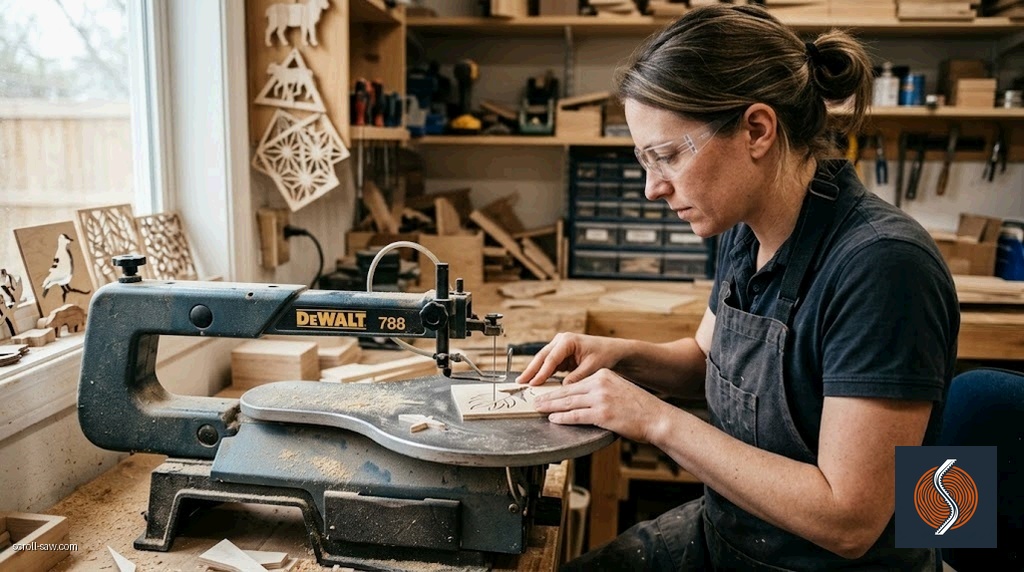
How Fun Scroll Saw Projects Fit Into a Scroll-Saw Workflow
Every scroller has a shelf of half-finished projects. The 40-piece Christmas nativity someone started in October, the intricate portrait that stalled at the eyes, the lasered-detail collector’s clock that is still just a rectangle of walnut and a pile of blades. The problem is not the technique. The problem is that ambitious first got in the way of finished.
Fun projects are the counterweight. They are the small, quick, high-reward cuts that get done in an afternoon and leave you wanting to start another one. They build hours of blade time (which is where the technique actually comes from), keep the shelf stocked with things to give away, and quietly turn a beginner into someone who knows their saw cold.
This article is about where fun projects fit in a real scroll saw workflow, how to pick them, and how to use them without slipping into pattern-collector paralysis.
Direct answer
Fun scroll saw projects are small, quick, high-reward cuts that finish in a single session. They belong at the front and end of a project rotation: at the front to warm up new blades and settings, at the end to reward the completion of a harder project. They are also the fastest way to build genuine skill because they concentrate practice on the movements that matter most.
What actually qualifies as a fun project
The honest test is simple. A fun scroll saw project is one that meets four criteria:
-
Cuts complete in one sitting (usually under two hours)
-
Requires only one blade size for the whole project
-
Uses stock you already have on hand
-
Produces something you would happily keep, give, or sell
Examples that pass all four for most scrollers:
-
Small holiday ornaments in 1/4-inch Baltic birch
-
Custom keychains with names or short words
-
Small standing animal silhouettes for shelf decor
-
Bookmarks in thin veneer or 1/8-inch plywood
-
Simple compound-cut figures (two-view cuts that produce a 3D shape)
-
Puzzle pieces (single or few-piece puzzles for young children)
-
Small trivet or coaster designs
-
Cookie cutter templates for a friend who bakes
Projects that fail one or more of those criteria are legitimate projects, they are just not fun ones. They belong in a different rotation.
Where fun projects fit in the week
A workflow rotation that keeps you at the saw.
Session opener. Warm up on a small fun project when you sit down. New blade, familiar shape, no pressure. Two things happen. First, you catch any setup issue (dull blade, blower misaligned, table drift) on a piece where the mistakes don’t matter. Second, your hands get calibrated before you tackle anything demanding.
Session closer. After finishing a section of a hard project, drop into a fun project as a reward. Momentum matters, and going straight from struggle to a shelved half-finished piece to another hard project drains motivation.
Between hard projects. Big projects benefit from breathing room. A day of fun projects between two portrait pieces resets your attention and keeps you actually cutting.
Skill-building sessions. Pick a fun project that focuses on one specific movement (tight interior curves, tight radius outside cuts, stack cutting). Cut ten of them. That is how technique gets built, not by grinding through one intricate piece.
Building a project pipeline
The difference between someone who finishes projects and someone who collects patterns is a pipeline. Three shelves in a small cabinet do it.
Ready to cut. Patterns printed, wood cut to size, blades on the shelf, tape or spray adhesive ready. When you sit down, you can start in under two minutes.
In progress. One or two projects underway. Anything not touched in two weeks moves to the last shelf.
Postponed or archive. Half-finished projects that stalled. Once a month, look through and either commit to finishing one or archive the pieces for parts or firewood. Do not let this shelf become a shrine.
The first shelf is where fun projects live. Keep it stocked. Whenever a fun project idea catches your attention (a magazine, a store window, a Pinterest scroll), spend five minutes turning it into a ready-to-cut piece and add it to the front shelf.
Fun projects vs. skill-building projects
A quiet truth: fun and skill-building are the same thing when the project is chosen well.
A 30-minute keychain in walnut with your friend’s initials teaches you cursive lettering, tight interior curves, and how walnut cuts differently from pine. All in half an hour. That’s more skill development than an hour spent staring at a stalled portrait piece.
The trick is to pick fun projects that stretch one specific skill without loading five other new challenges on top. A friend’s name in walnut is a great stretch project if you already know how to cut interior curves in pine. If you don’t, do it in pine first and move to walnut once the technique is solid.
Common ways fun projects go wrong
Even the small ones fail sometimes. The usual causes.
Pattern chosen at the wrong scale. A tiny ornament pattern printed at 3 inches has interior lines a #2/0 blade cannot navigate. Print a test at full size and physically look at the smallest interior gap before cutting.
Wood too thick for the pattern. A detailed pattern designed for 1/4-inch stock will feel completely different in 3/4-inch pine. Match stock thickness to the pattern’s design.
Blade size assumed instead of chosen. Fun projects tempt you to grab whatever blade is already in the saw. If the previous project used a #9 and the new one has fine detail, change the blade before starting.
Batch-cutting without a jig. Cutting five identical ornaments freehand from separate stock produces five slightly different ornaments. If you want them identical, stack-cut them (glue or tape a stack, cut once).
Verdict
Fun scroll saw projects are not a break from serious scrolling. They are the substrate serious scrolling grows on. Blade hours matter more than pattern ambition, and blade hours accumulate faster on small projects that get finished than on complex ones that don’t.
Build a project pipeline with the fun projects sitting at the front, use them as session openers and closers, and let the harder projects rotate through the middle. Within a few months the shelf of half-finished pieces gets shorter and the shelf of things you actually finished gets long enough to give away.
Skip the fun projects entirely, go straight for the ambitious ones, and the pattern collection grows faster than the pile of finished work.
FAQ
What is a fun scroll saw project for a beginner? A small ornament, keychain, or standing silhouette in 1/4-inch Baltic birch using a #5 reverse-tooth blade. Finishes in one session, forgives beginner mistakes.
How long should a fun scroll saw project take? Usually under two hours, ideally under one. If a project is stretching past two sittings, it is no longer in the fun category and belongs in a different rotation.
Where do I find fun scroll saw project ideas? Steve Good’s Scrollsaw Workshop blog, Scroll Saw Woodworking & Crafts magazine, Pinterest scroll saw pattern boards, and Fox Chapel Publishing pattern books.
Can I make money selling fun scroll saw projects? Yes, at craft fairs and online marketplaces, especially personalized items like name signs, keychains, and holiday ornaments. Margins are thin on complicated pieces; the fun projects often sell better because you can produce them fast.
Do I need special blades for fun projects? No. Standard reverse-tooth blades in #3, #5, and #7 sizes cover most fun projects. Have a small stock of each on hand.
What wood works best for beginner fun projects? 1/4-inch Baltic birch plywood for anything with fine detail, 1/2-inch or 3/4-inch pine or basswood for standing pieces and puzzles. Both are forgiving and widely available.
Should I finish scroll saw projects with paint or clear coat? Depends on the piece. Ornaments often look best with a light clear coat that shows the grain. Painted pieces need surface preparation and a primer for the paint to stick to plywood edges.


