
How a GMC Scroll Saw Fits Into a Scroll-Saw Workflow
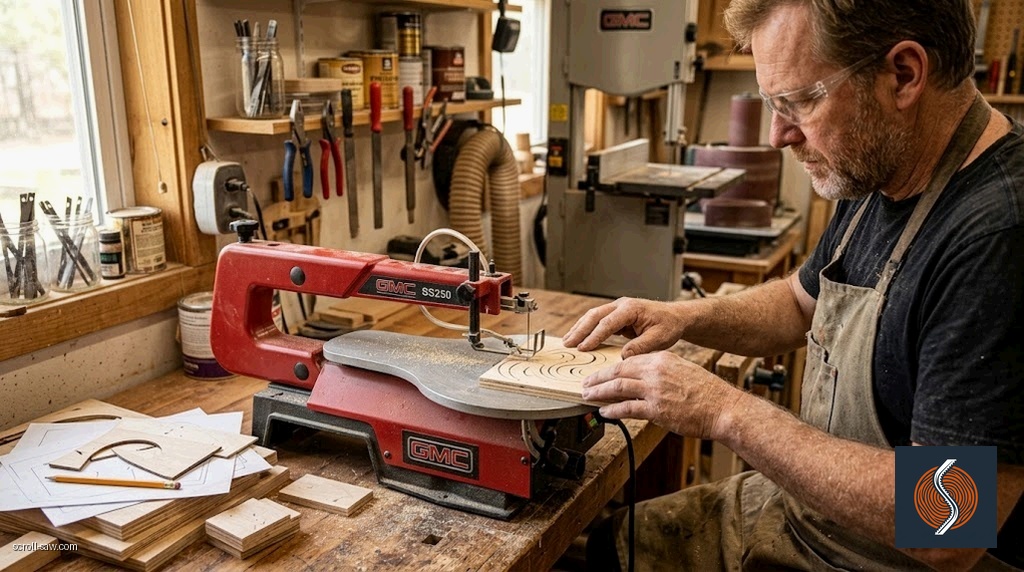
How a GMC Scroll Saw Fits Into a Scroll-Saw Workflow
Every few years another GMC scroll saw shows up on a marketplace listing, usually described as “barely used” and sold by someone clearing their garage. GMC (Global Machinery Company) sold budget power tools through big box retailers in Australia, New Zealand, and (via various channels) parts of North America and Europe from the mid-1990s to the late 2000s. The tools were entry-level, the price was aggressive, and the brand’s active marketing has largely faded.
That leaves a lot of working GMC scroll saws in circulation without a natural home. This article is about where one still fits, where it does not, and how to slot it into a workflow that includes other tools.
Direct answer
A GMC scroll saw is a light hobby-grade machine that fits the beginner and occasional-use end of a workflow: 1/4-inch to 1/2-inch stock, standard-size blades, projects that finish in one or two sessions. It does not fit into serious fretwork, hardwood detail work, or long production runs. Its role in a modern shop is often as a dedicated ornament or beginner saw, freeing a nicer saw for detail work.
Where a GMC saw belongs in a workflow
A scroll saw workflow is rarely one saw doing everything. In shops that already have a better primary saw, a working GMC finds a role as a secondary machine.
Dedicated ornament and craft-fair saw. Set up once with a #5 or #7 reverse-tooth blade, kept for cutting the same category of projects (holiday ornaments, keychains, name signs in thin stock), and used without reconfiguring. Reduces wear on the primary saw.
Teaching or shared-use saw. For kids, beginners, or shared shop time, a saw that can absorb mistakes and doesn’t matter much if a blade snaps is a real asset.
Travel saw for demos or shows. Lightweight enough to move, cheap enough not to worry about theft or damage.
Stack-cutting workhorse. Set up for one specific stack-cut task (multiple ornaments from a glued stack) so the primary saw stays free for detail work.
Where it does not belong.
Portrait, fretwork, or intarsia work. The tension mechanism and arm rigidity are not sufficient to hold fine blades cleanly. Serious detail work belongs on a Dewalt DW788 or better.
Hardwood over 1/2 inch. The motor and drivetrain are not comfortable in dense material. Blades burn, motor bogs, wear accelerates.
Production runs longer than a few hours. Light-duty motors are not built for continuous use.
Any project where the cut has to come off the saw finished. The saw can do rough cuts but expect to spend more time cleaning up than you would with a nicer machine.
Setup that makes a GMC punch above its weight
A GMC scroll saw responds well to the same setup fundamentals that help any light hobby saw.
Bolt it to a heavy bench. The single biggest change to vibration and cut quality. The stock base is too light to control the arm mass.
Level and square the table. Torpedo level for side-to-side. Small drafting square against the blade for perpendicular. Both take under two minutes.
Tension until the blade rings. The tension mechanism on the GMC can hold more than most owners give it credit for. Pluck the mounted blade; if it thuds, tension higher.
Change blades often. The GMC is not gentle on blades. A dull blade drifts, burns, and makes the saw feel worse than it is. Fresh blades transform the experience.
Aim the blower correctly. The blower tube arrives pointed wherever it was during shipping. Bend it to hit the cut line in front of the blade.
Clean the blade clamps. Sawdust and blade fragments in the clamp jaws cause slip. A quick brush every few months keeps them holding.
Done once, this setup lasts a long time.
Blade choice for a GMC scroll saw
Standard 5-inch pin-less blades from any reputable maker (Olson, Pegas, Flying Dutchman). Match size to material as usual.
-
#5 reverse-tooth: 1/4 to 1/2-inch plywood, general use
-
#7 reverse-tooth: 3/4-inch pine and basswood
-
#3 reverse-tooth: 1/8-inch stock, small details
-
#9 or larger: heavier stock at the top end of what the saw can handle
Stay clear of the very finest blades (#2/0 and thinner). The tension mechanism does not hold them well and they will snap or drift.
Common problems and their real causes
Vibration. Almost always the light base. Mount to a heavy bench. Replace hardened rubber feet.
Blade wanders. Under-tension is the top cause on light saws. Verify with the ring test. Also check blade square to the table.
Burn marks on cuts. Dull blade, blade too fine for material, or feed rate too slow. Replace blade first.
Blade snaps at clamp. Blade not seated in the jaw, or worn clamp not gripping fully. Reseat correctly; inspect clamp.
Motor bogs down. Wood too thick, blade too fine, or motor is at its rated limit. Step up blade size or accept the limit.
Table drifts out of square. Tilt lock is loose or worn. Tighten; add a secondary clamp for straight cuts.
Blower barely moves air. Blower diaphragm or tube blocked. Disassemble and clean.
When to retire the GMC
Honest signs it is done.
-
Arm develops visible play at the pivot
-
Motor overheats within thirty minutes of light use
-
Blade clamps no longer hold blades under any tension setting
-
Base or table has developed cracks around the trunnion
-
Vibration persists after all setup fixes
At that point, the saw is safer as a source of parts (rubber feet, blade holders, dust blower assembly, blade guards) for another light saw than as a running tool.
The role in a two-saw shop
If you already have a better saw (Dewalt, Excalibur, Hegner, Pegas), a working GMC as a second saw has real value:
-
One saw is always set up for detail work at fine tension
-
The other handles rough cuts, thick stock, ornament production, and beginner sessions
-
Blade changes happen less often on each saw because each has a job
-
Guest use, kid use, or shared shop use goes to the GMC without risking the nicer saw
A two-saw setup is common in serious hobby shops for exactly this reason. The GMC is a candidate for the second slot if you already have one working.
Verdict
A GMC scroll saw is a light hobby-grade import from a brand no longer actively marketed. Working units fit as beginner saws, secondary saws in a two-saw shop, or dedicated single-purpose saws for ornament runs. They do not fit as primary saws for serious detail work, hardwood cutting, or long production sessions.
Set one up properly, keep it in its designed range, and it will produce clean beginner-level work for years. Push it past its limits or trust it without setup and it will disappoint fast.
If you have one, keep it running as a secondary saw. If you are shopping for a primary saw, look elsewhere.
FAQ
Are GMC scroll saws still made? The GMC brand is no longer widely marketed under that name. Some legacy stock and used units remain in circulation.
What is a GMC scroll saw worth? On the used market, typically a modest amount for a working unit, less for a non-working one. Condition and completeness matter more than the badge.
Can I get GMC scroll saw parts? Direct factory parts are limited. Generic hobby saw parts often fit or can be modified. Motor and control board replacement is difficult.
What blades fit a GMC scroll saw? Most models use standard 5-inch pin-less scroll saw blades. Older models may use pin-end blades. Check the clamp style.
Is a GMC scroll saw good for beginners? A working GMC is fine for beginners on 1/4-inch to 1/2-inch stock and simple project designs. It will not support advancing to serious detail work.
How thick can a GMC scroll saw cut? Most GMC scroll saws list a maximum capacity around 1.5 to 2 inches, but practical use is under 3/4 inch of soft wood for regular cutting.
Should I keep a working GMC scroll saw or replace it? Keep it as a secondary saw if it still runs well after setup and inspection. Replace as a primary saw if it cannot hold fine blades or if arm play has developed.


