
Is a Homemade Scroll Saw Useful? Applications, Limits, and Setup
Is a Homemade Scroll Saw Useful? Applications, Limits, and Setup
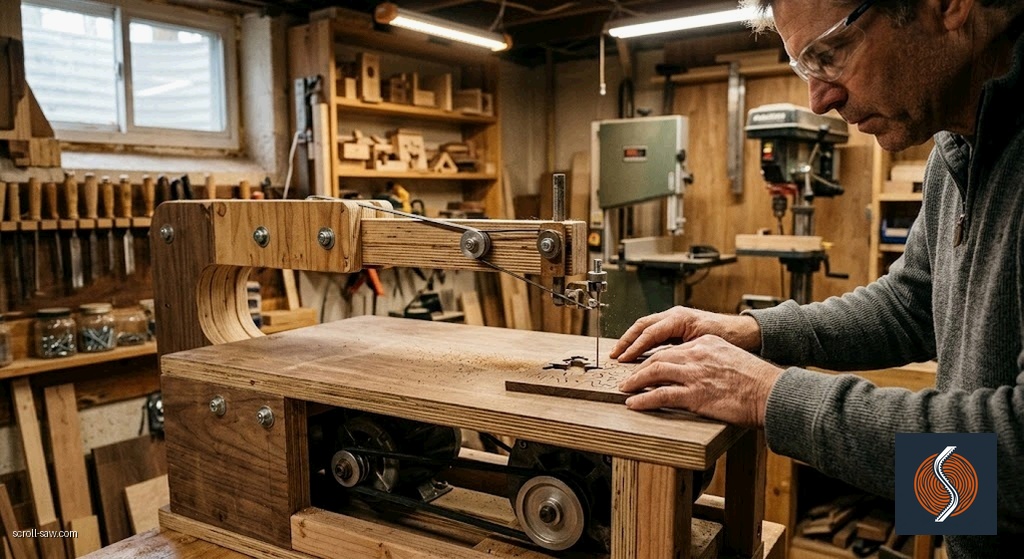
A scroll saw is one of the few power tools you can genuinely build yourself in a home shop. The mechanism is simple: a reciprocating blade, a spring-loaded upper arm to keep tension, a fixed lower arm to hold the blade taut, and a motor with a crank or eccentric to drive the motion. Plans and video builds are widely available. Some of the results are surprisingly good.
The question is not whether a homemade scroll saw is possible. It is whether one is worth building and using. The honest answer is: sometimes yes, more often no. This article covers when a shop-built saw makes sense, and when a $150 commercial saw is the more sensible answer.
Direct answer
A homemade scroll saw is useful when the builder values the process, needs a specific size or capability not available commercially, has scrap materials and time, or lives somewhere without easy access to a commercial saw. It is not useful when the goal is simply owning a scroll saw for its output, since entry-level commercial saws cost less than the materials for a decent build and offer better precision.
When a homemade saw actually makes sense
A few honest situations where building is the right answer.
You want to understand the mechanism. Building a scroll saw teaches you how one works, which pays back the first time your commercial saw drifts or breaks and you need to diagnose it.
You have a specific need commercial saws do not meet. Extra-large throat depth, unusual blade orientation, integrated dust collection routed through a specific path in your shop, or a specialty application (glass, thin metal, specific stack heights).
Access is limited. In parts of the world where commercial hobby scroll saws are expensive or hard to source, a homemade saw from local materials makes practical sense.
The build is the project. Some woodworkers enjoy building tools as much as using them. A shop-built scroll saw is a legitimate project on its own terms.
Educational or teaching context. Building a scroll saw with students or apprentices teaches skills that using a commercial one does not.
Outside these, a commercial saw is almost always the more sensible answer.
When it does not make sense
You just want to cut wood. A commercial entry-level saw costs less than the materials for a decent build and offers better precision, safer construction, and immediate use.
You expect to save money. Homemade saws rarely come out cheaper than commercial equivalents once real materials and time are counted.
You need production-grade precision. Commercial saws are the product of decades of engineering refinement. Matching them in a home shop is difficult.
You need it soon. Building a scroll saw is a weekend to several weekends project. Buying one is same-day.
The basic geometry
Any scroll saw, homemade or commercial, has the same essential parts.
Frame. Rigid structure holding everything else. Usually a C-shape (single curved arm) or an inverted U (parallel arms). Steel, plywood, or heavy hardwood are all workable. Rigidity is critical; flex in the frame translates directly into blade wander.
Lower arm. Fixed. Holds the bottom of the blade. Anchored to the base.
Upper arm. Movable. Reciprocates up and down. Holds the top of the blade with a tension spring to keep the blade taut on the down stroke.
Drive mechanism. Motor connected to a crank or eccentric that pulls the upper arm down against the spring. Motor releases; spring returns the arm up. Typical motors are small AC induction motors in the 1/6 to 1/4 horsepower range.
Blade clamps. Grip the blade at top and bottom. Can be scrap-built (bolt and washer designs work) or purchased.
Table. Supports the workpiece. Tilts for angle cuts. Flat, level, and square-adjustable.
All of these can be built in a home shop with common materials. Precision matters at every step.
What usually goes wrong
Common failure modes on homemade scroll saws.
Vibration. Insufficient mass in the base transmits motor vibration into the frame and workpiece. Fix: heavier base, sometimes concrete-filled steel tubing or a bag of sand under the mounting plate.
Blade not vertical. Frame flex or misaligned arms cause the blade to tilt forward or back at the top of its stroke. Fix: stiffen the frame; realign the arms.
Under-tension. Weak or improperly installed spring cannot hold the blade tight. Fix: heavier spring; verify the mounting is transferring the spring’s force fully to the blade.
Motor overheat. Motor rated for intermittent duty running continuously. Fix: use a motor rated for continuous duty, or accept short cutting sessions.
Table not stable. Trunnion attachment is loose or flexes. Fix: heavier trunnion mount, add secondary bracing.
Blade clamps that slip. Improvised clamps cannot grip fine blades under high tension. Fix: use commercial blade clamps; retrofit if necessary.
Noise. Poorly aligned drive mechanism produces knocking or squeaking. Fix: adjust alignment, add proper bearings, tighten hardware.
Setup and adjustment
A homemade saw needs the same setup as any other, plus specific attention to the shop-built elements.
Verify frame rigidity. Push on the arm assembly with the saw off. Any measurable flex is too much.
Verify blade vertical through stroke. With a mounted blade, rotate the crank slowly by hand and watch the blade throughout the stroke. It should stay vertical.
Verify tension. Mount a #5 blade and pluck it. Should ring at a clear pitch. If not, tension mechanism needs adjustment.
Verify motor RPM. Aim for around 400 to 1600 strokes per minute for typical scroll saw work. Faster is hard on blades in hardwood; slower makes cuts tedious.
Test cut in scrap. Straight line first, then a curve, then an interior cut. All three should be clean with a fresh blade in soft plywood.
Adjust and re-test. Homemade saws often need several rounds of adjustment before they cut well.
Verdict
A homemade scroll saw is useful for specific reasons: understanding the mechanism, meeting a specific need, working with limited commercial access, enjoying the build itself, or teaching. It is not useful as a shortcut to owning a scroll saw, since commercial equivalents cost less and cut better with less setup work.
If you build one, expect to spend real time on the setup and adjustment phase. A properly built and adjusted homemade saw can produce clean work. A hastily built one produces frustration.
Before starting, price a commercial entry-level saw and count the total materials cost of your intended build. If the numbers are close, buy commercial and save the weekend for actual cutting.
FAQ
Can I really build a working scroll saw at home? Yes. The mechanism is simple enough that many hobbyists have built functional saws from wood, steel, or a combination. Cut quality depends on the precision of the build.
How much does it cost to build a homemade scroll saw? From nearly free (using scrap materials and a salvaged motor) to more than a commercial saw (using new lumber, a new motor, and commercial blade clamps). Depends heavily on what you already have.
What motor do I need for a homemade scroll saw? A small AC induction motor in the 1/6 to 1/4 horsepower range, rated for continuous duty. Sewing machine motors work for light-duty builds.
Are homemade scroll saws safe? As safe as any scroll saw when built with proper guards and grounded electrical connections. Poorly built saws with exposed drive mechanisms or improper wiring are hazards.
Can a homemade scroll saw do fretwork? A well-built one can, if the frame is rigid and the blade clamps hold small blades under real tension. Both requirements are demanding for a shop-built saw.
What plans exist for a homemade scroll saw? Multiple free and paid plans are available online. Steve Ramsey, Matthias Wandel, and various woodworking magazines have published build guides.
Where can I find scroll saw motors for a homemade build? Salvage from old sewing machines, small appliances, or discarded power tools. New small motors are available from electrical suppliers, though costs can approach commercial saw pricing.


