
Homemade Scroll Saw Machine: Selection, Setup, and Common Problems
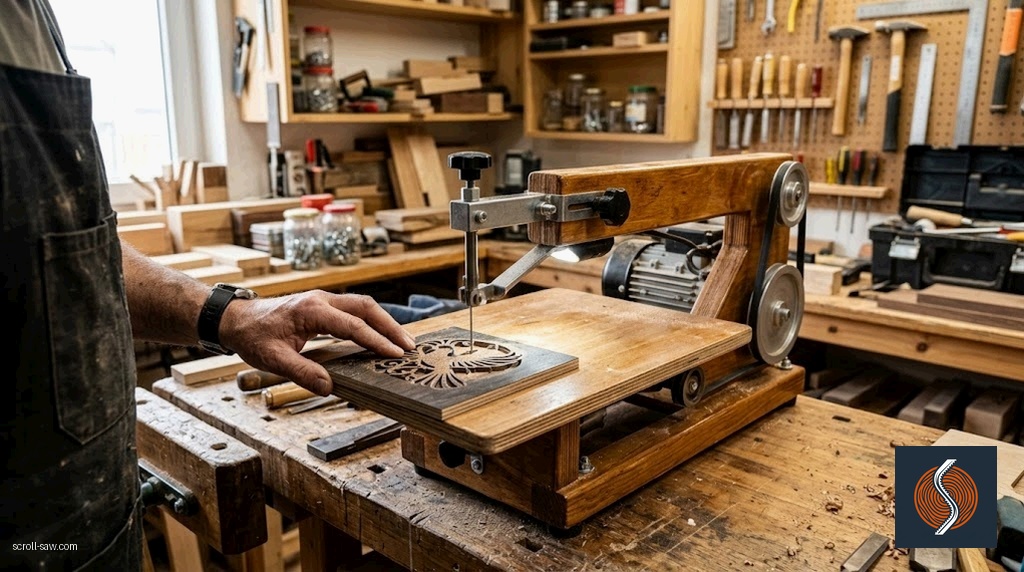
Homemade Scroll Saw Machine: Selection, Setup, and Common Problems
A homemade scroll saw machine is a serious build. Not because the mechanism is complicated, but because getting the geometry right is what separates a saw that cuts clean from one that vibrates, drifts, and breaks blades. The internet is full of scroll saw builds. About half of them work well. The other half are documented mainly because their creators kept the project moving even when the results were not great.
This article is about how to build one of the ones that works. Selection of plans, materials, and motor. Setup that gives a clean stroke. Common problems and their real causes.
Direct answer
A homemade scroll saw machine is a shop-built scroll saw, typically constructed from wood, steel, or a combination, powered by a small motor and using commercial or shop-built blade clamps. Selection depends on your available materials, skill level, and intended use. Setup is more demanding than for a commercial saw because build tolerances are less consistent. Common problems (vibration, drift, blade breakage) usually trace to frame flex, alignment errors, or under-tension.
Selecting plans
Many free and paid plans exist. A few characteristics separate the good ones.
Parallel-arm or parallel-link design. These keep the blade vertical through the stroke, which produces cleaner cuts than a simple C-arm design. Slightly more complex to build, worth the extra effort.
Documented dimensions. Good plans specify frame dimensions, arm lengths, and pivot locations precisely. Vague plans lead to alignment issues that are hard to correct later.
Proven builder reputation. Plans from established woodworkers with videos of the built saw actually cutting work are more reliable than untested plans.
Realistic material list. A plans that assume specialty materials you cannot easily source (specific bearings, custom springs, hard-to-find motor sizes) become impractical fast. Plans using common materials build more easily.
Match to intended use. A plan for a compact desktop scroll saw is different from a plan for a full-size floor-standing saw. Match to what you will actually use.
Matthias Wandel and Steve Ramsey have both published widely followed scroll saw builds. Woodworking magazines have published plans over the years. Any of these are reasonable starting points.
Selecting materials
Frame. Options include Baltic birch plywood laminated into rigid stock, steel tubing welded into a frame, hard maple or oak for a wood-only build, or a combination. Rigidity is the goal. Softer woods (pine, fir) flex too much for a serious saw.
Arms. Same materials as the frame. Arms should be as light as possible while remaining rigid, since arm mass affects reciprocation smoothness and motor load.
Motor. Small AC induction motor, 1/6 to 1/4 horsepower, rated for continuous duty. RPM typically 1725 to 3450, geared down through pulleys to a stroke rate of 400 to 1600 strokes per minute. Sewing machine motors work for light-duty builds but are not rated for continuous scroll saw use.
Drive mechanism. Crankshaft, eccentric, or connecting rod. Should convert rotary motion into smooth reciprocation with minimum play.
Bearings. Sealed ball bearings for arm pivots and drive linkage. Common sizes (6001, 6002, 6203) are widely available and inexpensive.
Blade clamps. Purpose-built commercial scroll saw clamps are worth buying for a homemade saw. Improvised clamps rarely hold fine blades under real tension.
Table. Flat and level. Cast iron plate is ideal but heavy; MDF with a laminate finish works and is easier to fabricate.
Base. Heavier is better for vibration control. Concrete-filled steel tubing, a heavy bench, or a mounting plate weighted with masonry all work.
Setup that produces clean cuts
A homemade saw needs setup that a commercial saw takes care of at the factory.
Verify frame rigidity. Push on the arm assembly with the saw off. Any measurable flex is too much. Add cross-bracing if the frame flexes.
Verify blade vertical through stroke. Mount a blade, rotate the drive by hand, watch the blade at top, middle, and bottom of the stroke. Should stay vertical. Realign arms if it does not.
Verify arm alignment. Upper and lower blade holders should be directly above and below each other. Even a small offset causes the blade to twist during the stroke.
Verify tension. Mount a #5 blade, tension it, pluck it. Should ring clearly. If tension mechanism cannot achieve this, spring is too weak or mechanism is losing force somewhere.
Verify motor RPM and stroke rate. Aim for 400 to 1600 SPM. Too fast is hard on blades; too slow is tedious.
Test cut on scrap. Straight line, curve, interior cut. All three clean with a fresh blade in soft plywood.
Adjust and re-test. Expect multiple rounds of adjustment.
Common problems and real fixes
Excessive vibration. Root cause is usually insufficient base mass or frame flex. Fixes: heavier base (add mass), stiffer frame (add cross-bracing), motor mounted on rubber isolators.
Blade wanders on cuts. Frame flex, under-tension, or blade not vertical. Check each in that order.
Blade breaks near clamp. Clamp not gripping fully, blade end pinched at the tip, or blade twisting due to arm misalignment. Reseat blade, verify clamp grip, check arm alignment.
Motor overheats. Motor is undersized or being run continuously beyond its duty cycle. Larger motor rated for continuous duty; alternatively, cut in shorter sessions.
Motor bogs down under load. Motor undersized, drive ratio wrong, or excessive friction in the mechanism. Verify each; often the fix is a larger motor.
Noise and knocking. Play in drive linkage or arm pivots. Tighten hardware; replace bearings if needed.
Table not stable. Trunnion mount too light or improperly braced. Add reinforcement.
Blower does not work. Blower is optional on a homemade saw. Simple diaphragm-and-tube designs work. Position aim at the cut line.
Blade selection
Once the saw is running, standard 5-inch pin-less blades from any reputable brand fit if you installed pin-less clamps. Pin-end blades require pin-end clamps.
Start with a #5 reverse-tooth in 1/4-inch soft plywood for testing. Once the saw is dialed in, the full range of blade sizes fits.
Safety points specific to homemade saws
Grounded electrical. All wiring inside a proper enclosure, grounded to earth, protected by an appropriately rated breaker. GFCI outlet is recommended.
Guards. Blade guard above the workpiece, hold-down foot to prevent lifting on the upstroke. Belt or drive linkage guarded against contact.
Secure blade clamps. A blade that comes loose during use is a hazard. Test the clamps thoroughly before continuous use.
Emergency stop. A clearly labeled and easily reachable switch to shut off power immediately.
Stability. Saw bolted to a stable bench or floor. A saw that tips is a hazard.
Verdict
A homemade scroll saw machine is a legitimate project for a woodworker who wants to build tools, has specific needs commercial saws do not meet, or values the learning that comes from constructing the mechanism. It is not a shortcut to owning a scroll saw, since commercial saws cost less and cut better with less setup work.
If you build one, expect real setup and adjustment time. Following proven plans, using rigid materials, and paying attention to alignment and tension are what separate a saw that cuts from a saw that vibrates.
A well-built homemade scroll saw will produce clean work for years. A rushed build will disappoint.
FAQ
Can a homemade scroll saw match a commercial one? A well-built and carefully adjusted homemade saw can approach commercial cut quality in the mid-hobby range. Matching a top-tier machine like a Hegner is very difficult.
How long does it take to build a scroll saw? A basic wood-frame build with a salvaged motor: one to two weekends. A more refined build with custom features: several weekends to a few months.
What is the hardest part of building a scroll saw? Alignment and rigidity. Getting the blade to stay vertical through the full stroke, and keeping the frame from flexing under motor and cutting loads, are the main challenges.
Can I use plywood for a scroll saw frame? Yes. Baltic birch plywood laminated to 1-1/2 to 3 inches thick makes a rigid frame. Softer plywoods and lumber-core plywoods flex too much.
What motor should I use for a homemade scroll saw? A small AC induction motor, 1/6 to 1/4 horsepower, rated for continuous duty, at 1725 or 3450 RPM. Sewing machine motors work for light-duty; better motors last longer.
Are commercial scroll saw blades compatible with homemade saws? Yes, if you install commercial blade clamps. Standard 5-inch pin-less blades and pin-end blades are widely available.
Is a homemade scroll saw cheaper than buying one? Usually not, when materials and time are counted honestly. Entry-level commercial saws are inexpensive relative to serious homemade builds.


