
Is a Laguna Scroll Saw Worth It? Applications, Limits, and Honest Setup
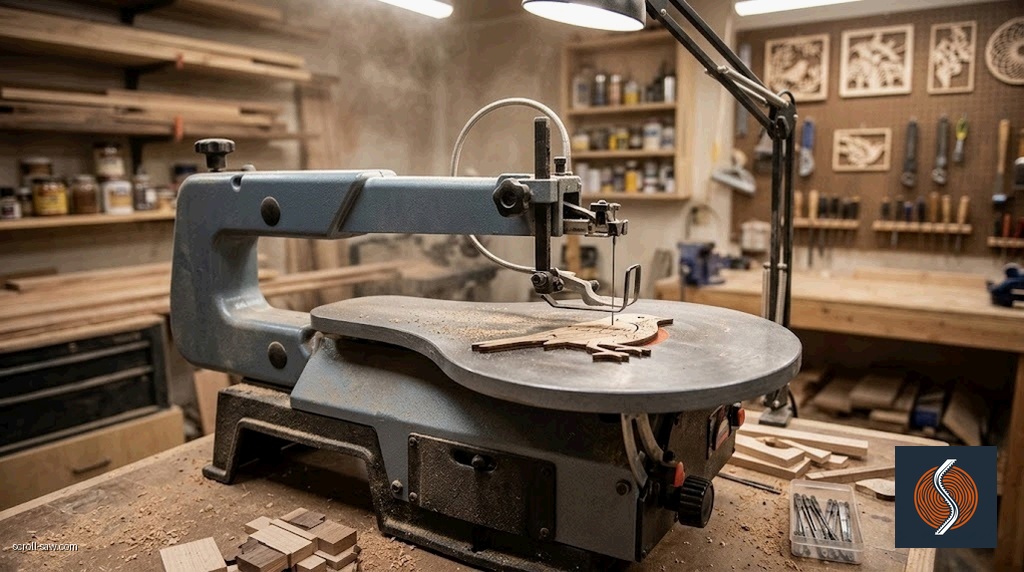
Is a Laguna Scroll Saw Worth It? Applications, Limits, and Honest Setup
Laguna Tools is known for making serious woodworking machines: wide-belt sanders, bandsaws, and CNC routers that professional shops trust. When Laguna entered the scroll saw market with the Swift line, they brought the same engineering philosophy: heavier base, tighter tolerances, cleaner stroke. The question for anyone considering one is whether those qualities show up in the work, and if so, whether the work you do actually needs them.
This article covers what a Laguna scroll saw does better than entry and mid-level machines, where the difference is visible in the work, and where a less expensive saw produces cuts that look the same.
Direct answer
A Laguna scroll saw (primarily the Swift 16 and Swift 24 models) is worth the investment for scrollers doing serious detail work, portrait cutting, or intarsia in hardwood who currently have a mid-level saw that is limiting their results. It is not worth the investment for casual hobby use, ornament cutting, or beginner work where an entry-level saw produces visually identical results.
What Laguna scroll saws offer
The distinguishing features of Laguna’s Swift line relative to most hobby saws.
Heavier base and frame. More mass absorbs vibration and provides a more stable cutting platform. Less vibration transmits to the blade and workpiece.
Precision-machined blade holders. Tighter tolerances in the blade clamps produce more consistent blade positioning. This matters most on fine blades.
Smooth variable speed. Electronic variable speed with a wide range (400-1800 SPM) and stable speed under varying load.
Clean stroke geometry. Parallel-arm design produces a blade that stays vertical through the full stroke. Vertical stroke is what produces square cut edges without cleanup.
Good blade-tensioning mechanism. Holds high tension without slipping during use. Critical for fine blade work.
Dust blower and hold-down. Well-designed and adjustable on the Swift models.
Thoughtful table. Large, flat, adjustable table with precise tilt mechanism.
None of these are unique to Laguna; similar features appear on the Dewalt DW788, Hegner Multimax, and Pegas models. Laguna’s execution is generally considered competitive with those machines.
Where the Laguna difference shows in work
Fine fretwork in hardwood. Tight blade tension maintained over long sessions without slipping. This directly affects cut quality in fine work.
Portrait cutting. The vertical stroke and stable tension produce cleaner lines in portrait work where adjacent lines are very close together.
Intarsia fit. Pieces that need to fit together precisely benefit from the consistent vertical stroke.
Long sessions. The heavier, more stable machine feels less fatiguing over a three or four hour cutting session because less energy goes into fighting the tool.
Blade life in fine work. Fine blades last longer in a saw that holds them correctly, reducing the cost and interruption of blade changes.
Where it does not matter
Simple ornament cutting. A #5 blade in 1/4-inch Baltic birch produces clean ornament cuts on any properly set up hobby saw.
Beginner projects. A beginner working on simple shapes cannot feel or see the difference between a Laguna and a Dewalt.
Occasional use. A saw used a few hours per month does not need industrial-grade components.
Very thick stock with large blades. Large blades are not sensitive to small tolerance improvements in blade clamping. The precision advantage concentrates in fine blade work.
Projects where cuts will be sanded. If cuts are all going to be sanded regardless of quality, the extra precision does not change the finished result.
Honest comparison to alternatives
At the premium hobby level, the Laguna Swift competes with the Dewalt DW788, the Hegner Multimax 3, and the Pegas 21. All of these are excellent machines.
Dewalt DW788. Often cited as the best value at this level. Widely available, excellent blade holders, large user community, long-established design. Many portrait and fretwork workers use this as their primary machine.
Hegner Multimax. German engineering, exceptional precision, longer service history in North America. More expensive than the Laguna. The reference for serious fretwork.
Pegas 21. Swiss-engineered. Exceptional build quality. Very smooth operation. Premium pricing.
Laguna Swift. Competitive with all of the above. Laguna’s manufacturing reputation adds confidence. Some users prefer the Swift’s specific ergonomics and control layout.
All of these produce cuts that a beginner or casual hobbyist cannot distinguish from each other. The differences only appear in the most demanding work.
Setup for a Laguna scroll saw
Same fundamentals as any quality scroll saw.
Verify table square to blade. Small drafting square against blade and table. Adjust the tilt mechanism until fully square.
Set blade tension. Pluck the mounted blade; should ring at a clear high pitch. The Swift’s tension mechanism is well-designed and holds reliably.
Position hold-down. Just clearing the workpiece. Not pressing down, but preventing lifting.
Aim the blower. At the cut line in front of the blade.
Level the table. Side to side with a torpedo level.
Verify variable speed control. Should respond smoothly throughout the range with no sudden speed changes.
Once set up, the Laguna rewards the correct setup by staying set up through long sessions without re-checking.
Verdict
A Laguna scroll saw is worth it if you are doing serious detail work that currently taxes the precision of a mid-level saw. The heavier build, precision blade holders, and clean stroke geometry show up in portrait cutting, fine fretwork, and intarsia precision.
It is not worth it for casual hobby use, ornament cutting, beginner learning, or any workflow where simple plywood shapes are the primary output. For those uses, a Dewalt DW788 or even an entry-level saw produces the same results at lower cost.
If you are considering a Laguna, the honest question is: can you name a specific cut your current saw cannot make? If yes, and if that cut is fine detail in hardwood or portrait-level work, a Laguna earns its place. If no, finish the projects on your current saw and revisit the question.
FAQ
What models does Laguna make for scroll saws? The primary models are the Swift 16 (16-inch throat depth) and Swift 24 (24-inch throat depth). Models and specifications may vary by year.
How does a Laguna scroll saw compare to the Dewalt DW788? Both are high-quality machines in the same tier. The Dewalt has a longer track record and large user community. The Laguna has competitive build quality and Laguna’s engineering reputation. Many serious scrollers own and love both.
Is a Laguna scroll saw good for beginners? It is excellent for beginners in the sense that it is easy to use and well-built. It is overkill financially; a beginner cannot take advantage of its precision advantages.
Does the Laguna Swift have a parallel-arm design? Yes. The parallel-arm design keeps the blade vertical through the full stroke, which is one of the features that distinguishes it from lower-cost saws.
Can the Laguna scroll saw do fretwork? Yes. The precision blade holders and stable tension make it well-suited for fine fretwork with #2/0 and similar fine blades.
Is there a Laguna scroll saw community online? Laguna has an active customer community. General scroll saw forums and communities (Scrollsaw Workshop, SSWA) include Laguna users along with users of other premium brands.
What blades does the Laguna Swift use? Standard 5-inch pin-less scroll saw blades. The same blades that fit the Dewalt, Hegner, Pegas, and other premium saws.


