
Moto-Saw by Dremel: What It Is, What It Handles, and Where It Falls Short
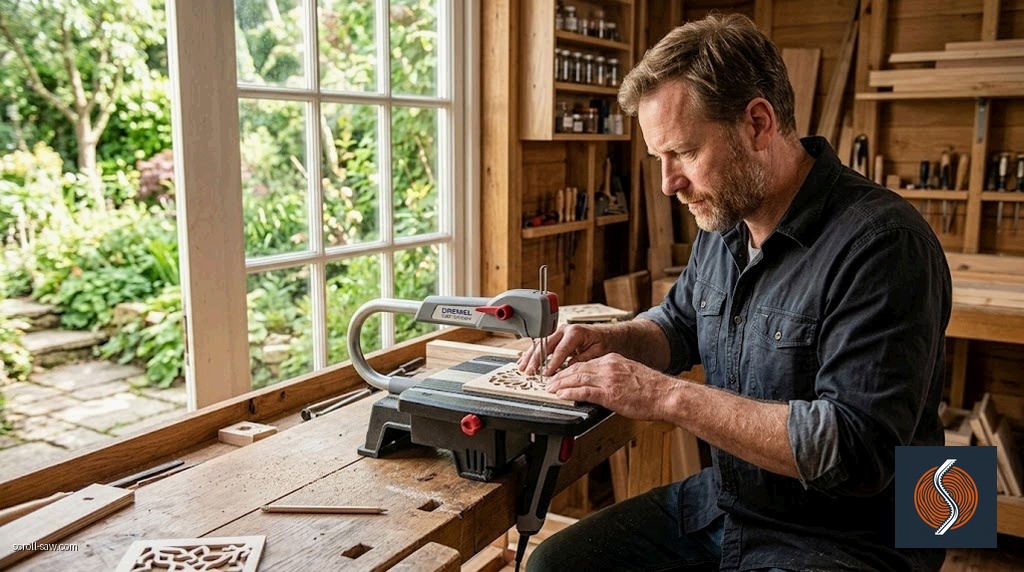
Moto-Saw by Dremel: What It Is, What It Handles, and Where It Falls Short
The Dremel Moto-Saw appeared on the market with a compelling pitch: a compact, portable scroll saw that works hand-held or clamped to a table, costs less than most benchtop saws, and handles craft materials for hobbyists who do not have bench space for a real saw. The pitch is honest. Where the pitch stops being honest is the implication that it can substitute for a benchtop scroll saw on real scroll saw work.
It cannot. But it does what it says it does, and for some users, that is exactly what they need.
Direct answer
The Dremel Moto-Saw is a compact handheld or clamped scroll saw designed for thin craft materials (foam, thin plywood, cardboard, thin plastic, and similar up to about 3/4 inch of soft wood). It works well for its intended market: crafters working with light materials who need portability or have no bench space. It is not a substitute for a benchtop scroll saw for standard hobby scroll saw work.
What the Moto-Saw actually is
The Moto-Saw is a reciprocating blade tool powered by a small motor, shaped to be held like a jigsaw or clamped vertically to a table. The blade is short (about 4 inches) and reciprocates vertically. Blade changes are tool-free.
Two use modes:
Hand-held mode. Operator holds the tool like a jigsaw and moves it over a stationary workpiece. Similar to using a jigsaw freehand. Less precise than a benchtop saw but portable.
Table-clamp mode. The Moto-Saw clamps to a table edge, blade pointing up, and a small plastic workpiece platform attaches to create a mini scroll saw station. Operator moves the workpiece under the blade.
In table-clamp mode, it is closest to a bench scroll saw in function. The table platform is small and the blade stroke is short.
Where the Moto-Saw works well
Thin foam for models and crafts. EVA foam and similar craft foam are the Moto-Saw’s best material. Clean cuts, no resistance.
Cardboard and corrugated materials. Cuts cleanly and precisely. Useful for packaging prototypes and card models.
Thin plywood (up to 1/4 inch of soft plywood or Baltic birch). Functional but slow. Clean enough for simple shapes in craft plywood.
Thin plastic sheet. PVC sheet, styrene, and similar craft plastics in thin gauge. Appropriate blades required.
PVC trim board (thin sections). Architectural trim and similar materials in thin cross-sections.
Kids’ craft projects. The compact size and low power make it less intimidating and more appropriate for supervised older-child use on soft materials.
Portability. Travels in a small kit bag. Works in classrooms, craft fairs, and other non-shop environments.
Where it falls short
Thick or dense hardwood. The motor cannot sustain cuts in hardwood above about 1/4 inch. Blades dull very quickly and the motor bogs.
Intricate fretwork. The blade holds reasonable tension but not the high tension that fine detail cuts require. Blades drift on complex interior detail.
Portrait or detailed scroll saw patterns. Not the right tool. Pattern drift, blade limitations, and table size all limit what is achievable.
Long sessions. The motor is not rated for continuous extended use. Warmth after fifteen to twenty minutes of cutting is a sign to rest the tool.
Precise interior cuts. Threading the blade through a starter hole for an interior cut is technically possible but awkward and imprecise on the Moto-Saw.
Blade life. In hard or dense material, Moto-Saw blades last minutes. The proprietary blade format means blades cost more per blade than standard scroll saw blades.
Blade format
The Moto-Saw uses proprietary blades, not standard 5-inch scroll saw blades. This is important for two reasons:
-
Replacement blades must come from Dremel or compatible aftermarket sources. Third-party blade selection is narrower than for standard scroll saw blades.
-
The blade size and tooth patterns available are limited compared to the full scroll saw blade ecosystem (Olson, Pegas, Flying Dutchman all offer dozens of sizes and patterns in standard format).
Setup for table-clamp mode
For the best results in table-clamp mode:
Clamp firmly. The table clamp must grip the bench edge tightly. A loose clamp causes the whole tool to vibrate, which produces poor cuts.
Level. The blade should be perpendicular to the work platform. Check this before starting.
Support the workpiece. The small platform provides limited support. For larger workpieces, extend the support with a smooth piece of scrap board at the same height.
Slow feed rate. Pushing too fast in any material dulls the blade immediately. Feed at whatever pace the blade wants to cut.
Appropriate blade. Use the wood-cutting blade for soft materials, the plastic blade for plastic and foam. Check the Dremel blade guide.
Moto-Saw vs. an entry-level benchtop scroll saw
The comparison most buyers face.
Moto-Saw advantages:
-
Portable
-
Small storage footprint
-
Less expensive
-
Works in non-shop environments
Entry-level benchtop saw advantages:
-
Accepts standard 5-inch blades (much wider selection)
-
Larger table with better workpiece support
-
Higher blade tension for better accuracy
-
Can handle thicker and harder material
-
Better suited for the full range of scroll saw project types
-
More durable for regular use
If you have bench space and expect to use the saw for standard hobby projects, an entry-level benchtop saw is a better investment. If portability is genuinely required and the projects stay within light craft materials, the Moto-Saw fits.
Verdict
The Dremel Moto-Saw is a compact, portable, light-duty scroll tool that does what it says: cuts thin craft materials and thin soft plywood in a small footprint. For crafters who need portability or have no bench space for a full saw and whose projects stay within craft plywood, foam, and similar materials, it is genuinely useful.
For anyone who expects to do standard hobby scroll saw work (ornaments, freestanding signs, portrait work, fretwork) or who plans to build up scroll saw skills, a small benchtop entry-level saw is the better choice.
The Moto-Saw is not a starter scroll saw. It is a portable craft cutter that happens to use a scroll-saw-style blade.
FAQ
Can the Dremel Moto-Saw cut hardwood? Very thin hardwood (1/8 inch) slowly and carefully. 1/4 inch and above in hardwood is beyond its designed capability.
What blades does the Moto-Saw use? Propriety Dremel Moto-Saw blades, not standard 5-inch scroll saw blades. Available from Dremel and some aftermarket suppliers.
Can the Moto-Saw do interior cuts? Technically yes with a starter hole, but the process is awkward and precision is limited. Not recommended for detailed interior work.
Is the Moto-Saw good for kids? With close adult supervision on soft materials (foam, cardboard), yes. It is less powerful and less intimidating than a benchtop saw.
How long can I run the Moto-Saw continuously? About fifteen to twenty minutes before the motor needs to rest. Not designed for long uninterrupted sessions.
Is the Moto-Saw quieter than a benchtop scroll saw? Yes, typically. The smaller motor and lighter construction produce less noise.
Should I buy a Moto-Saw or a small benchtop scroll saw? If portability is required and work stays within craft materials: Moto-Saw. If any standard scroll saw project range is expected: small benchtop saw.


