
Oak Scroll Saw Projects: What Works, What Does Not, and How to Cut It Clean
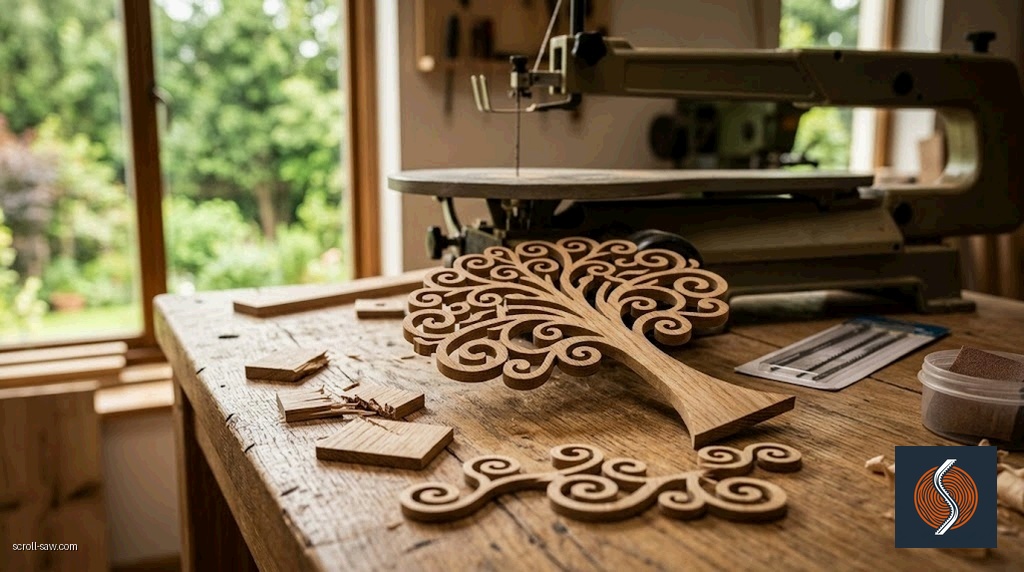
Oak Scroll Saw Projects: What Works, What Does Not, and How to Cut It Clean
Oak is not the first material most scroll saw beginners reach for, and for good reason. It is hard, dense, and punishing on blades. A dull blade in oak does not produce a slightly worse cut; it burns the wood brown, drifts off the line, and breaks. Oak on a scroll saw rewards proper setup more than any other common wood.
Get the setup right, however, and oak becomes one of the most rewarding materials in the shop. The open grain accepts a natural oil finish that brings out contrast and depth. The density makes scroll-cut pieces feel like objects rather than craft projects. A finished piece in oak looks like it was made seriously.
Direct answer
Oak scroll saw projects work best in 1/4-inch to 1/2-inch red or white oak with fresh #7 or #9 blades, higher-than-usual blade tension, and a feed rate slow enough that the blade never bogs. Oak’s open grain makes it slightly prone to tearout on the bottom face; a reverse-tooth blade with the show face down reduces this significantly. The best oak projects are those where the wood’s weight and color can be appreciated: freestanding silhouettes, name signs, display pieces, and larger decorative panels.
Why oak is demanding on a scroll saw
Janka hardness. Red oak is around 1290 on the Janka scale. That is roughly three times harder than basswood and about twice as hard as poplar. Every cut removes harder material per stroke, which dulls blades faster.
Open grain. Oak’s large pores can chip at cut edges when the blade is not sharp or when feed direction catches the grain the wrong way. Tearout on the bottom face is more common than in close-grained woods like cherry.
Tannins. Oak contains tannins that stain when in contact with water or certain metal blades. Some oxidation discoloration is visible on cut edges after cutting; it sands off easily.
Reaction to heat. Dull blades in oak produce heat at the cut surface faster than in softer wood. Burn marks appear quickly and are difficult to sand out of the open grain without losing detail.
Setup for oak
Fresh blade, every session. Do not start an oak project with a blade used on previous stock. The cost of a blade is trivial compared to the cost of a burned piece.
#7 or #9 reverse-tooth. For 1/4-inch oak, #7 is the right choice. For 3/8-inch and 1/2-inch, #9. Going finer produces heat and burns; going coarser produces tear-out.
Higher blade tension. Oak pushes the blade sideways more than softer wood. Tension until the blade rings; then verify the tension is holding by feeling for any wobble.
Slow variable speed. If the saw has variable speed, set it lower than you would for the same thickness in pine. Medium-speed in dense hardwood reduces heat.
Show face down. The reverse-tooth blade cuts cleanly on the bottom face (the teeth pointing up slice cleanly on the upstroke). Orient the oak so the face that will be displayed faces down.
Slow, steady feed. Feeding oak faster than it wants to be cut produces the characteristic problems immediately: smoke, drift, and blade wear. The saw should be removing material, not being pushed through it.
Project types that work well in oak
Freestanding silhouettes. A 3/4-inch red oak deer, bear, or eagle silhouette on a routed base looks professional and has the substantial feel that a lighter wood cannot match. The material does the heavy work in the appearance.
Name signs and home decor. Oak name signs with a Danish oil or natural oil finish have a permanence that makes them feel like heirlooms rather than craft projects.
Celtic knot and geometric patterns. Oak’s density means bridges in complex interlocking geometric patterns hold well. The dark grain lines show the pattern geometry clearly.
Fretwork panels. An oak fretwork panel is heavier and more durable than the same design in birch plywood. Suitable for cabinet doors, jewelry box lids, and architectural accents.
Clocks and functional objects. Oak’s weight and hardness make it appropriate for functional scroll-cut objects. A wall clock with a scroll-cut face in red oak reads as a made object.
Architectural accents. Small architectural details (corbels, brackets, decorative corner blocks) can be scroll-cut in oak for a finishing touch that matches existing oak trim.
What does not work in oak
Very fine fretwork with tiny bridges. The open grain of oak chips at thin bridges that would hold in close-grained cherry or maple. Minimum bridge width should be larger in oak than in denser-grained hardwoods.
Portrait detail with #2/0 or #1 blades. Very fine blades in oak dull within a few inches. This work belongs in harder-grained, denser woods (hard maple) or in thinner material.
Stack cutting. Multiple layers of oak make for a heavy, resistant stack. A two-layer stack in thin oak is manageable; more than that is pushing most hobby saws.
Very small pieces. The grain scale in oak makes it difficult to cut features smaller than about 1/4 inch without chipping.
Finishing oak scroll saw work
Oak rewards natural finishes that enhance the grain.
Danish oil. The standard finishing choice for natural-look oak. One coat, wipe off after fifteen minutes, let cure, light buff. Shows the grain, protects the surface, easy to apply.
Watco Danish Oil or similar. Widely available; produces a warm, natural result. Two or three thin coats for a richer look.
Mineral oil and beeswax blend. For pieces that will be handled (like a puzzle). Simple to apply and reapply. Does not build up a hard film that can chip.
Water-based polyurethane. For a harder, more protective film finish. Does not yellow over time as much as oil-based polyurethane.
Avoid: Thick stains in dark colors that fill the open grain and look muddy. The natural color and grain of oak is the point; do not bury it.
Verdict
Oak is a demanding but rewarding scroll saw material. Its density and open grain require fresh blades, more tension, slower feed, and the right blade size for the thickness. The results, finished with a natural oil, are some of the most satisfying pieces a scroll saw produces.
Start with simple freestanding silhouettes in 1/4-inch red oak. Get the feel of how the material cuts before attempting complex interior detail. Once the setup and feed rate are right, oak becomes a pleasure to cut, not a fight.
FAQ
What is the best scroll saw blade for oak? #7 reverse-tooth for 1/4-inch to 3/8-inch. #9 for 1/2-inch and thicker. Fresh blade every session.
Can I use a #5 blade in oak? In very thin (1/8-inch to 1/4-inch) oak for detailed work, yes. In thicker oak, #5 blades overheat quickly. Use #7 or larger for regular oak work.
Why does oak burn when I cut it? Dull blade, feed too slow, or blade too fine. Change the blade first. If burning returns quickly, step up blade size.
How do I prevent tearout on the bottom of oak cuts? Reverse-tooth blade with the show face down. The reverse teeth cut cleanly on the bottom face.
What is the best finish for a scroll saw piece in oak? Danish oil or a natural penetrating oil finish. Enhances the grain without filling it.
Can I stack-cut oak? Two layers of thin (1/8-inch) oak is manageable. More layers or thicker stock pushes most hobby saws beyond their comfortable range.
What projects show off oak best on a scroll saw? Freestanding silhouettes, name signs, Celtic/geometric patterns, and larger decorative panels. Projects that let the material’s weight and natural color do the work.


