
Old Delta Scroll Saw: What to Check, What to Fix, and Whether It Is Worth It
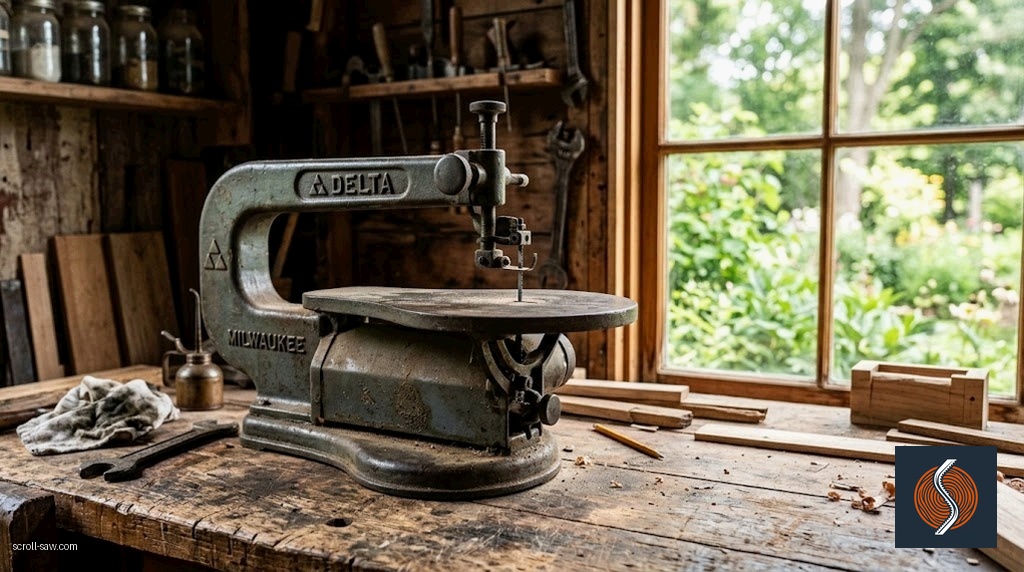
Old Delta Scroll Saw: What to Check, What to Fix, and Whether It Is Worth It
Delta Machinery made scroll saws from the 1930s through the 2000s, under American manufacturing and later under various overseas arrangements. The result is a very wide range of quality that shares a name. A Delta scroll saw from the 1950s, made in Milwaukee, is a different machine from a Delta scroll saw from 2005, made overseas under license. Both can be excellent; both can be problems. The name alone tells you almost nothing.
This article is a practical guide to evaluating an old Delta scroll saw: what varies by era, what to check before deciding to restore, and how to tell whether the specific unit in front of you is worth the effort.
Direct answer
Old Delta scroll saws span a wide quality range depending on era and manufacturing origin. Pre-1990 American-made Deltas (the 40-series models) are generally worth restoring: cast iron construction, quality bearings, robust design. Post-2000 models under various ownership arrangements are more variable. Evaluate any specific unit based on mechanical condition, parts availability, and the specific model’s track record, not the Delta name alone.
A brief history of Delta and why it matters
Early era (1930s-1960s). Delta Manufacturing, Milwaukee. Heavy cast iron, high build standards. The models from this period (including Homecraft budget line and professional Delta) are among the most durable scroll saws ever made.
Mid era (1970s-1990s). Delta International. Continued quality, some model redesigns. American manufacturing. Still excellent machines.
Late era (1990s-2000s). Porter-Cable acquired Delta; manufacturing moved or changed. Quality became inconsistent depending on the model and year. Some late-era Deltas are excellent; others are not.
Recent era (2000s onward). Delta’s brands passed through several corporate arrangements. Current Delta tools are imported products of variable quality under a heritage brand name.
For a found or inherited “old Delta” scroll saw, the era determines how much the name tells you about the machine.
The models that matter most on the used market
Delta 40-200 series (parallel-arm design, made from 1994 onward in various forms). One of the most common used Delta scroll saws. Parallel-arm design, variable speed, pin-less blade holders. These are good saws when set up correctly. Parts availability varies by model year and current Delta support.
Delta 24-400 (two-speed, older). An older model with a two-speed motor and a reputation for reliability. Cast construction. Less common now but worth finding.
Delta Homecraft models (1940s-1970s). See the Homecraft section above. These use pin-end blades and have simple, repairable construction.
Delta 16-inch (various model numbers, 1990s). 16-inch throat depth, variable speed, popular hobby saws. Generally good; check the blade holder design (some are better than others).
Pre-use inspection checklist
For any old Delta scroll saw, before plugging in:
1. Cord and switch. Full cord length for cracked insulation, damaged plug, or exposed wire. Switch for clean on/off action.
2. Motor. Hand-turn the arm assembly through the full stroke. Should be smooth. Any roughness or grinding indicates bearing wear.
3. Blade clamps. Both upper and lower clamps should open and close cleanly and hold with real pressure. Worn or deformed clamps are the most common failure on used saws.
4. Tension mechanism. Mount a blade and tension fully. Pluck the blade; should ring clearly. If the spring is weak, it will thud.
5. Table. Flat, tilt-adjustable, and lock-secure. Check for cracks near the throat or at the trunnion mounts.
6. Arm assembly. Look for play in the arm pivot. Some play is normal on old saws; excessive play means bushing or bearing wear.
7. Variable speed (if equipped). Speed should change smoothly across the range with no sudden jumps or dead spots.
8. Guards and hold-down. Should be present and functional.
Only after this checklist should the saw be run under load.
Parts availability for old Delta models
Delta service currently. Delta Machinery’s current ownership has some legacy parts support. Contact customer service with the model number and part needed.
OWWM (Old Wood-Working Machines). Active community with documentation, parts leads, and advice for vintage Delta restoration. Best resource for pre-1990 models.
Third-party suppliers. Companies specializing in vintage power tool parts stock common Delta items (blade clamps, belts, tension springs, switches).
Generic substitutes. Belts, bearings, springs, and cords often have generic equivalents. Measure the original before ordering.
Cross-reference with Rockwell. Delta and Rockwell shared manufacturing relationships for decades. Parts for equivalent Rockwell models sometimes fit Delta.
What to fix vs. what to pass on
Fix: Worn blade clamps (replaceable), weak tension spring (replaceable), cracked cord (standard replacement), dull motor brushes (accessible on universal motors), table tilt lock wear (hardware replacement).
Pass on: Cracked cast iron in structural locations (frame, table, arm pivot), motor that smokes or has burned windings, arm assembly damage beyond bearing replacement, multiple simultaneous failures where combined repair cost exceeds replacement.
Setup after restoration
A restored Delta deserves proper setup before use.
Table square. Verify with a drafting square against the blade.
Blade tension. Full tension; pluck test.
Blower direction. Aim at the cut line.
Hold-down. Just clearing the workpiece.
Test cut. Straight line, curve, interior cut in scrap.
Verdict
An old Delta scroll saw is worth restoring if the model is from the American manufacturing era (pre-2000 generally), the structural components are sound, and the wear items can be sourced. American-made Deltas are among the most durable hobby saws ever produced and can cut well for decades more after a basic restoration.
For post-2000 Deltas, evaluate the specific unit on its mechanical merits, not on the brand heritage. Quality varies too widely across that period to make a blanket recommendation.
Any old Delta is worth examining closely before plugging in, regardless of era.
FAQ
Are old Delta scroll saws any good? Pre-1990 American-made Deltas are excellent. Mid-era (1990s) parallel-arm models are good. Post-2000 models are variable.
Where can I find parts for an old Delta scroll saw? Delta Machinery customer service, OWWM.org, third-party vintage parts suppliers, and generic substitutes for standard wear items.
What is a Delta 40-200? A parallel-arm variable-speed Delta scroll saw produced across several model years. One of the most common Delta scroll saws on the used market.
Can I use modern blades in an old Delta? For models with pin-less clamps, standard 5-inch pin-less blades fit. For older models with pin-end clamps, pin-end blades are required.
Is a 1970s Delta scroll saw better than a modern import? For build quality and durability, yes, if it is in good condition. American-made Deltas from that era are heavy, well-built machines.
How do I find out what model Delta scroll saw I have? The model plate on the motor housing or base. Delta also published serial number date guides available through OWWM.org.
Are old Delta scroll saw parts compatible with Rockwell? Sometimes. Delta and Rockwell had manufacturing relationships; some parts cross between equivalent models. Check dimensions before ordering.


