
Pine Scroll Saw Projects: What Clear Pine Can Do and Where It Struggles
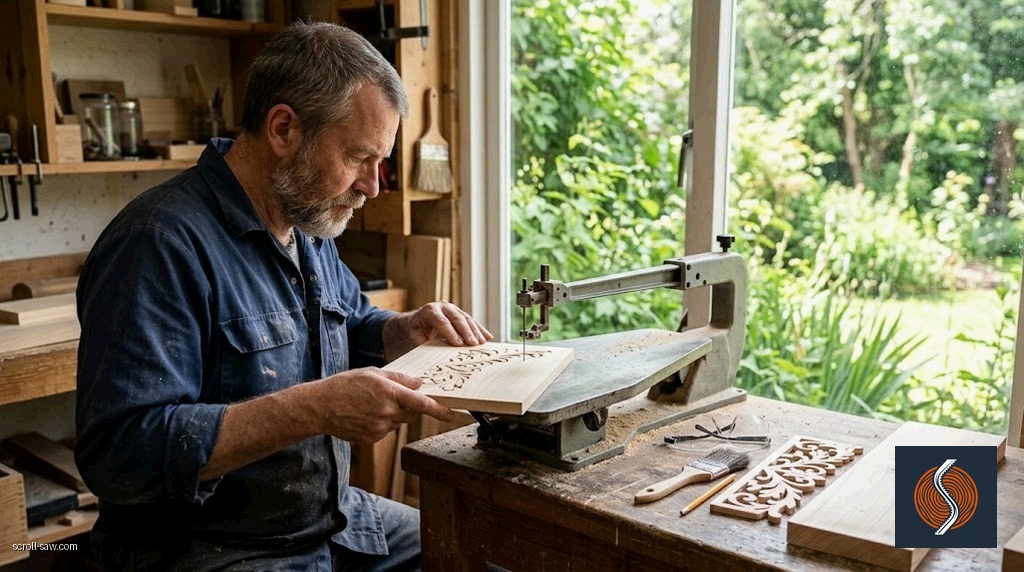
Pine Scroll Saw Projects: What Clear Pine Can Do and Where It Struggles
Pine is in every lumber yard and home center. It is inexpensive, available in every thickness, and the scent of fresh pine being cut is legitimately one of the more pleasant things about scroll saw work. It is also not the easiest scroll saw material: the grain can catch the blade, knots are a serious problem, and pine is soft enough that a too-fast feed rate produces a rough cut edge rather than a clean one.
With the right stock selection and setup, clear pine scroll saw work is genuinely beautiful. With careless stock selection, pine fights the blade at every knot and produces tearout at every grain reversal. Knowing which pine to use and how to cut it cleanly is what separates the two outcomes.
Direct answer
Clear pine (no knots, straight grain) cuts well on a scroll saw with standard blades (#5 for 1/4-inch, #7 for 3/4-inch) and produces a warm, natural finish that accepts clear oil well. Knotty pine is difficult: knots deflect blades, can come out during cutting, and produce unpredictable results. The best pine scroll saw projects showcase the natural grain and warm color of clear pine: freestanding silhouettes, signs, holiday ornaments, and simple fretwork panels.
Choosing pine for scroll saw work
Clear pine: what to look for. In a lumber yard, look for boards with straight, parallel grain lines running the full length of the board. The grain lines should be close together (fine grain, slow growth). No knots within the cutting area.
Grain orientation matters. A board with vertical grain (the annual rings run perpendicular to the face) cuts more cleanly in both directions than flat-sawn pine (rings parallel to the face). Vertical-grain pine is harder to find but noticeably better for scroll saw work.
Common lumber (knotty pine): avoid for detail work. Knots are harder than the surrounding wood. A blade cutting through pine encounters the knot suddenly, deflects or stalls, and produces a jog in the cut line. For large silhouettes where no cut line passes through a knot, knotty pine can be manageable. For fine detail, use clear stock.
Sugar pine and western white pine. Softer and more consistent than Eastern white pine. Easier to cut and produces cleaner edges. Less available in eastern markets.
Ponderosa pine. Widely available, relatively consistent. Clear sections cut well.
Yellow pine (Southern pine, hard pine). Significantly harder and more resinous than soft pine species. Dulls blades faster and can be gummy. Not ideal for scroll saw detail work.
Setup for pine
Pine is forgiving but rewards good setup.
#5 reverse-tooth for 1/4-inch. Standard choice. The reverse teeth produce clean bottom faces and reduce tearout in the soft wood.
#7 for 1/2-inch to 3/4-inch. Move up in blade size with thickness. Pine at 3/4-inch with a #5 blade produces excessive heat.
Medium saw speed. Pine cuts easily; very high speed can melt the resin and gum the blade. Medium variable speed works well.
Feed steadily. Pine’s grain can pull the blade sideways at grain reversals. Steady, even feed reduces this. Do not stop and restart mid-cut in pine; the restart point leaves a small mark.
Watch for blade gumming. Pine resin can build up on the blade and make it sticky. A blade that is running hotter than usual in pine may be gummed. Remove the blade, wipe with mineral spirits, let dry, reinstall.
Project types that work well in pine
Holiday ornaments in 1/4-inch. Clear pine ornaments with a natural oil finish have a warm, nostalgic quality that birch plywood cannot quite match. The grain shows through the finish and makes each ornament slightly unique.
Freestanding silhouettes. A 3/4-inch pine deer, cabin, or bear silhouette is a classic. The natural color and scent, finished with a clear oil or wax, is appealing on its own without stain.
Welcome signs. Pine letters and welcome signs at 3/4-inch look substantial and are appropriate for the traditional aesthetic where pine is the classic country-style material.
Simple fretwork panels. Pine in 1/2-inch or 3/4-inch for decorative panels with moderate detail. Fine fretwork in pine can work but the grain sometimes follows the blade; plan designs with wide enough bridges.
Rustic and farmhouse-style pieces. The aesthetic suits pine. A clean scroll-cut piece in pine with a wire brushed surface and clear wax finish reads as intentional in a farmhouse or cabin setting.
Children’s puzzles and toys. Clear pine at 1/2 inch or 3/4 inch is appropriate for puzzles and simple toy shapes that will be handled. Sands smooth, takes safe non-toxic finishes, and is soft enough to be light in small hands.
What does not work well in pine
Very fine fretwork with small bridges. Pine’s grain irregularity and softness make thin bridges fragile. Fine portrait fretwork belongs in a harder, more consistent-grained hardwood.
Any work that must pass through a knot. Predictable results cannot be achieved when a cut must pass through a knot.
Very thin stock (under 1/8-inch). Pine at 1/8-inch can be floppy and tear. Better to use birch plywood for thin-stock detail work.
Finishing pine scroll saw work
Natural oil finishes. Danish oil or pure tung oil on clear pine brings out the warm yellow and orange tones of the grain. The most appealing finish for pine scroll saw work that should read as natural wood. One to two coats, wipe off excess, let cure.
Clear wax. A thin coat of beeswax or paste wax over bare sanded pine. The simplest finish; appropriate for country or rustic-style pieces.
Clear spray lacquer. Fast, protective, transparent. Standard for production ornament work where finishing time matters.
Painting. Pine accepts paint well. For pieces where color is the point, prime with a water-based primer, then apply craft acrylic or spray enamel. Pine’s subtle grain shows through thin translucent stains.
Avoid oil-based stains in dark colors. Pine absorbs stain unevenly; dark stains often blotch badly. Either use a wood conditioner before staining or choose a finish that works with uneven absorption.
Verdict
Clear pine is a capable and appealing scroll saw material in the right applications. Its warmth, affordability, and availability make it practical for holiday production work, rustic decor, and projects where the natural pine look is the goal. Its grain variability and softness make it less ideal than hardwoods for fine detail work and very intricate patterns.
Choose clear stock, use reverse-tooth blades, and finish with a natural oil or clear coat. Pine treated this way produces work that looks nothing like cheap material.
FAQ
Can I use knotty pine for scroll saw work? For large silhouettes where no cut line passes through a knot, yes. For detail work or any pattern where the cut must pass near a knot, use clear stock.
What is the best blade for cutting pine on a scroll saw? #5 reverse-tooth for 1/4-inch pine. #7 for 1/2-inch to 3/4-inch.
Does pine accept stain well? Unevenly. Pine blotches with oil-based stain. Use a wood conditioner before staining or choose a finish that works with pine’s variable absorption.
What is the best finish for a pine scroll saw piece? Danish oil or clear penetrating oil for natural-look pieces. Clear spray lacquer for production ornaments. Both enhance the natural warmth of clear pine.
Why does my pine blade keep getting gummy? Pine resin builds up on the blade. Wipe the blade with mineral spirits, let dry, and reinstall.
Can I use dimensional 2x4 lumber for scroll saw work? For large simple silhouettes in clear sections, yes. For detail work, 2x4 is too thick for most hobby saws and the construction-grade stock is not usually clear enough for scroll saw quality.
Is pine or birch plywood better for scroll saw ornaments? Differs by intended look. Birch plywood is more consistent, flatter, and better for painted or detailed work. Clear pine has more character in the grain and suits natural finishes better.


