
Sign Scroll Saw Patterns: Material Thickness, Blade Size, and Finishing Notes
Sign Scroll Saw Patterns: Material Thickness, Blade Size, and Finishing Notes
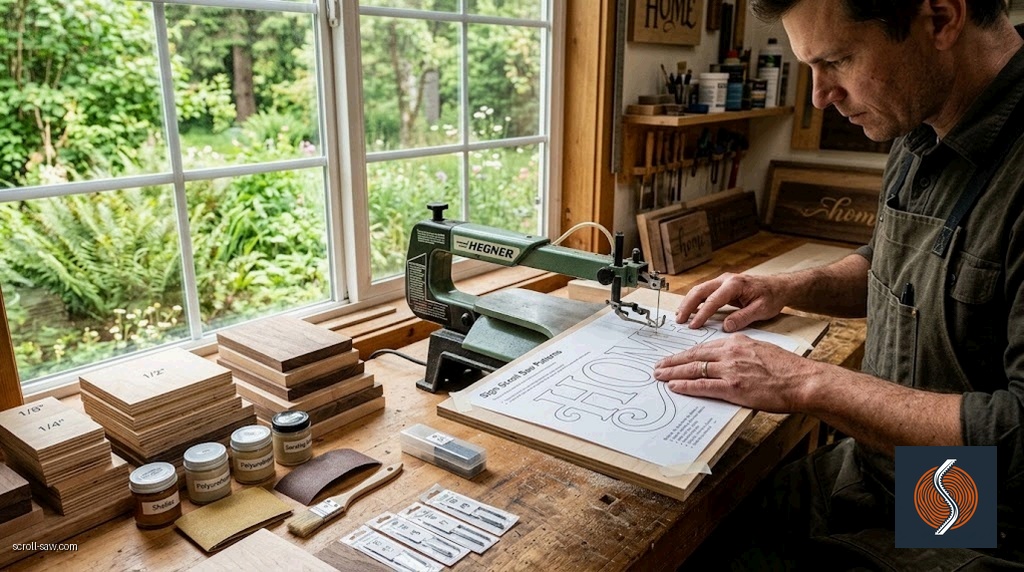
Sign scroll saw patterns cover an enormous range. Family entryway signs, kitchen decor signs, garden signs, business signs, holiday signs, and inspirational quote signs all fall into this category. The technique stays consistent across the range: cut a rectangular or shaped panel from wooden stock, pierce or shape the sign’s text and decorative elements, mount for display.
What separates signs that read clean from signs that read amateurish: font choice for the intended text, stroke thickness sized for the sign’s viewing distance, and finish selection matching the intended display environment (indoor vs outdoor, casual vs formal).
What sign scroll saw patterns typically include
Most sign scroll saw patterns include a rectangular or shaped panel outline, text or quote pierced through the panel, and optional decorative border or accent elements. Text can be a single word (family surname, name, quote keyword), a phrase (welcome, kitchen quote, garden inscription), or a full quote (inspirational, humorous, biblical).
Quick answer: cut from 1/2 to 3/4 inch cherry, walnut, or basswood for indoor signs. Use 3/4 inch cedar or white oak for outdoor signs. Use a #5 skip-tooth for outer perimeter and #3 reverse for pierced text detail. Choose fonts with strokes at least 3/16 inch thick. Cut interior text before outer perimeter. Finish with wipe-on oil for indoor, spar urethane for outdoor.
Material thickness
Half-inch stock for small indoor signs (kitchen decor, small quote signs).
Three-quarter inch stock for medium indoor signs (family entryway signs, wall-hung inspirational quotes) and standard outdoor signs.
One-inch stock for large signs (business signs, large family entryway signs).
Wood choice
Indoor signs:
Half to 3/4 inch quartersawn cherry for warm oiled indoor signs.
Half to 3/4 inch walnut for formal or dark-tone indoor signs.
Half to 3/4 inch basswood for painted indoor signs in specific colors.
Half to 3/4 inch maple for pale indoor signs.
Outdoor signs:
Three-quarter inch cedar. Weather-resistant, ages to silver-gray if untreated, holds paint well.
Three-quarter inch white oak. Weather-resistant, closed-grain, resists rot.
Avoid pine and softwoods other than cedar for outdoor signs. They rot within a season or two.
Avoid interior hardwoods (cherry, walnut, maple) for outdoor signs. They crack and warp under weather exposure.
Blade size
A #5 skip-tooth blade for outer sign perimeter cuts on 1/2 to 3/4 inch stock.
A #7 skip-tooth for thicker stock (1 inch signs) or when cutting oak.
A #3 reverse-tooth for pierced text detail and closed counters.
A #1 blade for the finest detail on ornate script text.
Font selection
Bold sans-serif fonts: easiest to pierce, reads clean at any viewing distance.
Slab serif fonts: moderate difficulty, formal look.
Classic serif fonts (Times, Garamond): higher difficulty. Fine serifs need thickening.
Script fonts: reserve for informal signs at close viewing distance (kitchen decor, nursery signs). Fine connecting strokes limit outdoor use.
Decorative fonts: use sparingly. Fine detail elements complicate cutting.
Stroke thickness
Minimum stroke thickness varies by sign viewing distance:
-
Close viewing (within 3 feet, kitchen or desk signs): minimum 3/16 inch stroke thickness.
-
Medium viewing (3 to 10 feet, wall-hung inspirational signs): minimum 1/4 inch stroke thickness.
-
Far viewing (over 10 feet, entryway or outdoor signs): minimum 3/8 inch stroke thickness.
Strokes thinner than the minimum for the sign’s viewing distance read as muddled.
Cut sequence
-
Sand both faces of the panel to 220 grit before cutting.
-
Apply the pattern with painter’s tape and spray adhesive.
-
Drill entry holes for every closed counter and interior pierce with a 1/32 inch bit.
-
Cut interior text and decorative pierces smallest to largest.
-
Cut the outer sign perimeter last in one continuous cutting path.
-
Save fragile detail (fine serif tips, decorative flourishes) for the last cutting strokes.
Where sign patterns fail
Text reads muddled at intended viewing distance. Stroke thickness too fine for the distance. Verify stroke thickness against viewing distance minimums.
Fine serifs shear off. Serifs drawn too thin. Thicken or choose a slab serif or sans-serif font.
Sign warps outdoors. Wrong wood species or not sealed on both faces. Use cedar or white oak for outdoor signs, seal both faces.
Sign cracks in cold weather. Interior hardwood used outdoors. Use cedar or white oak for outdoor signs.
Paint chips on outdoor sign. Non-outdoor-rated paint. Use exterior spar urethane or exterior-rated acrylic paint.
Finishing notes for indoor signs
Wipe-on boiled linseed oil for cherry, walnut, and maple. Two coats over two days.
Oil-varnish blend for slightly more protection against handling.
Painted indoor signs: shellac sanding sealer, acrylic craft paint in specific color, matte water-based polyurethane top coat.
Finishing notes for outdoor signs
The finish requirements for outdoor signs differ. Weather exposure requires UV-resistant coatings that resist water, temperature swings, and freeze-thaw cycles.
-
Sand outdoor sign to 220 grit.
-
Apply exterior-rated oil finish (Cabot’s Australian Timber Oil or similar) as an initial protective layer.
-
Top-coat with exterior spar urethane for maximum weather resistance. Two to three coats.
-
Recoat outdoor signs every 2 to 3 years to maintain weather resistance.
For painted outdoor signs: exterior-rated primer, exterior-rated acrylic paint, exterior spar urethane top coat.
Mounting
Indoor signs: keyhole slot cut into the back before finishing, or heavy-duty picture-frame hangers after finishing.
Outdoor signs mounted to a house or building: exterior-rated screws through pre-drilled holes into wall studs or building frame.
Outdoor garden signs: mounted to a wooden stake driven into the ground.
Freestanding signs: cut a decorative wooden base from matching stock, glue and pin the sign to the base.
Comparing three sign projects
Simple kitchen quote sign (Eat Cook Love) in 1/2 inch cherry, oiled, keyhole-slot mounted. The reliable first sign project. Cuts and finishes in a weekend.
Family entryway welcome sign in 3/4 inch walnut with decorative pierced border, oiled, picture-hanger mounted. The mid-range piece.
Outdoor cedar family sign for a house entrance (18 by 30 inches) with pierced surname and address numbers, painted with exterior-rated acrylic and sealed with exterior spar urethane, mounted with exterior-rated screws into house exterior wall studs. The signature outdoor project.
Conclusion
Sign scroll saw patterns produce clean-reading signs when the font stroke thickness matches the sign’s intended viewing distance, the wood species matches the intended display environment (indoor vs outdoor), and the finish matches the display environment’s weather exposure requirements. Half to 1 inch cherry, walnut, basswood, or maple for indoor signs. Three-quarter inch cedar or white oak for outdoor signs. A #5 skip-tooth for outer perimeter, #3 reverse for pierced text detail. Wipe-on oil for indoor, exterior spar urethane for outdoor. Keyhole slot, picture-frame hanger, exterior-rated screws, or wooden stake mounting.
Frequently asked questions
What wood works best for a scroll saw sign? Cherry, walnut, or basswood for indoor signs. Cedar or white oak for outdoor signs. Match wood species to intended display environment.
Which blade cuts pierced text cleanest? A fresh #3 reverse-tooth blade for pierced text detail and closed counters, dropping to a #1 for hair-thin script strokes.
How thin can I safely draw a text stroke? Minimum 3/16 inch for close viewing signs, 1/4 inch for medium viewing, 3/8 inch for far viewing signs.
What font is easiest for a sign? Bold sans-serif for maximum readability at any viewing distance. Slab serif for formal signs. Script fonts limit outdoor use.
What finish works outdoors? Exterior-rated oil finish under exterior spar urethane top coat. Recoat every 2 to 3 years.
How do I mount an outdoor sign? Exterior-rated screws through pre-drilled holes into wall studs or building frame. For garden signs, mount to a wooden stake driven into the ground.
Paint or oil? Wipe-on oil for indoor cherry, walnut, and maple signs. Exterior spar urethane for outdoor cedar and oak signs.
References
-
Steve Good, Scrollsaw Workshop sign pattern archive: scrollsawworkshop.blogspot.com
-
Rust-Oleum shellac and finish product guide: rustoleum.com/product-catalog/consumer-brands/zinsser
-
Scroll Saw Woodworking & Crafts, Fox Chapel Publishing: foxchapelpublishing.com


