
Scroll Saw Art: Where Craft Becomes Something More
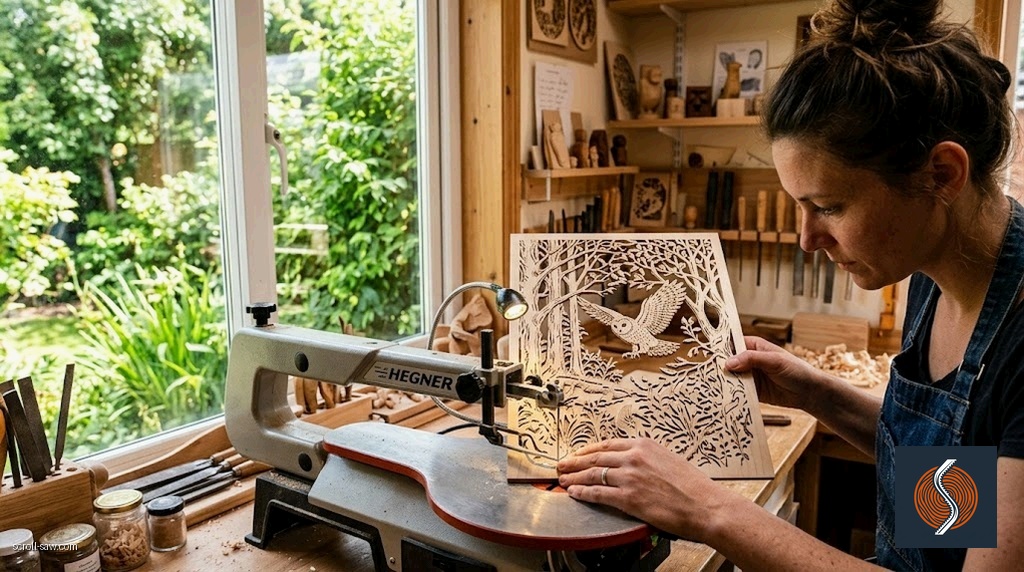
Scroll Saw Art: Where Craft Becomes Something More
Most scroll saw work is craft: produced to a design, consistent in execution, destined for a mantel or a gift box. Craft is honorable. Craft matters. But there is a category of scroll saw work that operates differently, where the object is the primary thing and the skill is in service of an idea that could not exist without it. That is scroll saw art, and it is more accessible than it looks from outside.
The scroll saw as an art medium has specific properties: the subtraction of material to reveal form, the interplay of positive space and negative, the physical presence of real wood grain against cut lines. These are genuine aesthetic properties that painters and printmakers cannot achieve and that digital fabricators can imitate but not replicate.
Direct answer
Scroll saw art is defined by work where the concept drives the execution: a specific idea or aesthetic vision requires the specific capabilities of the scroll saw to realize it. Portraiture in fretwork, intricate landscape silhouettes, layered dimensional pieces, and work that uses the physical properties of wood as part of the content are all legitimate art territory. The distinction from craft is intention, not skill level.
What makes scroll saw work art
Intentional use of the medium. Craft applies a technique to a design. Art uses the technique because it is the only way to realize the specific idea.
The piece could not exist in another medium. A scroll saw portrait in tiger maple or figured walnut uses the material’s specific visual properties in a way another medium cannot replicate.
Compositional decisions beyond pattern execution. Where the cuts fall, what is left as wood and what is removed, how the grain direction interacts with the cut lines.
Presence as an object. Scroll saw art exists in three dimensions with physical weight and texture. The work is not merely an image but an object with specific haptic and visual properties.
Aesthetic possibilities specific to the scroll saw
Positive-negative interplay. Every cut creates a relationship between what remains and what is removed. Designing with both in mind is the fundamental aesthetic of scroll saw art.
Light through the cuts. When a fretwork piece is backlit, cut areas transmit light and solid areas block it. This reversal creates effects no other medium produces the same way.
Wood grain as composition element. A bird’s-eye maple or figured walnut piece uses the wood’s natural visual texture as part of the composition.
Physical edge and shadow. The cut edges of scroll saw work create micro-shadows in raking light that are visible and tactile.
Approaches to developing a scroll saw art practice
Start with a specific concept. What is the piece about? What does it need to say or be? If there is no concept, it is craft, which is fine. Concept is what makes it art.
Design from the negative space. Instead of designing what will remain, design what will be cut away.
Use material properties intentionally. Choose wood for what its grain does to the specific design.
Work in series. A single piece is an experiment. A series of related pieces is a body of work.
Look at other two-dimensional media. Printmaking (woodcuts, linocuts) works in the same positive-negative logic as scroll saw fretwork. Cross-media looking develops an eye that scroll-saw-specific practice alone cannot develop.
Verdict
Scroll saw art is not a different technical skill level from scroll saw craft. It is a different intention. Any scroll saw practitioner with enough technical control to execute complex patterns is technically capable of making art. The step across the line is intentional: stop following patterns and start designing pieces that could not have been designed any other way.
FAQ
What is the difference between scroll saw craft and scroll saw art? Intention. Craft applies technique to a design. Art uses the technique because it is the only way to realize a specific concept.
Can a beginner make scroll saw art? Technically complex work requires skill, but the most impactful scroll saw art is not always the most technically difficult.
Who are some notable scroll saw artists? Gary Browning, Charles Dearing, and Judy Gale Roberts are among the most recognized.
Is scroll saw art taken seriously in galleries? In craft-specific galleries and woodworking exhibition contexts, yes.
How do I develop from scroll saw craft to scroll saw art? Start with a concept that requires the scroll saw’s specific properties to realize. Design from intentional decisions. Work in series. Show work in competitive or exhibition contexts.
Can scroll saw art be sold? Yes. Original scroll saw art commands higher prices than production craft work.
What materials are best for scroll saw art? Depends on the concept. Figured hardwoods where grain is part of the composition; consistent close-grained wood for portrait work where cut precision is the point.


