
Scroll Saw Bird Patterns: Design, Cutting, and the Species That Work Best
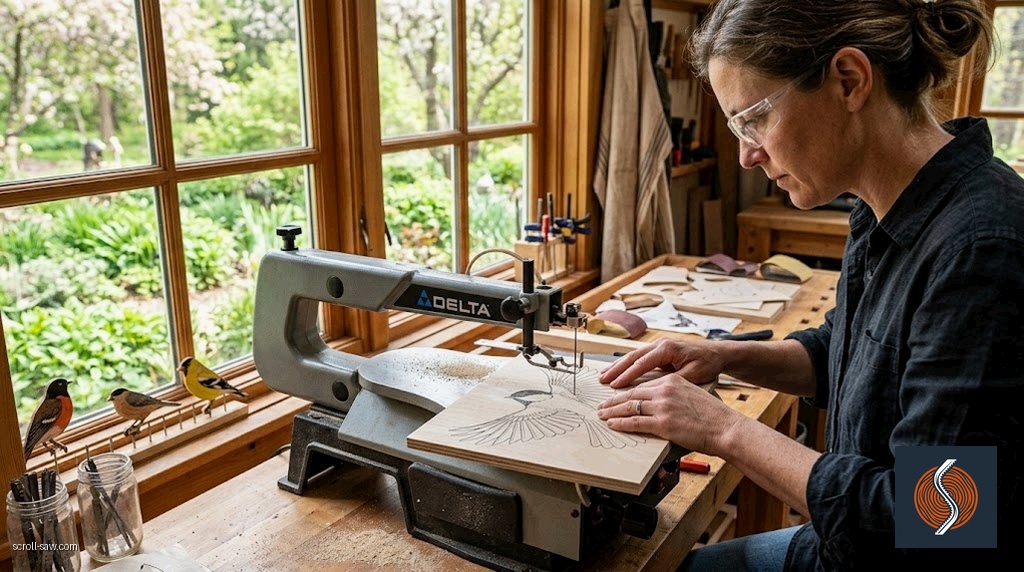
Scroll Saw Bird Patterns: Design, Cutting, and the Species That Work Best
Birds work as scroll saw subjects for the same reason they work in Japanese woodblock prints and medieval heraldry: the silhouette of a bird is distinctive. A crow and a heron and an eagle look different in pure outline. That specificity is what makes bird patterns satisfying: when a piece comes off the saw, it should look like a specific bird that someone knows.
Direct answer
Bird scroll saw patterns work best when the silhouette has distinctive species-specific characteristics (a heron’s neck curve, an eagle’s wing spread, a cardinal’s crest), bridges are planned to hold fine feather detail without breaking, and the cut is oriented so grain direction enhances the body rather than fighting the detail cuts. 1/4-inch Baltic birch or solid cherry cut with a #5 reverse-tooth blade handles most bird work.
Species that translate well to scroll saw
Eagle and hawk. Large wingspan silhouettes with strong outer profiles. Interior feather cuts add detail. Very popular in American market craft and decor.
Heron and egret. The elongated neck and long legs create a distinctive, elegant silhouette. One of the most beautiful bird patterns because the proportions are unusual and striking.
Cardinal. The crest and compact body are distinctive in silhouette. Easily painted in traditional red and black. Popular as ornaments and holiday decor.
Owl. The round facial disc, forward-facing eyes, and ear tufts are distinctive. Barn owls, great horned owls, and screech owls all translate clearly.
Hummingbird. The long bill, hovering posture, and compact body with spread wings make a recognizable silhouette.
Woodpecker. The clinging posture on a tree trunk, the prominent bill, the distinct color pattern. The bark texture of the tree and feather pattern on the back are natural interior detail opportunities.
Swan and duck. The swan in profile has a beautiful curved neck. Both work well as freestanding or wall-mounted pieces.
Design considerations by bird type
Fine bill detail. In 1/4-inch stock with a #5 blade, a bill should be at minimum 1/16 inch wide at its narrowest. Thinner bills break in cutting or handling.
Wing feather detail. Individual feather lines within wings are interior cuts that run parallel and close together. A #3 blade handles this detail better than a #5.
Perching leg and foot. A bird perched on a branch has very fine legs. Design the branch as the support and simplify the leg to a connection between body and branch.
Cut sequence
Interior cuts first (eye detail, interior feather cuts), smallest to largest. Long wing cuts continuously at a steady feed rate. Perimeter last, releasing the piece from the waste.
Material choices
-
1/4-inch Baltic birch plywood: Standard for most bird work.
-
Solid cherry or alder: For natural-finish pieces. The grain can enhance wing texture.
-
Figured walnut: Bird silhouettes in figured walnut with a clear oil finish are striking.
-
Basswood: For birds with planned painting.
Finishing
Natural wood with clear oil. For solid hardwood bird pieces. Danish oil on cherry or walnut produces pieces that look like serious artwork.
Traditional painted finish. Species-accurate colors. Base color on the body, painted detail, clear coat.
Two-tone natural and painted. The bird body in natural wood; the eye, bill, or wing-tip detail in painted accent color.
Verdict
Bird scroll saw patterns reward species specificity. The silhouette of a recognizable bird is more interesting than a generic bird shape. Choose species with distinctive outlines, plan bridges for thin bill and leg details, and orient the grain to enhance the body shape rather than fight the detail cuts.
FAQ
What is the best scroll saw blade for bird patterns? #5 reverse-tooth for most bird work. #3 for fine feather detail and thin bill areas.
How do I keep thin bird bills from breaking? Minimum 1/16-inch width at the narrowest point in 1/4-inch stock. Simplify the bill tip if needed.
What species work best for scroll saw bird patterns? Eagle, heron, owl, cardinal, and hummingbird are among the most recognized and most successfully cut bird subjects.
Should I paint a scroll saw bird or leave it natural? Both work. Natural hardwood with a clear finish looks elegant. Painted finishes allow species-accurate color.
Can I put multiple birds on one piece? Yes. A group of birds on a branch is a common design. The branch provides structural connection and a base for display.
Where can I find scroll saw bird patterns? Steve Good’s Scrollsaw Workshop, Fox Chapel Publishing bird-themed books, and individual designers on Etsy.
What is the easiest bird pattern for a beginner? A simple cardinal or duck silhouette with no interior cuts.


