
Scroll Saw Blade Tension: Why It Matters and How to Set It Right
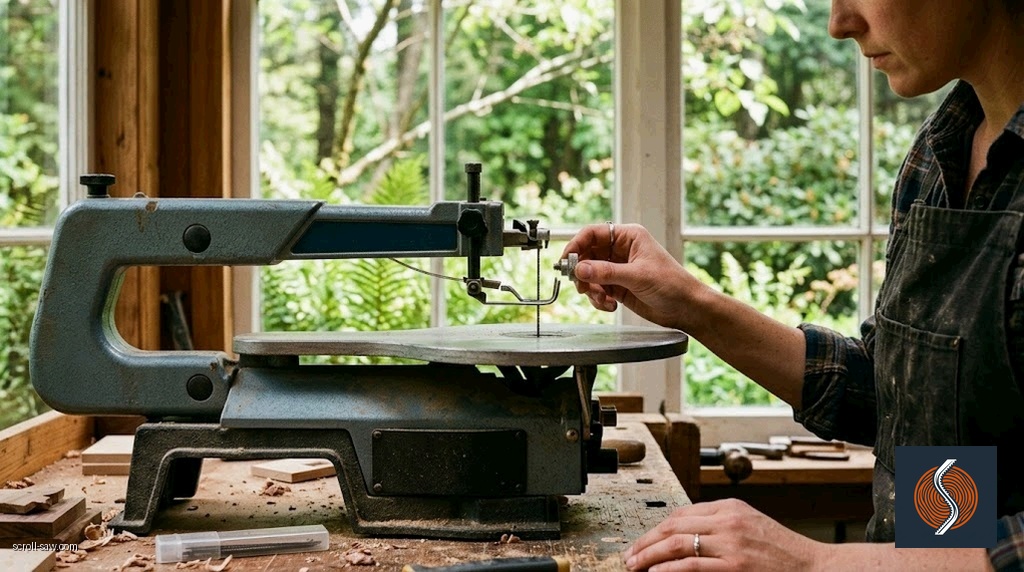
Scroll Saw Blade Tension: Why It Matters and How to Set It Right
Ask a scroll saw instructor what single setup variable causes the most problems for beginner and intermediate scrollers, and the answer is almost always blade tension. Too low, and the blade drifts, burns, and produces poor cuts. Too high, and fine blades snap. At the right tension, the blade cuts where it is pointed, stays on the line, and lasts the expected session.
Direct answer
Correct scroll saw blade tension is achieved by tightening the tension mechanism until the blade, when plucked like a guitar string, produces a clear, high-pitched ring rather than a dull thud. This tension level keeps the blade rigid under cutting load, prevents lateral deflection (which causes drift), and provides the resistance that makes the blade cut cleanly rather than being pushed sideways by the workpiece.
Why tension matters
A scroll saw blade cuts by reciprocating up and down at speed. As it cuts, the workpiece pushes against the blade from the sides. A blade under proper tension has enough stiffness to resist this lateral force and stay on the intended cut line. An under-tensioned blade deflects sideways under cutting pressure, which causes the cut to drift.
What under-tension causes: Drift off the cut line, blade burns the wood, cut face is angled, blade breaks unexpectedly, inconsistent cut width.
What over-tension causes: Blade snaps immediately or early in use, unnecessary stress on the saw’s tension mechanism, reduced blade life.
The pluck test: the practical standard
How to do it: Mount the blade. Apply tension. Pluck the blade in its center with a finger, as you would pluck a guitar string. Listen to the sound.
-
Dull thud or low tone: Under-tension. Increase tension.
-
High, clear ping or ring: Correct tension.
-
Very high note approaching shrill: Approaching over-tension for fine blades; back off slightly.
By blade size: Fine blades (#1 to #3) respond more sensitively. Medium (#5 to #7): a clear, firm ring. Large (#9 to #12): a lower ring pitch because the wider blade vibrates at lower frequency.
Step-by-step tension setting
-
Mount the blade. Both ends fully seated in clamps; clamps fully closed.
-
Apply initial tension to bring blade from slack to slightly taut.
-
Pluck the center of the blade. Note the sound.
-
Increase tension gradually. Pluck again.
-
Identify the transition from low thud to clear ring. Stop at the ring.
-
Verify after a few minutes of cutting. Some mechanisms relax slightly as the blade settles; add a small increment if pitch has dropped.
Common tension mistakes
Not tensioning enough. The most common mistake. Blade plucks with a low, dead sound. Tension until the blade rings.
Setting tension by feel rather than sound. “It feels tight enough” is not accurate. The pluck test takes one second and is reliable.
Not re-checking after the blade settles. Many blades relax slightly after the first few cuts. Check and adjust.
Using a single tension setting for all blade sizes. The pluck test calibrates correctly for each size.
Verdict
Blade tension is the most important setup variable in scroll saw work, and the pluck test is the accurate, fast, free tool for setting it correctly. One second per session, before the first cut, prevents the large majority of drift, burning, and premature blade failure problems.
If scroll saw cuts are drifting, the first question is always: did I pluck the blade and verify the ring?
FAQ
What happens if scroll saw blade tension is too low? The blade deflects sideways under cutting pressure, causing drift, burning, and inconsistent cut edges.
Can too much tension break a scroll saw blade? Yes, especially on fine blades (#3 and smaller). Over-tensioning puts the blade at risk of snapping immediately or early in the cut.
How do I know if my scroll saw blade tension is correct? The pluck test: pluck the blade in the center. If it rings clearly (not thuds), tension is correct.
Why does my blade keep breaking mid-cut? Could be: over-tension, blade not fully seated in the clamp, wrong blade size for the material, or over-force against a tight turn.
Should I release blade tension when the saw is not in use? Not necessary for normal storage. Re-tension if storing the saw for an extended period.
Why does my scroll saw blade still drift after tensioning? Verify the blade is square to the table. If it rings but still drifts, check squareness with a drafting square.
Does blade tension change between sessions? Sometimes slightly, as the blade clamp seating settles. Verify with the pluck test at the start of every session.


