
Scroll Saw Box Patterns: Building Boxes That Are Worth Keeping
Scroll Saw Box Patterns: Building Boxes That Are Worth Keeping
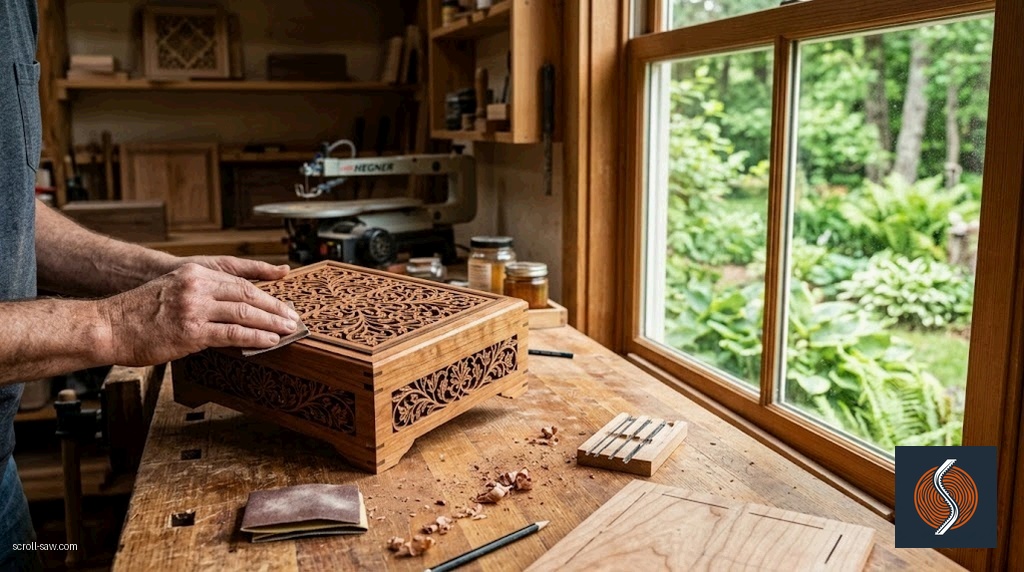
A box is one of those objects that people keep. Not every box, and not every scroll saw box, but the ones that are made well. A jewelry box with a fitted lid, a keepsake box with a fretwork panel on the front, a small trinket box from figured walnut with a tight-fitting sliding lid: these stay on dressers and shelves for decades. The scroll saw contributes the decorative panel work; the box construction contributes the joinery and function. Both have to be right.
This article covers how to approach scroll saw box patterns, what the design considerations are, and how to produce results that justify the effort.
Direct answer
Scroll saw box patterns range from simple hinged boxes (four sides, a base, and a hinged lid) with decorative scroll-cut panels on the lid or sides, to more complex designs with fitted sliding lids, interior dividers, and full-surface fretwork panels. The scroll saw contributes shaped panels and decorative cuts; the joinery (dados, rabbets, miters) is done with table saw or router. Most serious scroll saw box work combines both the scroll saw and shop joinery tools.
Box categories by complexity
Hinged-lid keepsake box with decorated lid panel. A simple rectangular box with four sides, a base, and a hinged lid. The lid has a scroll-cut decorative panel (a floral motif, a family name, a wildlife scene) either cut directly into the lid or set as a separate panel inlaid into a recess. The joinery is simple rabbets or butt joints reinforced with glue. This is the most common and most approachable scroll saw box project.
Sliding-lid box. A box where the lid slides in routed grooves on the inside of the side panels. No hinges needed. The lid can have a scroll-cut pull tab or a decorative surface panel. Cleaner look; requires accurate groove routing.
Fretwork panel box. A box where one or more sides have fretwork scroll-cut panels that allow the interior to be partially visible. Light-lined interior creates a lamp effect when lit from within. More demanding because the fretwork panels must also be structural box components.
Layered intarsia-topped box. A simple box with a lid surfaced in intarsia work: a wildlife scene, a landscape, or a floral composition in multiple wood species. The intarsia is cut on the scroll saw; the box body is joinery work. Time-intensive; very impressive.
Puzzle box. A box with a hidden opening mechanism. Some designs use scroll-cut interlocking pieces that must be moved in sequence. Clever and gift-appropriate.
Carved and scroll-cut combination. A box with scroll-cut panel work and relief-carved detail elements. Both techniques contribute to the visual result.
Design and structural considerations
Box squareness. A box that is not square will not close properly. The lid will rock; the sides will not align. Every cut and every joint must be square. Check with a reliable square after each stage of assembly.
Lid fit. A well-fitting hinged lid should close with a slight pressure and stay closed without a latch. Loose is worse than slightly snug; a loose lid reads as poor construction.
Structural integrity of fretwork panels. A fretwork side panel with many interior cuts may be too thin to provide structural rigidity to the box. For fretwork side panels, either back them with a thin solid panel (so the fretwork is decorative on the face, backed by structure) or keep the fretwork area away from the corners where the structural connection is made.
Scroll panel inset. The most common approach to a decorated lid: a recess routed into the lid surface, with a separately cut scroll panel inset into the recess and glued in place. The recessed inset looks intentional; a panel glued flat to the lid surface looks added-on.
Interior surface quality. The inside of the box receives as much scrutiny as the outside. Sand interior surfaces to the same standard as exterior. Line with felt or thin leather if the box will hold jewelry or valuables.
Hardware. Hinges must be mortised flush for a clean result. Hinges surface-mounted on the lid and back look unfinished. Mortise the hinge into both the box back and the lid back.
Wood choices for scroll saw boxes
Walnut. The most serious choice for a gift or display box. Dark, fine-grained, takes an oil finish beautifully.
Cherry. Warm red-orange, deepens with age. Traditional choice for keepsake boxes.
Maple (hard or figured). Light-colored, very hard, takes a clear finish. Bird’s-eye or curly maple for the lid panel makes an impressive decorative element without the scroll saw contributing any cut decoration.
Basswood. For painted boxes and practice joinery. Not appropriate for a serious natural-finish piece.
Baltic birch (quality grade). For painted or stained boxes. Not the choice for natural-finish work.
Blade selection for box panels
Panel surface work (#5 reverse-tooth): Standard for decorative lid and side panel fretwork in 1/4-inch stock.
Fine detail (#3): For intricate panel cuts.
Thicker side panels (#7): If the box sides are 1/2-inch solid hardwood.
Finishing a scroll saw box
Sanding sequence: 120 grit, 180 grit, 220 grit on all surfaces before any finish.
Oil finish (Danish oil or tung oil): For solid hardwood boxes. Applied before final assembly where possible; touch up after assembly. Two to three thin coats.
Shellac and wax: For lighter, more traditional finishing. Appropriate for boxes in cherry and maple.
Interior lining: Green, red, or black craft felt cut to fit and contact-cemented in place. Makes the interior look intentional and protects the contents.
Hinge installation: Mortise the hinges flush before final finishing. Apply finish, let cure, then reinstall the hinges.
Verdict
Scroll saw boxes are rewarding projects precisely because they combine decorative and functional requirements. The scroll saw contributes what it does best: shaped panels and decorative detail. The joinery contributes what that requires: accurate square cuts, fitted joints, and functional hardware.
A box that closes well, has a fine-fitting lid, and carries a piece of scroll work that suits the wood’s character is a serious piece. Take the joinery as seriously as the scroll cut.
FAQ
What is the best wood for a scroll saw box? Walnut or cherry for a serious natural-finish keepsake box. Basswood or Baltic birch for a practice or painted box.
How do I make a hinged lid fit tightly on a scroll saw box? Accurate rabbets on the lid so it indexes into the box opening. Mortised hinges that are flush with the surface. Test the fit dry before gluing.
Can I make a full fretwork side panel box? Yes, but back the fretwork with a thin solid panel for structural integrity. Fretwork side panels with many interior cuts can lack rigidity if used as the sole structural element.
How do I install box hinges on a scroll saw box? Mortise the hinges flush into both the box back and the lid back using a router, chisel, or sharp knife. Surface-mounted hinges look unfinished.
What scroll saw blade for box lid panels? #5 reverse-tooth for most 1/4-inch lid fretwork. #3 for fine detail.
Should I line the inside of a scroll saw box? For any box that will hold jewelry, keepsakes, or valuables: yes. Felt or thin leather lining looks intentional and protects the contents.
Where can I find scroll saw box patterns? Fox Chapel Publishing has dedicated box pattern books. Steve Good’s Scrollsaw Workshop has box-related patterns. Many woodworking plan retailers include box designs as well.


