
Scroll Saw Jewelry: Making Wearable Wood Pieces That People Actually Wear
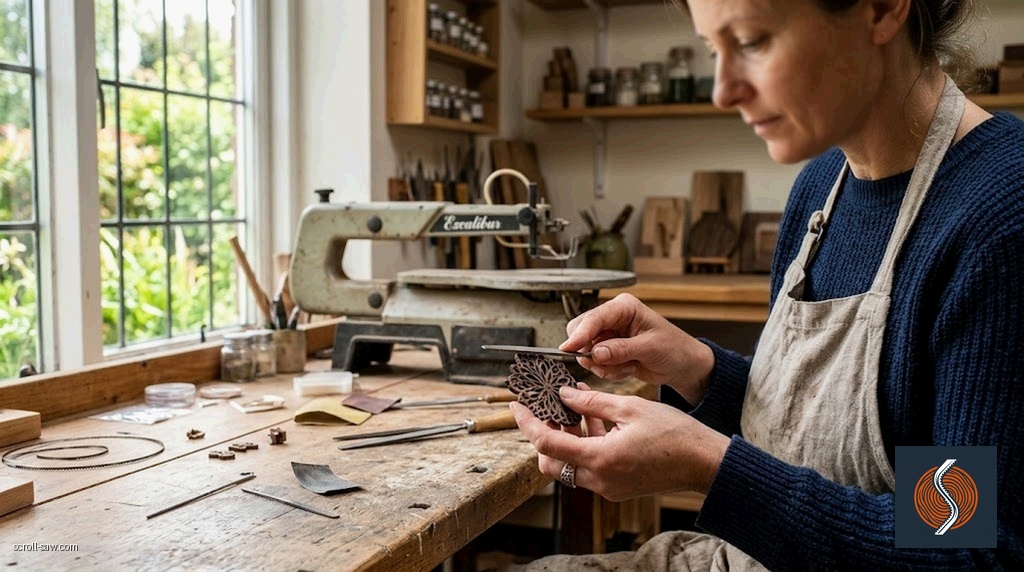
Scroll Saw Jewelry: Making Wearable Wood Pieces That People Actually Wear
Wood earrings are having a sustained moment. The specific aesthetic of a thin-cut wood piece with clean grain, a simple geometric or organic shape, and a quality ear wire is well-established in craft markets and independent boutiques. The scroll saw, which most people associate with wall ornaments and holiday decorations, produces wood jewelry pieces that are genuinely competitive in this market.
The challenges are specific: the pieces must be thin enough to be lightweight, finished to handle skin contact and daily wear, and designed with shapes that have enough visual interest to carry the scale. This article covers how to meet all three requirements.
Direct answer
Scroll saw jewelry works best in thin stock (1/8-inch or thinner), with simple geometric or organically shaped profiles, finished with multiple coats of a durable, non-reactive finish (water-based polyurethane or jewelry-specific resin coating). Earring hardware (ear wires, ear posts, jump rings) is available from jewelry supply retailers and connects to the wood piece through small drilled holes. The most wearable pieces are the lightest ones: thin stock, minimal size, clean finish.
Wood choices for jewelry
Thin veneer and wood sheets (1/32 to 1/16 inch). The lightest option. Small geometric shapes (circles, hexagons, triangles) cut from very thin wood sheets. Lightweight enough for long earrings without pulling. Requires a very sharp blade and a backing material during cutting to prevent tearout.
1/8-inch basswood or alder. The most common scroll saw jewelry thickness. Light, cuts cleanly, takes stain and paint well, sturdy enough to drill for hardware without splitting.
1/8-inch Baltic birch. Similar properties to solid wood at this thickness. Works well for painted pieces; the plywood edge is visible and may need painting or sealing.
Figured or exotic thin stock. Bird’s-eye maple, zebrawood, purpleheart, and padauk in 1/8-inch thickness produce stunning natural-finish pieces. The figure is the design; the cut shape is the frame for it.
Dyed wood or wood veneer. Pre-dyed wood in bright colors available from craft suppliers. No painting required. Used for contemporary geometric jewelry.
Design for wearable jewelry
Keep it small. Most successful wood earrings are between 1 and 2.5 inches in maximum dimension. Larger pieces become heavy or visually overwhelming at earring scale.
Simple, clean profiles. The most saleable wood jewelry shapes are clean geometric forms (circle, teardrop, hexagon, long drop, half-moon) and simple organics (leaf, feather, botanical). Avoid overly complex profiles at jewelry scale; the detail is too small to read at conversational distance and the fine points break easily.
Grain as design element. At jewelry scale, the wood grain is a primary visual element. Orient the grain to enhance the shape: straight grain on a long drop, radial grain on a circle, diagonal grain on a geometric shape to create movement.
Drilled hole placement. The hardware hole at the top of the piece must be well-placed: centered on the width (so the piece hangs straight), and positioned where the wood is thick enough to hold the metal without splitting. Minimum 1/8-inch wood around the hole.
Matching pairs. Earrings must match. If cutting from grain-specific wood, cut both earrings from adjacent areas of the same piece so the grain patterns are similar (never identical, but harmonious). For painted or dyed pieces, cut from the same sheet and finish in the same batch.
Cutting jewelry on a scroll saw
Use a fine blade. #2 or #3 reverse-tooth for 1/8-inch stock. Finer blade = smaller kerf = more accurate small shapes.
Backing during cutting. For very thin stock (1/16 inch and thinner), tape the thin wood to a 1/4-inch backing piece before cutting. The backing supports the workpiece through the cut. Remove after cutting.
Stack cutting pairs. Tape two pieces of thin stock together. Cut both simultaneously. The pair will match because they came from the same cut. Verify orientation before taping so the grain patterns are harmonious.
Drill hardware holes before cutting the perimeter. Drill the hardware hole with the piece still attached to the waste. The extra wood makes drilling on the drill press simpler and prevents the small finished piece from moving during drilling.
Slow feed rate. At jewelry scale, the feed rate is very slow. Rushing causes the blade to drift off the pattern line on these small shapes.
Hardware and assembly
Ear wires. The most common earring hardware. Sterling silver or gold-filled for quality pieces; surgical steel or hypoallergenic zinc alloy for budget options. Available from Rio Grande, Fire Mountain Gems, and craft suppliers.
Ear posts. For stud-style earrings. A post is epoxied to the back of the wood piece; the ear nut holds it on. Requires very thin, light wood (under 1/8-inch) for the proportions to work.
Jump rings. A jump ring connects the ear wire to the wood piece through the drilled hardware hole. Standard sizes: 4mm to 6mm for jewelry scale.
Pendant bails. For necklace pendants; glued to the back or fed through a drilled hole.
Adhesive. Two-part epoxy for hardware attached directly to the wood surface. Jewelry-grade epoxy holds better than craft glue.
Finishing for wearable jewelry
Jewelry finish requirements are different from wall decor: the finish must withstand skin contact, light moisture (rain, sweat), and physical abrasion.
Water-based polyurethane (multiple thin coats). Sand to 220 grit. Apply three to four very thin coats of water-based polyurethane, allowing full cure between coats. Lightly sand with 400 grit between coats. Final coat: no sanding. Durable and non-reactive.
Jewelry resin coating. Thin-pour jewelry resin (Envirotex Lite or similar) applied as a top coat over a sealed base produces a very durable, glass-like surface. More labor-intensive but very professional result.
Natural oil (for limited skin contact pieces). Danish oil or tung oil for pieces with minimal skin contact (pendants, not earrings). Less durable than polyurethane for contact wear.
Avoid wax. Wax finishes are not durable enough for wearable jewelry.
Selling scroll saw jewelry
Wood jewelry sells well on Etsy, at craft fairs, and in independent boutiques focused on sustainable and handmade goods.
Photography matters. Wood earrings photographed on a model’s ear sell better than photographed on a white background. Show the scale and how the piece looks worn.
Offer multiple woods. Listing the same earring shape in walnut, maple, and purpleheart tripling the SKUs with minimal additional production time.
Personalization. Initials or simple symbols laser-engraved or burned into the earring surface. Commands a meaningful price premium.
Verdict
Scroll saw jewelry is a real product category with a genuine market. The production requirements (thin stock, fine blades, small shapes, jewelry-grade finish) are different from standard scroll saw work but accessible to any intermediate scroller. The pieces are small, fast to produce once the workflow is established, and the margin on jewelry is strong relative to the material cost.
Start with a simple teardrop or circle in 1/8-inch figured maple. Get the finish right on five pairs. Then expand to other shapes and wood species.
FAQ
What is the best wood for scroll saw earrings? Figured maple, walnut, cherry, and exotic thin stock (zebrawood, purpleheart) for natural-finish pieces. Basswood for painted or dyed pieces.
How thin should scroll saw jewelry be? 1/8-inch is the standard. Thinner (1/16-inch) for very lightweight long earrings. Thicker is too heavy for most earring styles.
Where do I buy jewelry hardware for wood earrings? Rio Grande, Fire Mountain Gems, and Amazon for ear wires, jump rings, and ear posts.
What finish is best for wood jewelry? Water-based polyurethane in multiple thin coats, fully cured. Jewelry resin for a very durable glass-like surface.
Can scroll saw wood jewelry get wet? With a proper polyurethane or resin finish, light moisture is fine. Do not submerge. Remove before swimming or showering.
Is wood jewelry hypoallergenic? The wood itself is generally non-reactive for most people. Use hypoallergenic hardware (surgical steel or sterling silver) to eliminate the metal contact risk.
How do I make matching earring pairs from scroll saw cuts? Stack-cut both pieces simultaneously from the same area of stock. This produces matched grain patterns from the same cut.


