
Scroll Saw Magnolia Patterns: Flowers, Trees, and Southern Home Decor
Scroll Saw Magnolia Patterns: Flowers, Trees, and Southern Home Decor
The magnolia occupies a specific cultural position in American home decor. The flower is large, white, and structurally distinctive: wide petals with a rounded outer edge and a tapered base, arranged around a prominent central cone. The tree is recognizable in silhouette, especially when cut with a few of the large leaves still on the branches. In Southern homes especially, a magnolia motif on a wall piece, a porch sign, or a table decoration is not a generic botanical choice; it is a specific local reference that a lot of people respond to.
This article covers how to cut magnolia patterns that look like magnolias and not just generic flower shapes.
Direct answer
Magnolia scroll saw patterns range from single flower head silhouettes (approachable for intermediate scrollers) to full tree silhouettes with branch and leaf detail (for experienced scrollers). The defining features are the wide rounded petals, the prominent central cone, and the large glossy leaves with visible mid-vein. Capturing these features in the design is what makes a magnolia recognizable vs. a generic flower.
Pattern categories
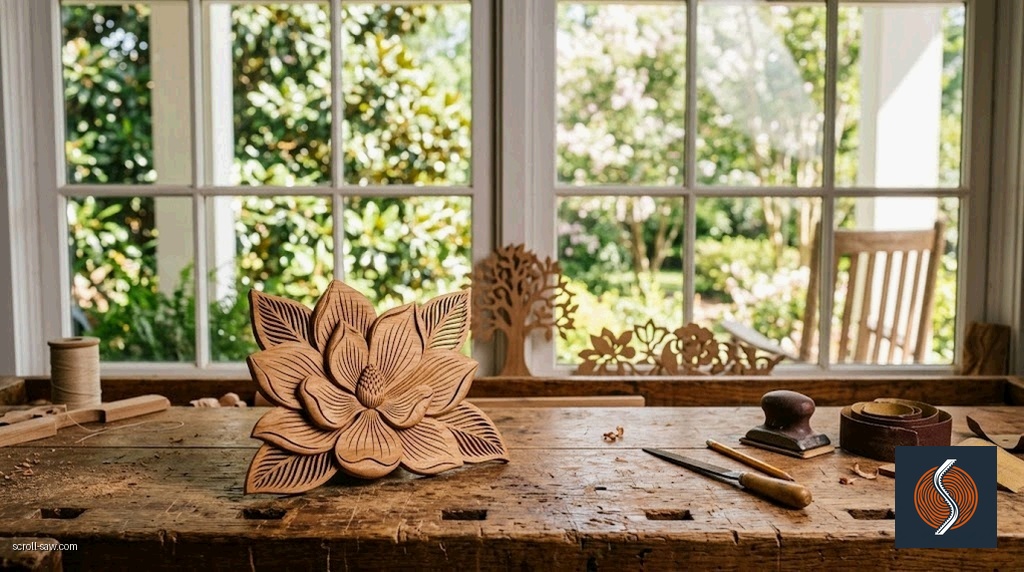
Single magnolia flower head. A face-on or three-quarter view of a magnolia bloom. The petals define the outer perimeter. The central cone is a separate interior element. This is the most common single-subject magnolia piece.
Magnolia branch with flower and bud. A branch with one open bloom, one bud, and two or three leaves. Combines the flower form with the characteristic large waxy leaves. More complex than the single flower; more botanically specific.
Magnolia tree silhouette. The full tree in silhouette, recognizable from the branching pattern and the large rounded leaf profiles. Powerful as a larger wall piece or window silhouette.
Magnolia wreath. A circular wreath of magnolia flowers and leaves. A wall piece appropriate for any season. Common in Southern home decor.
Magnolia with monogram. The flower forms a frame around a central monogram. A personalized piece appropriate for a home entrance or a gift.
Magnolia name sign. A horizontal sign with the recipient’s name, flanked by magnolia flowers and leaves on each side.
Design considerations for magnolia forms
Petal shape. Magnolia petals are oval, wide, and have a distinctly rounded outer edge with a slightly tapered inner end. They are NOT pointed like a tulip or star flower. The rounded petal tip is what makes the magnolia recognizable. Pattern lines should reflect this: no petal tip should come to a sharp point.
Petal number. A magnolia bloom typically has 6-12 petals arranged in tiers. In scroll saw silhouette work, six to nine petals visible is appropriate. More than twelve makes the flower look like an overworked generic pattern.
Central cone. The central cone (technically the receptacle and carpels) is a prominent upright element in the center of the bloom. In scroll saw work, this is typically a separate interior piece or a raised element. It gives the flower its structural distinctiveness.
Leaf shape. Magnolia leaves are large, oval, and glossy. They are much larger relative to the flower than most flowering trees. This large leaf scale is part of what makes a magnolia pattern botanically specific. The back side of the leaf is lighter (rusty brown in southern magnolia); this can be suggested by a two-tone approach.
Vein line. A center vein line on each leaf, either suggested by the grain direction or indicated by a narrow interior cut, adds botanical specificity.
Material for magnolia patterns
1/4-inch Baltic birch plywood (painted pieces): Standard for painted wall pieces and name signs.
1/4-inch solid alder or poplar (natural finish): For pieces where the wood’s natural color contributes to the cream or ivory tone of the magnolia flower.
Walnut (for high-contrast pieces): A dark walnut silhouette tree against a light-painted or contrasting backing.
Cedar (for outdoor pieces): Southern magnolia is associated with Southern porches and outdoor spaces. Cedar for an outdoor porch sign is appropriate.
Finish approaches
White flower, dark green leaves (traditional painted). Primer, flat white for petals, deep hunter green for leaves, brown for the cone center, clear coat. Botanically accurate; looks like the real flower.
Natural wood with dark wax. The birch or alder color suggests the cream of the magnolia bloom naturally. Dark wax deepens the color slightly and protects. For the buyer who wants something natural-looking.
Monochromatic white. Entire piece painted flat white. Clean, contemporary, works in modern interiors that would read the flower’s shape without needing color variation.
Walnut silhouette with no paint. The form without color, in a serious material. Elegant for an interior that already has botanical character.
Southern market context
Magnolia is one of the most specifically Southern botanical motifs in American home decor. This has specific implications for positioning and selling the work.
In Southern craft markets. Magnolia pieces are a recognized and expected category. The buyer knows exactly what they are looking at and what wall it belongs on. Do not overthink the positioning.
Beyond the South. The magnolia’s botanical distinctiveness travels outside its geographic home. In any market, a recognizable, well-cut magnolia pattern competes on botanical credibility vs. generic flower designs.
Magnolia + personalization. A name sign with magnolia flanking elements, or a magnolia wreath with a family monogram, is gift-appropriate year-round. Not a seasonal piece.
Verdict
Magnolia scroll saw patterns reward botanical specificity. The wide rounded petal, the prominent cone center, and the large waxy leaf profile are the three elements that make a magnolia look like a magnolia. Capture those in the design and the piece is recognizable before the buyer reads the label.
The single flower head is the most approachable starting point. Get the petal form right, the cone distinctive, and the leaves at the correct scale. From there, the branch and tree patterns build on the same vocabulary.
FAQ
What makes a magnolia pattern look like a magnolia? Wide rounded petals (not pointed), a prominent central cone, and large oval leaves at a bigger relative scale than most flower designs.
What scroll saw blade is best for magnolia flower patterns? #5 reverse-tooth for 1/4-inch stock. #3 for petal-edge detail work.
Can I cut a magnolia tree silhouette on a scroll saw? Yes. A tree silhouette with recognizable branching and large leaf profiles reads clearly. More appropriate for 1/4-inch to 1/2-inch stock depending on the piece size.
What color should I paint a scroll saw magnolia? Traditional: flat white petals, deep green leaves, brown cone. Monochromatic white is a contemporary alternative.
Are magnolia patterns good for Southern craft markets? Yes. The magnolia is a recognized Southern motif with a consistent buyer market. Name signs and wreaths with magnolia elements sell reliably.
Where can I find magnolia scroll saw patterns? Steve Good’s Scrollsaw Workshop, Etsy pattern sellers specializing in Southern or botanical designs, and Fox Chapel Publishing botanical scroll saw books.
What is the best wood for a magnolia wall piece? 1/4-inch Baltic birch for painted pieces. Alder or poplar for natural-finish pieces where the wood color suggests the bloom’s cream tone.


