
Cutting Farm Scroll Saw Patterns: Entry Holes, Interior Cuts, and Assembly
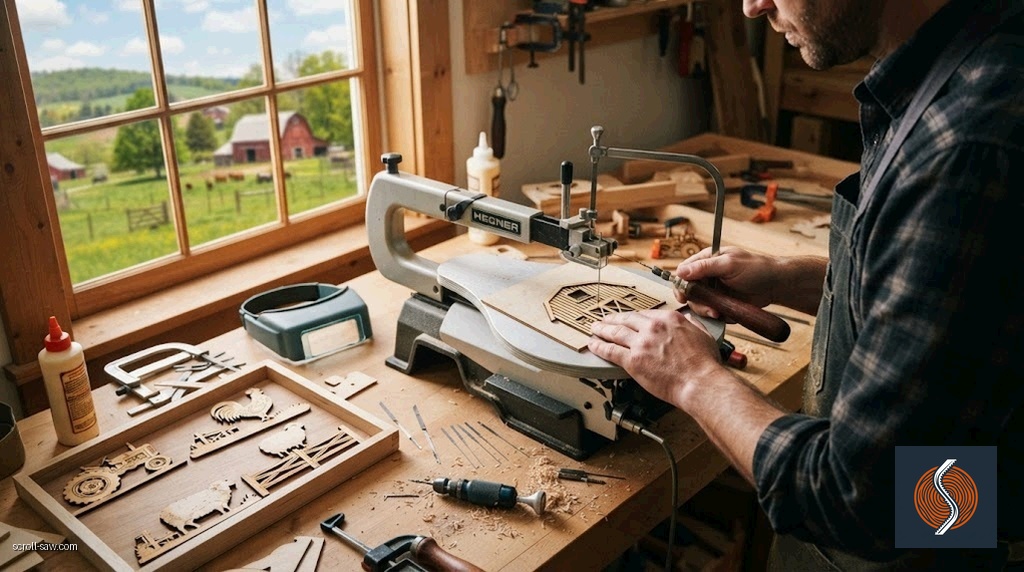
Cutting Farm Scroll Saw Patterns: Entry Holes, Interior Cuts, and Assembly
Farm scroll saw patterns are a rustic display category with imagery from ranch and farm life: roosters, cows, pigs, sheep, horses, tractors, barns, farmhouses, and combined farm scenes. The imagery reads authentic when the patterns capture characteristic farm animal proportions and farm building geometry. Rushed patterns produce generic livestock and generic buildings; careful cutting produces recognizably farm-scene pieces. This guide is how to cut farm scroll saw patterns so they read as farm scenes.
Farm scroll saw patterns are silhouette or fretwork patterns of farm animals, farm buildings, and farm scenes cut on a scroll saw from 1/2 to 3/4 inch stock, sized 8 to 24 inches, with attention to characteristic farm animal proportions and farm building geometry. Applications include farmhouse decor, ranch signage, gift pieces for farmers, kitchen decor, and country-theme wall art.
The short version of the plan: 3/4 inch dense hardwood, reclaimed barn wood, or Baltic birch, reverse-tooth #5 for silhouette outlines and #3 for detail (rooster comb, sheep wool texture, barn plank lines), and finishes that suit rustic display (weathered stain, oil finish, or aged look).
Common farm pattern types
Farm animals:
Rooster. Iconic farm imagery. Distinctive comb, wattles, tail feathers, upright stance. Fragile projections at comb tips and tail feather tips.
Cow. Silhouette with distinctive body proportion, horns (if a breed with horns), and udder detail on dairy cows.
Pig. Rounded body silhouette with characteristic snout and curly tail.
Sheep. Fluffy silhouette rendered as scalloped body outline. Wool texture is optional interior detail.
Horse. Silhouette with mane and tail flow. Farm horse (Belgian, Percheron) versus riding horse proportions differ.
Goat. Silhouette with characteristic beard and horn shapes.
Farm buildings:
Barn. Iconic red barn silhouette with distinctive gambrel roof (double-slope) or gable roof (single-slope). Cupola on top, sliding doors on the front. Recognizable American farm imagery.
Farmhouse. Two-story rectangular house with porch, distinctive roof. Simpler than barn geometry.
Windmill. Vertical tower with rotating vane at the top. Traditional farm imagery.
Silo. Cylindrical grain storage tower. Simple silhouette.
Tractor. Vintage farm tractor silhouette with recognizable wheel proportion (large rear wheels, smaller front wheels).
Combined farm scenes:
Farmhouse with barn and animals. Multi-element pattern showing a complete farm scene. Larger and more complex.
Farm animal grouping. Multiple animals (cow, pig, sheep, chicken) as a single connected pattern.
Stock choice for farm patterns
3/4 inch dense hardwood is the honest workhorse for farm scroll saw patterns. Oak reads rustic and farmhouse; walnut reads formal; cherry reads warm.
3/4 inch reclaimed barn wood is the authentic farm scroll saw material. Genuine weathered lumber gives farm patterns instant character. Verify no cracks or loose knots at fragile feature locations.
3/4 inch Baltic birch plywood for detailed patterns or beginner projects.
1/2 inch stock for smaller patterns (under 10 inch across) or lighter hanging pieces.
Skip pine and softwoods for farm animal detail work; fragile projections crack.
Blade choice
A reverse-tooth #5 in 3/4 inch oak, walnut, or Baltic birch for farm silhouette outlines. Fast enough cutting, clean edges.
A reverse-tooth #3 for interior detail: rooster comb detail, cow horn detail, sheep wool texture, barn plank lines, tractor wheel spokes.
A #2 for very fine detail on multi-element farm scenes.
Cutting sequence for farm patterns
Cut order:
First, drill every interior entry hole at the drill press: eye openings, detail entry holes, hanger hole. A 1/32 or 1/16 inch bit clears the blade.
Second, cut interior detail: farm animal facial features, wool texture on sheep, barn plank separations, tractor wheel spoke detail. Each is a closed cut.
Third, cut the outer silhouette. Approach fragile projections from the supported inner side. Free rooster comb tips, tail feather tips, and animal projection tips as the last cuts.
For combined farm scenes, cut each element (barn, farmhouse, animals) with its own interior detail and silhouette. Assemble on a common backing board.
Rustic finishing for farm pieces
Farm pieces read best with rustic finishes:
Wipe-on Danish oil or tung oil at two to three thin coats for oak, walnut, or cherry pieces. Wood tone shows through and the piece reads honest.
Weathered gray stain (Minwax Classic Gray or similar) at two thin coats for aged rustic look.
Milk paint in barn red, dusty blue, sage green, cream, or barn white at one thin coat with wiping back for aged look. Traditional farmhouse colors.
Minimal finish on reclaimed barn wood. Single thin coat of tung oil preserves the aged patina.
Optional dark walnut or ebony stain accent for barn plank lines or roof shadow detail. Applied with fine brush after base finish cures.
Skip heavy gloss finishes. Farm pieces read best in matte or satin finish.
Common farm pattern mistakes
| Mistake | What went wrong | Fix |
|---|---|---|
| Rooster comb broke | Cut approached tip from unsupported side | Cut rooster body outline first, then approach comb from head side and free tips last |
| Barn cupola snapped | Cupola too fragile for cross-grain | Baltic birch or thicker stock; verify cupola geometry supports the projection |
| Cow reads generic | Body proportions wrong | Verify pattern shows characteristic cow proportions before cutting |
| Farm scene looks flat; pieces not distinct | Multi-element scene poorly composed | Space elements to read as distinct components; consider backing board with different color per element |
| Reclaimed wood cracked at cut | Existing cracks in stock | Inspect reclaimed wood carefully; skip cutting near existing cracks or knots |
Verdict
Farm scroll saw patterns are rewarding rustic display pieces. The plan is not complicated. Dense hardwood or reclaimed barn wood at 3/4 inch for authentic character; Baltic birch for detailed work. Reverse-tooth #5 for silhouette outlines, #3 for detail. Cut interior detail first, silhouette second with fragile projections freed last. Rustic finish (oil, weathered stain, or milk paint) suits the farm context.
For a first farm scroll saw pattern, a 12 inch rooster silhouette in 3/4 inch oak with wipe-on Danish oil is the honest starting piece. Barns, farmhouses, and combined farm scenes follow naturally.
FAQ
What wood is best for a farm scroll saw pattern? Dense hardwood at 3/4 inch: oak for rustic farmhouse character, walnut for formal, cherry for warm. Reclaimed barn wood for authentic aged patina. Baltic birch for detailed work.
What blade cuts farm patterns cleanly? A reverse-tooth #5 for silhouette outlines. A #3 for interior detail (rooster comb, sheep wool, barn plank lines, tractor detail).
How do I cut a rooster on a scroll saw without breaking the comb? Cut rooster body outline first (from feet upward, around body, to head base). Approach the comb from the head side. Cut around the comb from base to base, freeing comb tips as the last cuts on the head.
What is the recognizable American farm barn shape? Rectangular barn with gambrel roof (double-slope, characteristically American) or gable roof. Cupola on top, sliding doors on the front, often painted red with white trim. Verify pattern shows characteristic barn silhouette.
What finish suits a rustic farm scroll saw piece? Wipe-on Danish oil for natural wood tone. Weathered gray stain for aged look. Milk paint in barn red, dusty blue, sage green, or cream for traditional farmhouse colors. Minimal finish on reclaimed wood.
Can I use reclaimed barn wood for farm scroll saw patterns? Yes. Genuine weathered lumber gives farm patterns authentic aged character. Inspect for cracks and loose knots before cutting; skip cutting near existing defects.
How thick should stock be for a farm pattern? 3/4 inch for most patterns (fragile projections have real strength). 1/2 inch for smaller patterns or hanging pieces.
Can I make a combined farm scene with multiple elements? Yes. Cut barn, farmhouse, tractor, and animal silhouettes as separate scroll saw pieces. Assemble on a common backing board with contact cement or wood glue for a full farm scene display piece.
References
-
Fine Woodworking magazine — Scroll saw silhouette and rustic pattern reference (finewoodworking.com)
-
Popular Woodworking — Scroll saw farmhouse and lodge display techniques (popularwoodworking.com)
-
Scrollsaw Workshop by Steve Good — Free scroll saw farm and country patterns (scrollsawworkshop.blogspot.com)


