
How to Cut Scroll Saw North American Wildlife Patterns for the Without Losing the Fine Details
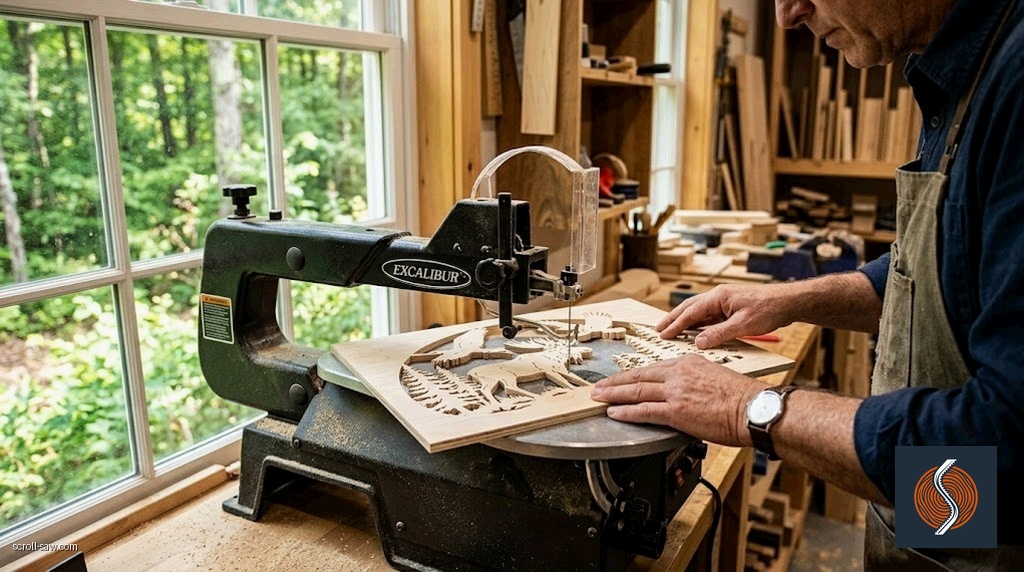
How to Cut Scroll Saw North American Wildlife Patterns for the Without Losing the Fine Details
North American wildlife scroll saw patterns cover native species: black and grizzly bears, whitetail and mule deer, elk, moose, wolves, bald eagles, buffalo, and mountain lions. Each species has recognizable anatomical features that must survive cutting. This guide covers the technique for the range of North American wildlife pattern subjects.
North American wildlife scroll saw patterns are silhouette or fretwork patterns of native North American animals cut from 3/4 inch stock, sized 10 to 24 inches, featuring recognizable species anatomy. Applications include outdoor enthusiast decor, hunting cabin display, wildlife appreciation pieces, and gift pieces for outdoors-oriented recipients.
The short version: 3/4 inch dense hardwood or Baltic birch, reverse-tooth #5 for silhouette and #3 for fine detail (antler tines, feather barbs), cutting sequence that preserves species-defining features, wipe-on Danish oil finish.
Native species covered
Bears. Black bear (rounded ears, moderate size), grizzly (larger, shoulder hump, longer claws).
Deer. Whitetail (characteristic tail, distinctive antler geometry), mule deer (larger ears, bifurcated antlers).
Elk. Larger than deer; distinctive antler geometry; bugling pose common.
Moose. Distinctive palmate antlers; long face; body proportions.
Wolves. Athletic body; alert ear posture; characteristic tail.
Bald eagles. White head, dark body, hooked beak, spread wings, talons.
Buffalo. Massive body; shoulder hump; small head relative to body.
Mountain lions. Athletic large cat; long tail.
Species recognition features
Each species needs its defining feature preserved:
Bears: rounded ears, general body proportions, claws.
Deer: antler geometry (points, tine count), body proportions, characteristic tail.
Elk: antler geometry with sweeping shape, bugling pose.
Moose: palmate antlers, long face.
Wolves: athletic body, alert ears, tail.
Bald eagles: white head coloring rendering, hooked beak, spread wings.
Buffalo: shoulder hump, massive body.
Mountain lions: long tail, athletic proportions.
Stock choice
3/4 inch dense hardwood (walnut for dramatic wildlife, oak for rustic cabin display, cherry for warm).
3/4 inch Baltic birch plywood for detailed patterns with fragile antler tines.
Blade choice
A reverse-tooth #5 for outer silhouettes.
A reverse-tooth #3 for antler tine detail, feather barb rendering, facial features.
Cutting sequence
First, drill entry holes: facial feature openings, feather detail on eagles, antler detail if fretwork, hanger hole.
Second, cut interior detail.
Third, cut outer silhouette. Approach fragile projections (antler tines, feather tips, eagle talons) from body side; free tips as last cuts.
Finishing
Wipe-on Danish oil on hardwood.
Optional selective staining for realistic species coloring: white head accent on bald eagles, darker fur regions on bears.
Optional bright paint for kids’ cabin pieces; skip on adult wildlife display.
Common mistakes
| Mistake | What went wrong | Fix |
|---|---|---|
| Species reads generic | Defining feature missing | Verify species-specific anatomy before cutting |
| Antler tine broke | Cross-grain projection | Baltic birch; approach from body side; free last |
| Bald eagle reads generic raptor | No head coloring rendering | Add white head accent via selective stain or paint |
| Sold pieces of protected species | Legal issue | Bald eagle feathers are legally protected; artistic pieces are generally acceptable |
Verdict
North American wildlife scroll saw patterns are rewarding outdoor and cabin pieces. 3/4 inch walnut or Baltic birch. Reverse-tooth #5 for silhouette, #3 for detail. Verify species-defining features. Standard cutting sequence with fragile projections freed last. Wipe-on Danish oil finish.
For a first North American wildlife pattern, a whitetail deer silhouette in 3/4 inch walnut with wipe-on Danish oil is the honest starting piece.
FAQ
What species are common? Bears, deer, elk, moose, wolves, bald eagles, buffalo, mountain lions.
What wood is best? Walnut for dramatic. Oak for rustic cabin. Cherry for warm. Baltic birch for detailed patterns.
What blade cuts wildlife patterns cleanly? A #5 for silhouette. A #3 for antler and feather detail.
How do I make a species read as the specific animal? Verify species-defining features: antler geometry, body proportions, facial features, characteristic coloring.
How do I cut antler tines without breaking? Baltic birch. Approach tines from body side. Free tine tips as last cuts.
Can I sell bald eagle scroll saw pieces? Artistic pieces are generally acceptable. Actual bald eagle feathers are legally protected in the US.
How thick should stock be? 3/4 inch for most patterns.
What finish suits wildlife pieces? Wipe-on Danish oil on hardwood. Optional selective staining for species coloring.
References
-
Fine Woodworking magazine — Scroll saw wildlife reference (finewoodworking.com)
-
Popular Woodworking — Scroll saw wildlife techniques (popularwoodworking.com)
-
Scrollsaw Workshop by Steve Good — Free scroll saw wildlife patterns (scrollsawworkshop.blogspot.com)


