
Steve D. Good Scroll Saw Patterns: What They Are and How to Cut Them
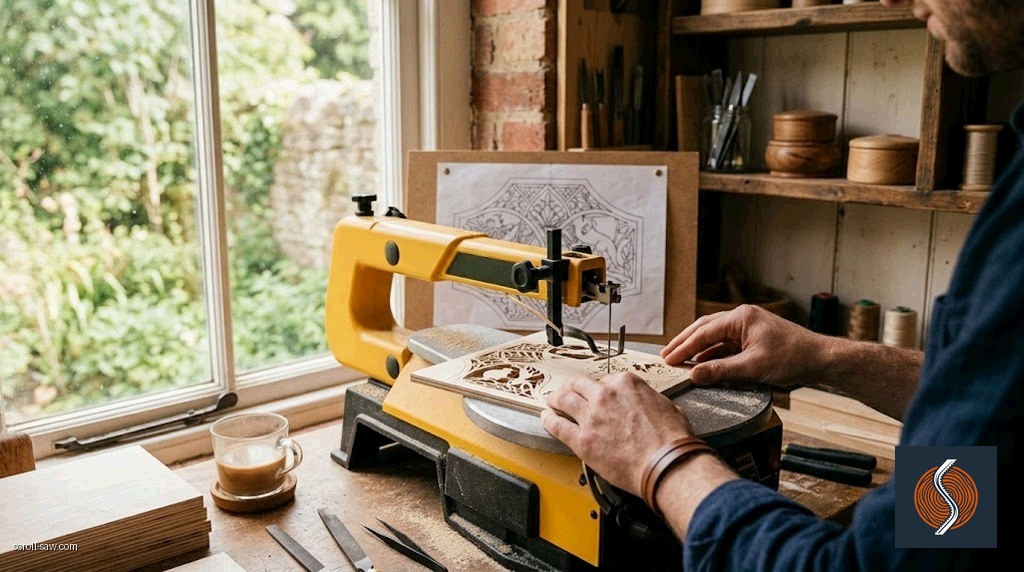
Steve D. Good Scroll Saw Patterns: What They Are and How to Cut Them
Steve Good, sometimes referenced as Steve D. Good in older listings, runs Scrollsaw Workshop, one of the most extensive free scroll saw pattern archives on the internet. The site publishes hundreds of new patterns per year across categories from ornaments and animals to religious themes, name signs, holiday pieces, and specialty craft work.
For a scroll sawyer starting out, Scrollsaw Workshop is one of the fastest paths from wanting to cut a pattern to having a printable file. The archive is deep enough that most specific requests (a particular animal, a specific holiday theme, a certain style of lettering) find a match with some searching.
What the archive does not do is prep the patterns for you. Steve Good’s patterns are designed for scroll saw work, tested by an experienced sawyer, and generally cut cleanly on the first attempt. But they still assume you will pick appropriate wood, install the right blade, and follow standard cutting sequence.
Short answer: use Steve Good patterns as-published for most projects, print at 100 percent scale on a laser printer, cut on 1/2-inch Baltic birch or hardwood using a #5 reverse-tooth blade for outer profiles and a #3 for interior fret work, and follow standard bridge and cutting-order rules regardless of who designed the pattern.
The rest of this guide covers what to expect from the archive and how to prep the files.
What the Scrollsaw Workshop archive contains
The archive is organized by category. Major categories:
Christmas and holiday. Ornaments, sleigh silhouettes, snowflake fret patterns, holiday phrase signs, nativity scenes, and other seasonal work.
Religious. Cross patterns, prayer scenes, biblical figures, church-specific commemorative pieces.
Animals. From common household pets to exotic wildlife. This is one of the larger categories, refreshed frequently.
Lettering and names. Name plaques, monograms, family signs, alphabets in various fonts.
Fretwork clocks. A specialty of the archive. Complex clock pieces with hundreds of interior cuts.
Puzzles. Jigsaw-style puzzles and stand-up puzzle pieces.
Special occasions. Weddings, anniversaries, birthdays, retirements, memorials.
Free downloadable patterns. The bulk of the site’s content is available at no cost with attribution.
Patreon patterns. Some newer or more complex patterns require Patreon subscription for access.
The archive dates back over a decade. Older patterns from earlier in the archive were designed for older scroll saw setups but still cut cleanly on modern equipment.
What the patterns typically look like
Steve Good’s pattern files share consistent characteristics.
Black line art on white background, no grayscale or shading.
Stroke weight around 1 to 1.5 mm at the intended print scale. Visible under spray adhesive.
Bridges included where necessary. Enclosed counters on letters have bridges, floating regions on complex patterns have bridges.
Entry hole locations marked, or noted in accompanying instructions.
Cutting order suggestions in the accompanying blog post or PDF instructions.
Scale indicated on the pattern sheet.
These are pattern-maker best practices, and Steve Good follows them consistently. This is why his archive is a good starting point for beginners who might otherwise learn bad habits from lower-quality free patterns elsewhere.
Preparing an archive pattern for cutting
Download the PDF from Scrollsaw Workshop.
Open in Adobe Reader or a similar PDF viewer.
Check the scale label on the pattern sheet. Compare to the intended finished size for your project.
Print at 100 percent scale, actual size. Disable any fit-to-page option.
Measure the printed pattern with a ruler. Verify the scale matches the label.
Apply the pattern to wood using standard technique: blue painter’s tape on the wood, 3M Super 77 spray adhesive on the pattern paper, press firmly onto the taped wood.
Cut following the sequence noted in the pattern instructions, or standard sequence if none provided: interior details first, exterior profile last.
Matching pattern complexity to skill
The archive spans beginner to expert difficulty.
Beginner patterns: simple silhouettes with no or minimal fret work. Ornaments, basic letter monograms, silhouette animals. Cut in one session with one blade.
Intermediate patterns: silhouettes with moderate interior fret work. Holiday scenes with 5 to 15 interior cuts. Name signs with counter bridges.
Advanced patterns: heavy fret work, small detail, multi-part assemblies. Fretwork clocks, nativity scenes, portrait patterns.
Expert patterns: extreme fret work, very fine detail, or complex compound cuts. Some pattern books at the high end of the archive have 200 or more interior cuts per piece.
Start at the beginner tier if this is your first pattern. Move to intermediate after a few successful cuts. Approach advanced patterns only after developing consistent feed rate and blade control.
Wood and blade selection for archive patterns
The archive is agnostic on wood choice, which is correct because the same pattern works in different woods for different aesthetic effects.
General guidance for Steve Good style patterns:
1/2-inch Baltic birch for most wall-mount and display pieces. Reliable, forgiving, holds detail.
Hardwood (cherry, walnut, maple) for gift-quality pieces where wood color contributes to the aesthetic.
1/4-inch stock for ornaments and light hanging pieces.
Outer profiles: #5 reverse-tooth blade.
Interior fret work: #3 reverse-tooth blade.
Fine detail: #2/0 blade.
Hardwood detail: Pégas Modified Geometry blades for cleaner corners.
Finishing pieces from archive patterns
Finishing follows standard scroll saw practice regardless of pattern source.
Wipe-on oil (Danish oil, boiled linseed oil) for hardwood pieces where grain contributes to the look.
Matte spray lacquer for pieces that will handle regularly or need color under clear coat.
Color finishes (dye stains, painted color schemes) for pieces intended as art rather than natural wood display.
Exterior finishes (spar urethane, marine varnish) for outdoor pieces.
The pattern archive rarely specifies finish because finish is a project-specific choice. Match the finish to the piece’s intended setting.
Common failures with archive patterns
Pattern prints at wrong scale. Cause: fit-to-page enabled in print driver. Fix: explicit 100 percent scale, verify with ruler.
Cutting sequence not clear from pattern. Cause: skipped the accompanying instructions. Fix: read the blog post or PDF instructions along with the pattern.
Pattern too complex for available skill. Cause: selected an advanced pattern as an early project. Fix: back off to a simpler pattern, build skill on intermediate work.
Pattern lines faint on printed copy. Cause: low printer toner or draft mode. Fix: check toner, use normal or high print quality.
Bridges look out of place on finished piece. Cause: expected bridges to be invisible. Fix: bridges are structural, not decorative. Some visibility is normal. Focus on placement that reads as intentional.
FAQ
Are Steve Good’s patterns free to use?
Most patterns on Scrollsaw Workshop are free for personal use with attribution. Some Patreon-tier patterns require subscription. Commercial use rules vary by pattern; check the specific pattern’s license.
How often are new patterns added?
Steve Good publishes new patterns several times per week. The archive grows continuously.
Can I request custom patterns?
Steve Good sometimes takes reader requests through his blog. Turnaround varies. There is no formal commission system.
Do the patterns work on any scroll saw?
Yes. The patterns are designed for standard scroll saw work and cut on any modern saw with appropriate blade selection.
Are the patterns tested before publication?
Steve Good is himself an experienced scroll sawyer and tests patterns on his own equipment before publishing. This is why the archive quality stays consistently high.
Can I combine patterns from the archive with my own designs?
Yes for personal use. Commercial combinations require checking the license of each pattern component.
What if a downloaded pattern has an error?
Contact Steve Good through the blog. Corrections are usually posted quickly if the pattern has a genuine error rather than a user setup issue.
References
-
Steve Good, Scrollsaw Workshop official archive
-
Wood Magazine, feature articles on pattern archive quality
-
Fine Woodworking, tutorials on pattern preparation
-
Adobe Help Center, PDF print scale and export settings


