
The Art Factory Scroll Saw Patterns: Where to Find and How to Cut Them
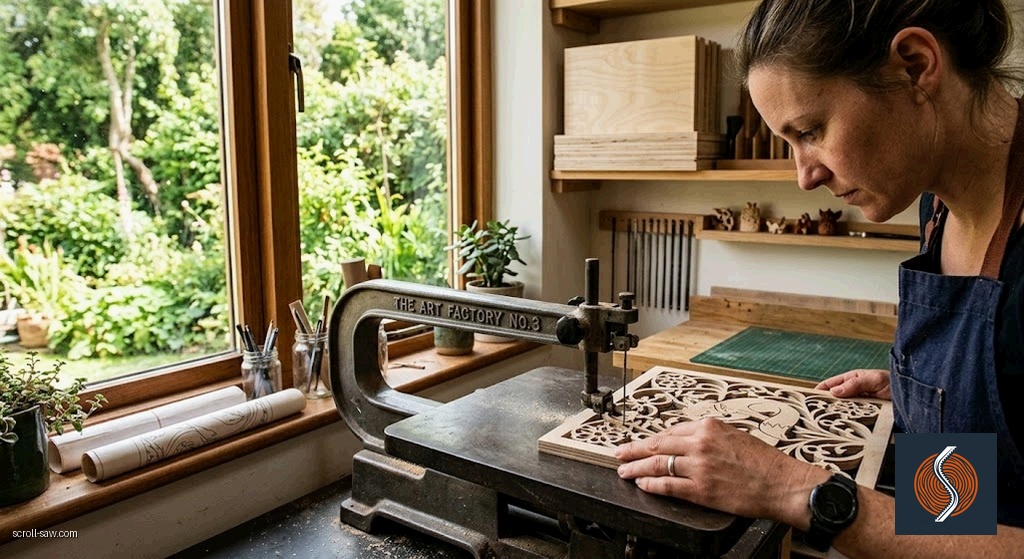
The Art Factory Scroll Saw Patterns: Where to Find and How to Cut Them
Commercial pattern archives like The Art Factory sit alongside free archives like Scrollsaw Workshop as sources for scroll saw project files. The trade-off is straightforward: commercial archives charge for their patterns, and in exchange offer curated collections, tested patterns, higher print quality, and often better instructions than free alternatives.
Whether The Art Factory is the specific publisher you had in mind or a similar commercial source, the workflow is the same: purchase or subscribe, download files, prepare for print, cut following standard scroll saw practice. The pattern content varies, but the preparation and cutting workflow does not.
Short answer: use commercial pattern archives for curated pattern packs when free archives do not have what you need, verify licensing before commercial use, print at 100 percent scale on a laser printer, cut on 1/2-inch Baltic birch or hardwood using standard blade selection, and follow the pattern instructions when provided.
The rest of this guide covers commercial pattern workflow.
What commercial pattern archives offer
Commercial pattern archives typically offer several advantages over free alternatives.
Curation. Patterns are organized by theme, difficulty, and style. Finding what you want takes less time.
Testing. Reputable commercial publishers test patterns before release. Fewer surprises on the wood.
Print quality. Higher-resolution files, better line weight, cleaner PDF export.
Instructions. Cutting order, blade recommendations, wood suggestions included with the pattern.
Packaging. Related patterns often bundled into themed packs (Christmas set, animal collection, name pattern generator).
Support. Some commercial archives offer email support for questions about specific patterns.
The trade-off is cost. Commercial patterns range from a few dollars per pattern to twenty or thirty for a themed pack. Subscription services provide unlimited access at monthly or annual rates.
Choosing between free and commercial archives
Both have their place.
Free archives. Deep back-catalogs of tested patterns available at no cost. Scrollsaw Workshop is the leading free source. Wood Magazine’s pattern library is another. Good for browsing, first-time cuts, and general craft needs.
Commercial archives. Better for specific project needs where free options do not match, or for professional pattern makers who value curated collections. The Art Factory and similar publishers occupy this space.
A sensible workflow: browse free archives first for common project types. Move to commercial archives for specialized needs or when volume of work justifies subscription.
Verifying licensing before use
Commercial patterns come with specific licensing terms.
Personal use only. Most common. Allows cutting patterns for personal projects and gifts. Does not allow selling finished pieces cut from the pattern.
Commercial use with attribution. Allows selling finished pieces with credit to the pattern designer.
Commercial use without attribution. Allows selling finished pieces without credit. Less common; usually more expensive.
Redistribution allowed. Rare. Some patterns allow you to share or resell the pattern file itself.
Redistribution prohibited. Most common. Pattern file cannot be shared or resold; only finished pieces cut from it may be redistributed under whatever commercial use terms apply.
Read the license before using. Selling pieces cut from personal-use-only patterns can attract legal action from the designer.
Downloading and organizing commercial patterns
Once purchased, download and organize commercial patterns for later retrieval.
Download PDFs to a dedicated folder for that publisher or archive.
Rename files with descriptive names if defaults are cryptic. “art-factory-christmas-ornament-set-01.pdf” beats “pack-9241.pdf”.
Sort by category, difficulty, or use frequency.
Back up occasionally. Commercial download links sometimes expire; a local backup protects your investment.
Keep the original license document if provided. Some publishers include license terms as a separate PDF; retain it for reference.
Printing commercial patterns
Printing follows standard scroll saw pattern practice.
Open the PDF in Adobe Reader or similar viewer.
Check the scale label on the pattern sheet.
Open the print dialog. Set scale to 100 percent, actual size.
Disable fit-to-page.
Print on standard 20-pound office paper using a laser printer.
Measure a labeled dimension on the printed page with a ruler.
For patterns larger than your paper, tile using Adobe Reader’s Poster mode.
Apply the pattern to blue painter’s tape on the wood, using 3M Super 77 spray adhesive on the pattern paper.
Following pattern instructions
Commercial patterns often include instruction sheets with cutting-specific guidance.
Recommended stock. Specific thickness and species suggested for the pattern.
Blade specifications. Which blade sizes for which sections of the pattern.
Cutting order. Interior cuts before exterior, or specific sequence for multi-part assemblies.
Bridge locations. Marked on the pattern or noted in instructions.
Assembly notes. For multi-piece patterns, glue-up sequence and any hardware requirements.
Finishing suggestions. Recommended finish schedule for the pattern’s intended aesthetic.
Follow the instructions when provided. Commercial pattern testers usually know something about the pattern’s specific quirks that saves you time.
Cutting sequence for a commercial pattern
Standard sequence applies regardless of pattern source.
Step one, drill all entry holes before any cutting.
Step two, cut interior fret work with the recommended fine blade.
Step three, cut any secondary interior detail.
Step four, cut the outer profile with a larger blade.
Step five, remove pattern paper only after all cutting is complete.
If the pattern’s instructions differ from this default (some patterns require specific non-standard sequence), follow the pattern’s guidance.
Assembly for multi-part commercial patterns
Some commercial patterns are multi-piece assemblies rather than single-piece cuts.
Layered pieces. Multiple wood colors stacked and glued. Cut each layer separately from its designated stock. Sand each piece. Assemble in the specified order using wood glue.
Three-dimensional builds. Compound cuts or box-style construction. Cut all pieces to their outer profiles first. Cut joinery (mortises, tenons, dados) after profiles. Dry-fit before glue-up.
Painted pieces. Cut, sand, then paint pieces before assembly. Paint applied after assembly traps color in joints.
Follow the assembly instructions. Multi-part patterns rely on specific sequence for the finished piece to fit together correctly.
Finishing commercial pattern pieces
Finishing follows the pattern’s intended aesthetic.
Curated commercial patterns often specify finish schedules that produce the visual effect shown in the pattern preview. Deviating from these produces different-looking pieces, which may or may not be the goal.
For pieces you plan to gift or sell, staying close to the specified finish schedule keeps the piece consistent with the pattern’s marketing.
For personal pieces, adjust finish freely to match your setting.
Common failures with commercial pattern work
Pattern price seems high for the content. Cause: mismatched expectations. Fix: preview patterns before purchase where possible, subscribe to services that let you sample before committing.
Pattern licensing prevents intended commercial use. Cause: bought before reading license. Fix: read license terms before purchasing patterns you plan to sell finished pieces from.
Pattern instructions unclear. Cause: some commercial publishers assume prior experience. Fix: reach out to the publisher’s support if available.
Downloaded file will not open. Cause: download interrupted or file corruption. Fix: re-download from the publisher’s site.
Print scale wrong. Cause: fit-to-page enabled. Fix: explicit 100 percent scale, ruler verification.
FAQ
Where do I find The Art Factory or similar commercial pattern publishers?
Search for the specific publisher name plus “scroll saw patterns”. Most commercial publishers have their own online storefronts.
Are commercial patterns significantly better than free ones?
Better or worse depends on the specific pattern. Some free patterns are excellent. Some commercial patterns are unremarkable. Compare specific patterns, not archives generally.
Can I share commercial patterns with a friend?
Usually no. Most commercial licenses prohibit redistribution of the pattern file. Your friend can purchase their own copy.
Do commercial pattern archives update their catalogs?
Most do. New patterns are typically added monthly or seasonally.
Can I request specific patterns from commercial publishers?
Some commercial publishers offer commission work at additional cost. Ask the publisher directly.
Are commercial pattern subscriptions worth the cost?
Depends on cutting volume. If you cut multiple patterns per month, subscriptions often pay for themselves. For occasional use, individual pattern purchases are more economical.
How do I evaluate a commercial pattern before buying?
Most publishers offer preview images or sample patterns. Look for tested patterns with clear instructions and reasonable licensing terms.
References
-
Steve Good, Scrollsaw Workshop archive for free pattern alternatives
-
Wood Magazine, feature articles on commercial pattern publishers
-
Fine Woodworking, tutorials on pattern selection and workflow
-
Adobe Help Center, PDF print scale and management


