
Foot of the Cross Scroll Saw Art: Cutting Devotional Pieces
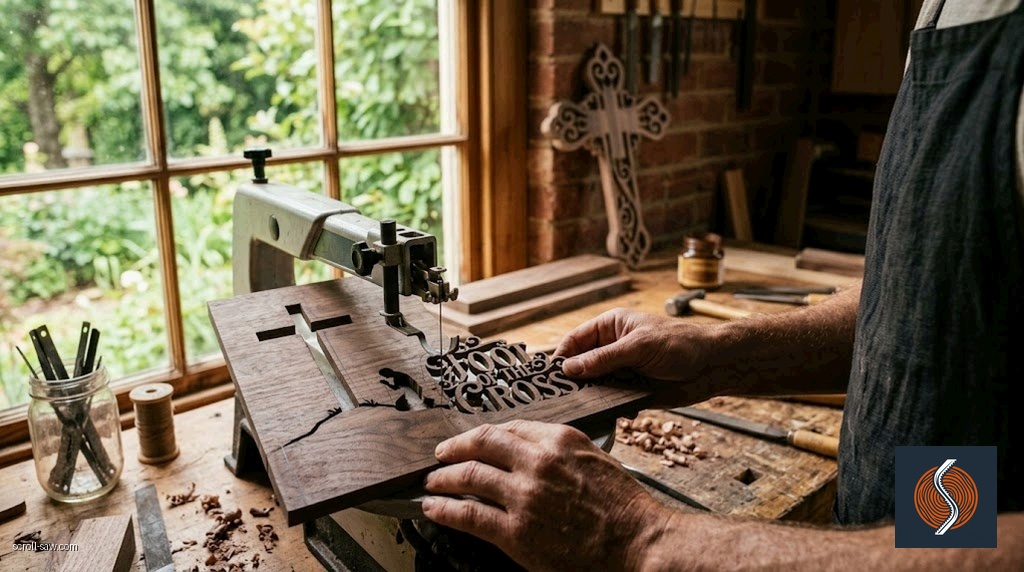
Foot of the Cross Scroll Saw Art: Cutting Devotional Pieces
Foot of the cross scroll saw art depicts one of the most emotionally weighted scenes in Christian iconography. Mary and John, and often Mary Magdalene, at the base of the crucifixion, sometimes with the body of Christ, sometimes with the empty cross after the deposition. The subject requires reverent handling. A rushed or careless piece reads as disrespectful. A well-cut piece with appropriate wood and finish becomes a meaningful devotional object for the home, church, or memorial setting.
These patterns show up in personal home devotion pieces, church commissioning gifts, memorial pieces marking a loved one’s passing, Easter and Lenten displays, and gifts for clergy or people entering religious life.
Because of the subject’s weight, the pattern work itself is often less complex than the visual challenge suggests. Foot of the cross scenes are typically silhouette compositions with modest interior detail rather than elaborate fret work. The challenge is in the execution and finishing rather than in raw cutting difficulty.
Short answer: cut foot of the cross patterns on 1/2-inch hardwood (walnut, cherry, mahogany) for gift and church pieces, use a #5 reverse-tooth blade for outer profiles and a #3 for interior detail, cut with reverent attention to detail rather than rushing, and finish with wipe-on oil or matte lacquer that lets the wood grain contribute to the devotional feel.
The rest of this guide covers the workflow.
Foot of the cross pattern variants
Traditional grouping. Mary, John, and sometimes Mary Magdalene at the foot of the cross. The cross rises above them; the figures are in poses of grief or contemplation.
Pieta variant. Mary holding the deposed body of Christ at the foot of the cross. Classical composition drawing from Michelangelo’s Pieta.
Empty cross scene. The cross after the deposition, with mourning figures at the base. Emphasizes the loss more than the crucifixion itself.
Multi-figure scene. Additional figures (the disciples, Roman soldiers, other mourners) in a fuller composition.
Single figure. Mary alone at the foot of the cross, or John alone. Simpler pattern, more focused emotional impact.
Christ on the cross with foot of the cross detail. The full crucifixion scene with detailed treatment of the base.
Cross alone with symbolic elements. Crown of thorns, nails, and cross without figures. More symbolic than narrative.
Each variant carries different theological and artistic weight. Match to the intended recipient or setting.
Wood choice
Devotional pieces benefit from wood species that carry visual weight.
Walnut. Dark, warm color that reads as reverent and serious. Traditional choice for religious pieces.
Cherry. Warm reddish-brown that reads as devotional and hopeful. Good for pieces emphasizing resurrection alongside crucifixion.
Mahogany. Deep red-brown, traditional for church furniture. Reads as formal and church-appropriate.
Oak. Traditional in Northern European Christian art. Its ring-porous grain limits fine detail but works for simpler compositions.
Baltic birch plywood. Practical choice for pieces that will be painted or heavily finished. Not the first choice for pieces where wood grain contributes to the aesthetic.
Avoid softwoods (pine, spruce, cedar) for devotional pieces. The wood species should support the subject’s gravity.
1/2-inch stock works for wall pieces. 3/4-inch for freestanding devotional pieces on shelves or altars.
Blade selection
Outer profile of figures and cross: #5 reverse-tooth blade.
Interior detail (facial features, robe folds, cross grain suggestion): #3 reverse-tooth blade.
Fine detail (eye, mouth, crown of thorns): #2/0 blade.
Hardwood detail: Pégas Modified Geometry blades for cleaner corners on the intricate detail work.
Cutting sequence for a foot of the cross scene
Step one, drill entry holes for all interior fret work. This may include facial features, robe folds, halo elements, crown of thorns detail, or any decorative border.
Step two, cut interior fret work with a #3 or #2/0 blade. Face features first, since these carry the emotional weight of the piece.
Step three, cut any secondary interior elements (halo detail, robe patterns, background suggestion).
Step four, cut the outer profile of the cross with a #5 blade. Cross first since it is often the highest and most visible element.
Step five, cut the outer profile of each figure. Start with the figure furthest back in the composition and work forward.
Step six, save fragile projections for last: fingers, hair details, hem points on robes, crown of thorns points if projecting.
Step seven, remove pattern paper only after all cutting is complete.
Work slowly. Devotional pieces should feel like they came from patient hands, and this reflects in the cut quality.
Finishing devotional pieces
Finishing matches the subject’s gravity.
Wipe-on oil. Danish oil or tung oil on hardwood. Two coats. Preserves grain visibility. Traditional finish for religious wood pieces.
Matte lacquer. Sprayed thin coats. Protects wood without adding shine. Suitable for pieces that will be handled or displayed in high-humidity settings (church interiors).
Antique glaze. Aged bronze or dark walnut glaze over lighter wood. Adds patina appropriate to devotional pieces.
Ebonized finish. Very dark wood stain over hardwood. Reads as somber and formal.
Avoid glossy finishes on devotional pieces. High gloss reads as decorative rather than reverent.
Avoid painted color finishes unless the pattern specifically calls for realistic figure coloring (some pieces show colored robes, gold halos). Painted finishes require artistic skill to match the subject’s gravity.
Presenting the piece
Presentation affects reception, especially for gift or church pieces.
For wall pieces, use a subtle mounting that lets the piece dominate visually. Sawtooth or D-ring hangers behind the piece, not visible from front.
For freestanding pieces, add a modest wooden base. The base should not compete visually with the composition.
For church pieces, consider size and placement. A piece too small gets lost in the space. A piece too large overwhelms.
For memorial pieces, include a small plaque with the deceased’s name and dates. Discreet placement (bottom back corner) preserves the piece’s primary visual weight for the devotional subject.
For pieces intended as gifts, include a small note or card explaining the piece’s meaning and any personal significance.
Cultural and denominational considerations
Different Christian traditions have different iconographic conventions.
Catholic and Orthodox traditions often include specific symbolic elements: gold halos, specific gestures, iconographic markers like the Chi-Rho or crown of thorns.
Protestant traditions typically favor simpler, less iconic compositions. Empty crosses without corpus (body) are common in Protestant contexts.
Eastern Orthodox iconography has specific conventions about depicting religious figures. Attempting to replicate icons without training can produce results that read as inappropriate.
Match the pattern to the recipient’s or setting’s tradition. Ask if uncertain.
Common failures on devotional pieces
Face detail comes out flat. Cause: blade too coarse for the small features. Fix: use #2/0 for face detail, slow feed.
Piece reads as decorative rather than devotional. Cause: overly ornate finish or inappropriate wood species. Fix: matte finish on serious hardwood.
Cross proportions look wrong. Cause: pattern proportions off, or scaling adjustment. Fix: verify proportions against traditional depictions before cutting.
Figure poses look stiff or awkward. Cause: pattern design flaw. Fix: choose patterns with well-composed figures.
Robe or clothing detail unclear. Cause: blade too coarse for fold detail. Fix: use #3 or #2/0 for robe detail.
Piece feels rushed. Cause: cutting speed too fast or fatigue. Fix: work slowly, take breaks, treat the subject with the attention it warrants.
FAQ
What is the easiest foot of the cross pattern for a first cut?
A simple cross with a single mourning figure at the base. Focus on the cross and one figure. Add complexity on subsequent pieces.
Should devotional pieces be signed?
On gift pieces, yes, in pencil before finishing. Signature and date add provenance. Some sawyers add a discreet cross or symbol alongside their signature.
Are foot of the cross pieces appropriate as memorial pieces?
Yes. Memorial pieces mourning a loved one’s passing often draw from this subject. Add a small plaque with the deceased’s name.
Can I combine foot of the cross with other Christian imagery?
Yes. Combined compositions with additional figures, symbols, or Bible verses work well. Plan the overall composition at design stage.
Should figures be in period-appropriate clothing?
Traditional depictions show first-century Jewish clothing. Modern interpretations sometimes update the setting. Match to the intended aesthetic.
Can I make foot of the cross pieces for sale?
Yes with attention to pattern licensing. Some devotional patterns are copyright-restricted; some are public domain. Verify licensing before commercial sale.
How large should a foot of the cross piece be?
Home devotion pieces: 8 to 12 inches. Church pieces: 18 to 36 inches. Memorial pieces: 12 to 18 inches typically. Match to intended placement.
References
-
Steve Good, Scrollsaw Workshop archive on religious and devotional patterns
-
Wood Magazine, tutorials on religious craft work
-
Fine Woodworking, wood species for formal and church pieces
-
Christian iconography traditional references for pose and composition


