
Heart Shaped Scroll Saw Patterns: Wedding, Anniversary, and Love Pieces
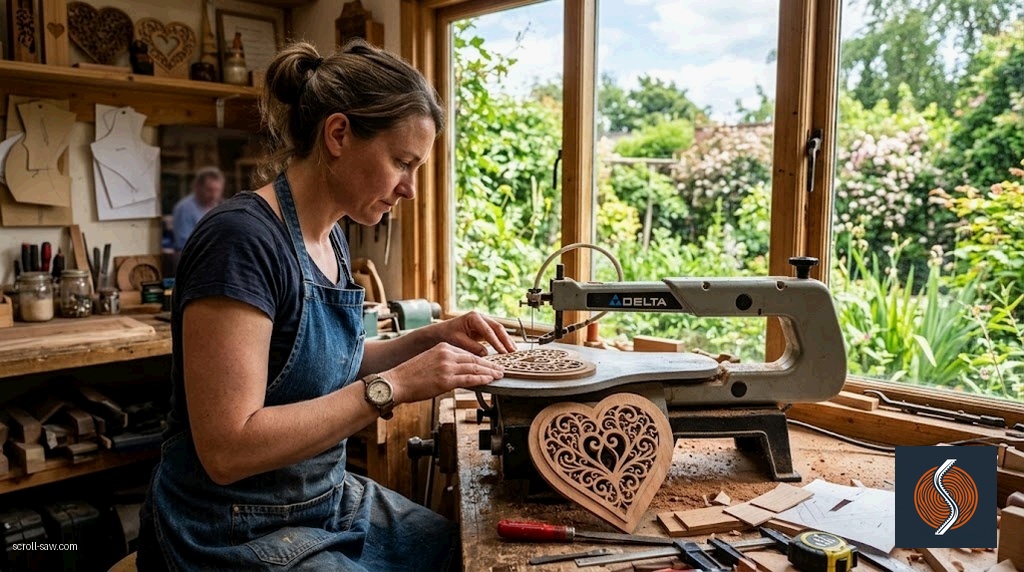
Heart Shaped Scroll Saw Patterns: Wedding, Anniversary, and Love Pieces
Heart patterns are one of the highest-demand scroll saw subjects. Wedding gifts, anniversary presents, Valentine’s Day pieces, memorial hearts marking the loss of a loved one, and general love-themed decor all draw on the heart shape. The variety within the heart pattern family is enormous: plain silhouettes, name-personalized hearts, entwined double hearts, hearts with fretwork lace patterns, layered 3D hearts, hearts holding phrases or Bible verses.
The visual appeal is universal. The technical challenge varies from beginner-friendly (plain heart silhouette) to expert-level (elaborate fretwork lace hearts). The common thread across all heart patterns is the shape itself: two smooth curves meeting at a top notch, and a pointed bottom. Getting those curves and that notch right is what makes a heart pattern read as a heart rather than as an ambiguous rounded shape.
Short answer: cut heart patterns on 1/2-inch Baltic birch or hardwood for wall pieces and 1/4-inch for ornaments, use a #5 reverse-tooth blade for the outer profile with careful attention to the top notch, plan bridge work if the heart contains enclosed lettering, and finish with warm tones (walnut, cherry, red mahogany) that complement the emotional weight of the subject.
The rest of this guide covers the specifics.
Heart pattern variants
Plain silhouette. Single-piece heart with no interior detail. Beginner-friendly.
Name-personalized heart. Heart with a name or two names cut through the middle. Requires bridge work on any enclosed letter counters.
Wedding heart. Names and wedding date. Sometimes with additional decorative elements (rings, doves, floral accents).
Anniversary heart. Names and anniversary date. Common gift for milestone anniversaries (10th, 25th, 50th).
Entwined double hearts. Two hearts overlapping. Requires careful bridge planning where they intersect.
Fretwork lace heart. Heart silhouette filled with lace-like fret pattern. Advanced piece.
Bible verse heart. Heart with a short verse cut through. Requires lettering skill plus heart shape control.
Layered 3D heart. Multiple wood colors stacked to create depth.
Heart with dove or floral accent. Composition combining heart with symbolic accompanying element.
Puzzle heart. Heart cut into interlocking pieces. Kids’ or educational piece.
Wood choice for heart pieces
Wall pieces: 1/2-inch Baltic birch. Works for every heart pattern.
Ornaments: 1/4-inch stock. Lighter for hanging.
Gift-quality: cherry for warm-toned hearts, walnut for darker aged pieces, red mahogany for pieces with strong red visual weight.
Maple works for hearts intended to be stained or painted.
Avoid softwoods for hearts with fine detail. Fret work tears out on soft grain.
Avoid oak for lace-detail hearts. Its ring-porous grain fights the fine work.
Blade selection
Outer heart profile: #5 reverse-tooth blade.
Interior lettering or fret work: #3 reverse-tooth blade.
Fine fret detail (lace hearts): #2/0 blade.
Hardwood detail: Pégas Modified Geometry blades for cleaner corners.
The top notch
The distinguishing feature of a heart shape is the top notch where the two upper curves meet.
Sharp notch. Traditional angular meeting of the two curves. Cuts as a sharp V. Requires the blade to enter and exit the notch cleanly.
Rounded notch. Gentler curve at the meeting point. Reads as softer or more modern.
Deep notch. Notch cut significantly below the top edge. Reads as more classic Valentine’s Day heart.
Shallow notch. Notch barely below the top edge. Reads as rounded organic shape.
Cutting technique: enter the notch from one side, cut through the notch bottom, exit the other side without backing up. Backing up during the notch cut leaves visible burn or drift marks.
For very sharp notches, drill a small entry hole at the notch bottom and cut into it from both sides. This produces the cleanest sharp notch.
Bridge planning for name-personalized hearts
Letters with enclosed counters need bridges when cut as through-cuts within a heart.
A, B, D, O, P, Q, R. Have fully enclosed counters. Need bridges.
e, o, a, b, d, g, p, q. Lowercase equivalents also need bridges.
A#, %, & signs and other special characters. May have enclosed counters depending on font. Plan case by case.
Bridge width: 2 to 3 mm at final scale.
Bridge placement: usually at the top or bottom of the counter, matching typography conventions for stability.
For short names, plan bridges as you finalize the pattern. For long names or full phrases, consider using an outline font that avoids enclosed counters entirely.
Cutting sequence for a name-personalized heart
Step one, drill entry holes for every enclosed letter counter and any decorative interior element.
Step two, cut all interior letter counters and decorative elements with a #3 blade.
Step three, cut the outer profile of the letters if they are cut through the heart (rather than raised on top).
Step four, cut the outer heart profile with a #5 blade. Start at one side of the top notch, work down and around, up the other side, and through the top notch.
Step five, remove pattern paper only after all cutting is complete.
Finishing heart pieces
Heart pieces suit warm finishes that match their emotional weight.
Natural hardwood oil. Wipe-on Danish oil on cherry, walnut, or mahogany. Two coats. Preserves grain visibility.
Red mahogany stain. For hearts meant to have red weight. Stain over lighter wood, matte clear coat.
White pickling. For bleached, rustic hearts. White stain over hardwood, matte clear coat.
Painted red. For Valentine’s Day or bright-color hearts. Base coat, red acrylic, matte clear coat.
Gold or silver leaf. For premium anniversary pieces (25th silver, 50th gold). Applied over base coat, sealed with clear coat.
Avoid glossy finishes on wedding or anniversary pieces. Matte or satin reads as intentional and reverent.
Personalization techniques
Cut names. Names cut through the heart as fret work. Permanent, integral to the piece.
Raised names. Names as separate cut pieces glued on top. Adds dimension and can be highlighted with different wood.
Wood-burned. Names or dates burned into the surface with a wood-burning tool. Applied before finish.
Engraved. Names or dates carved with a rotary tool or router. Applied before finish.
Painted. Names or dates painted on the finished piece. Vinyl lettering can serve the same purpose without permanent commitment.
Match personalization to the piece’s intended audience. Cut names work best for pieces meant to be permanent. Painted or vinyl work for pieces where names might change (relationship gifts before commitment).
Common failures on heart pieces
Notch looks fuzzy or rounded. Cause: blade drifted at the notch. Fix: enter and exit notch cleanly, do not back up mid-cut.
Curves look asymmetric. Cause: pattern printed askew, or cutting drift. Fix: check pattern alignment, cut with consistent feed rate.
Letter bridges break. Cause: bridges too narrow at final scale. Fix: 2 to 3 mm minimum bridge width.
Name looks too small in the heart. Cause: pattern proportions off. Fix: name width should be 60 to 70 percent of heart width at widest point.
Fretwork lace tears out. Cause: blade too coarse or feed rate too fast. Fix: use #2/0 blade, slow feed.
Piece feels commercial or generic. Cause: rushed workflow. Fix: personalization details (specific names, dates, meaningful phrase) elevate the piece from generic to specific gift.
FAQ
What is the easiest heart pattern for a first cut?
A plain silhouette heart with no interior detail. Focus on the outer profile and the top notch. Add complexity on subsequent pieces.
Do all letters need bridges when cut through a heart?
Only letters with fully enclosed counters (A, B, D, O, P, Q, R and their lowercase equivalents). Open letters (H, K, M, N, X) do not need bridges.
Can I stack-cut heart ornaments?
Yes for simple silhouette hearts in 1/4-inch stock, up to three layers.
How large should a wedding heart be?
8 to 12 inches for tabletop display. 12 to 24 inches for wall mounting. Match to intended placement.
Are heart pieces appropriate as memorial pieces?
Yes. Memorial hearts marking a loved one’s passing are meaningful gifts. Add name and dates for provenance.
Can I make heart pieces for sale?
Yes, and personalized heart pieces sell well at craft shows and online. Custom names and dates command premium prices.
Should the heart shape be sharp-notched or rounded?
Match to intended aesthetic. Sharp for classic or Valentine’s Day pieces. Rounded for modern or gentle pieces.
References
-
Steve Good, Scrollsaw Workshop archive on heart and love-themed patterns
-
Wood Magazine, tutorials on wedding and anniversary craft work
-
Fine Woodworking, personalized gift piece techniques
-
USDA Forest Products Laboratory, wood species for detailed craft


