
Scroll Saw Christmas Pyramid Patterns: Selecting and Cutting
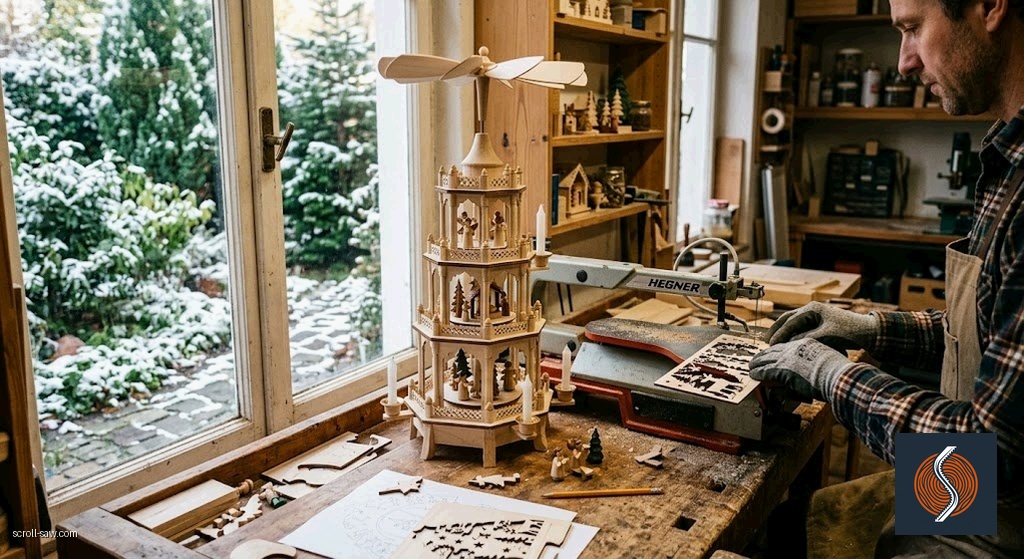
Scroll Saw Christmas Pyramid Patterns: Selecting and Cutting
Christmas pyramid patterns, called Weihnachtspyramide in their German origin, range from beginner single-tier pieces to elaborate multi-tier scenes with 20 or more figurines rotating on multiple platforms. The pattern you choose determines everything downstream: build time, wood requirements, mechanical complexity, and finished visual impact.
Most sawyers underestimate pyramid difficulty at first attempt. The cutting is manageable. The mechanical assembly is where projects fail. Getting the fan balanced. Getting the shaft to spin freely. Getting the platforms to clear the frame without binding. These require patience and precise fitting that scroll saw work alone does not teach.
This guide focuses on pattern selection rather than mechanical assembly. Pattern choice sets the scope of what mechanical work you will need to do.
Short answer: choose Christmas pyramid patterns matching your skill level (single-tier for beginners, three-tier for intermediate, four-plus tier for advanced), use 1/4-inch and 1/2-inch quality hardwood, cut with a #5 blade for structural pieces and #3 for figurines, and plan the mechanical assembly (shaft, bearings, fan) before cutting begins.
The rest of this guide covers pattern selection.
Pyramid pattern categories
Single-tier miniature pyramids. Small tabletop pieces, 6 to 10 inches tall. One platform with 3 to 6 figurines. Beginner-friendly.
Single-tier standard pyramids. Medium tabletop pieces, 12 to 18 inches tall. One large platform with 6 to 10 figurines. Intermediate.
Two-tier pyramids. Two rotating platforms. Nativity below, angels above is a common arrangement. Intermediate to advanced.
Three-tier pyramids. Three platforms, each with its own scene. Classic Erzgebirge style. Advanced.
Four-plus tier pyramids. Elaborate multi-scene pyramids. Expert level.
Wall-mounted pyramids. Half-pyramid designs mounted flat against a wall. Novel adaptation of the traditional design.
Musical pyramids. Pyramids incorporating a music box mechanism alongside the candle-driven fan. Advanced.
Themed pyramids. Non-nativity themes (winter scenes, angels, wildlife). Same construction principles.
Pattern sources
Steve Good, Scrollsaw Workshop. Free pattern library includes basic Christmas pyramids.
Wood Magazine. Occasional Christmas pyramid patterns in seasonal issues.
Erzgebirge traditional patterns. German craft magazines and pattern books, sometimes available in English translation.
Commercial pattern designers. Sue Mey, Steve Good and others publish more advanced pyramid patterns.
Custom pattern design. Advanced sawyers design their own pyramids based on personal preferences and available space.
Skill assessment before pattern choice
Before selecting a multi-tier pattern, verify your skill level.
Have you completed a simple lidded box? If not, start with box making before attempting pyramids.
Have you completed a fretwork clock or similar mechanical piece? Pyramids require similar mechanical thinking.
Do you have a scroll saw with reliable table tilt? Not strictly required, but helpful.
Do you have a drill press for accurate hole drilling? Very helpful for shaft bearing holes.
Have you worked with wood glue on structural assemblies? Frame gluing is critical for pyramid stability.
If answers are mostly yes, intermediate pyramid patterns are within reach. If mostly no, start with a simple single-tier pattern.
Wood requirements by pattern complexity
Single-tier: 1/4-inch stock for frame and figurines, 1/2-inch stock for base, 1/8-inch stock for fan blades, small dowel or rod for shaft.
Two-tier: Same stock thicknesses. More total stock needed.
Three-tier and above: Larger base for stability. Steel rod for shaft (wood dowels warp on longer spans). More fan blades and larger fan for adequate draft.
Use quality hardwood throughout. Linden traditional. Baltic birch as substitute. Cherry or maple for premium pieces.
Blade selection
Frame and base: #5 reverse-tooth blade.
Figurines: #3 reverse-tooth blade.
Fine figurine detail: #2/0 blade.
Fan blades (identical shapes): #3 blade. Stack-cut if possible.
Hardwood: Pégas Modified Geometry blades.
Cutting sequence per pyramid tier
For each tier, cut components in this order.
Step one, cut the platform (rotating disc) from base stock.
Step two, cut hub or shaft-hole detail in platform.
Step three, cut figurines for the tier from figurine stock.
Step four, cut base of each figurine (small mounting foot).
Step five, sand all components.
Repeat for each tier.
Pattern-specific considerations
Nativity pyramids. Traditional pattern content. Baby Jesus, Mary, Joseph, shepherds, wise men, animals. Figurine count 6 to 20 depending on tier count.
Angel pyramids. Angel figurines on multiple platforms. Simpler figurine shapes than nativity.
Winter scene pyramids. Skaters, sledders, chimney sweeps, market vendors. More secular alternative to nativity.
Cathedral pyramids. Elaborate architectural fretwork frame with figurines inside. Advanced.
Simple candle pyramids. No figurines, just fretwork frame with candles. Beginner-friendly if you want to skip figurine cutting.
Mechanical planning by pattern
Mechanical assembly complexity scales with tier count.
Single-tier. One platform, one shaft, one fan. Simple bearing setup.
Two-tier. Two platforms on the same shaft. Bearings top and bottom.
Three-plus tier. Same shaft, multiple platforms. Longer shaft means straightness matters more.
Coupled tiers. Some designs have platforms rotating at different speeds via gear couplings. Advanced.
Music-box coupled. Music mechanism coupled to shaft. Advanced.
Finishing pyramid components
Frame and base. Wipe-on oil or matte lacquer. Preserves wood aesthetic.
Platforms. Same finish as frame.
Fan blades. Unfinished linden traditional. Light matte finish acceptable.
Figurines. Painted or unfinished per pattern style. Water-based acrylics with matte clear coat if painting.
Shaft. Unfinished. Paste wax at bearing point to reduce friction.
Avoid heavy glossy finishes on pyramid components. Traditional aesthetic is matte or satin.
Candle selection
Candle choice affects performance.
Small tapers. Traditional. 4 to 6 inches tall, 1/2-inch diameter. Steady heat.
Number. 4 to 6 for single-tier. 6 to 8 for multi-tier.
Beeswax or paraffin. Both work. Beeswax has less sooting.
Placement. Equidistant around base, directly under fan.
Safety. Never leave burning pyramid unattended.
LED alternative. Small LED-powered heat elements for pyramids used around children or in fire-restricted settings.
Common failures on pyramid patterns
Pyramid does not rotate. Cause: friction at bearing, imbalanced fan, or platform binding. Fix: verify shaft clearance, check fan balance.
Rotation jerky. Cause: shaft not straight or worn bearing. Fix: replace shaft with steel rod, replace bearing.
Fan wobbles visibly. Cause: blades at inconsistent angles. Fix: rebuild fan with consistent angles.
Figurines fall off platforms during rotation. Cause: figurine bases too small or glue insufficient. Fix: larger bases, quality wood glue.
Candles blow out from fan draft. Cause: fan too aggressive. Fix: reduce fan blade angle.
Pyramid smokes. Cause: candle wick too long. Fix: trim wicks to 1/4-inch.
FAQ
What is the easiest Christmas pyramid pattern for a beginner?
A single-tier pyramid with a simple frame and 3 to 6 figurines. Focus on getting the mechanical assembly right before adding tier complexity.
Can I use LED heat instead of candles?
Yes. LED-powered heat elements exist specifically for pyramids used around children or in settings where open flame is not appropriate.
How long does a Christmas pyramid project take?
Single-tier: 15 to 30 hours. Two-tier: 30 to 60 hours. Three-tier and above: 60 to 150 hours or more.
Are Christmas pyramid patterns copyrighted?
Some free (Steve Good), some commercial (Sue Mey, Wood Magazine). Verify licensing before commercial sale.
Can I paint figurines?
Yes and traditionally figurines are painted in bright colors. Water-based acrylics with matte clear coat.
Do pyramids work as heirloom pieces?
Yes. Quality construction produces pieces that outlast their maker with proper care.
Should the shaft be metal or wood?
Metal for reliable rotation. Wood dowels warp with humidity changes.
References
-
Steve Good, Scrollsaw Workshop archive on Christmas pyramid patterns
-
Wood Magazine, tutorials on Christmas craft work
-
Fine Woodworking, mechanical craft projects
-
Erzgebirge traditional Christmas craft references


