
Scroll Saw Patterns Cars: Cutting Classic and Modern Vehicles
Scroll Saw Patterns Cars: Cutting Classic and Modern Vehicles
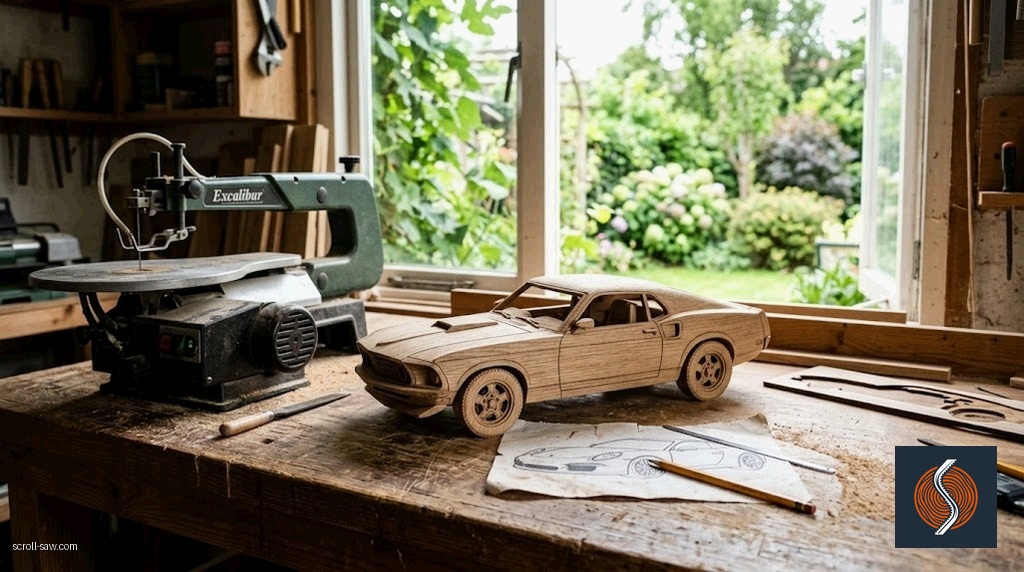
Car patterns are a specialty within scroll saw work with a devoted audience. Automotive enthusiasts, family members giving gifts to car owners, garage decor makers, and craft show buyers who grew up with specific vehicles all drive demand for car pattern pieces. The variety covers everything from Model T silhouettes cut in walnut for antique automobile fans to modern Corvette and Mustang silhouettes cut in maple for weekend track enthusiasts.
Car patterns share technical characteristics regardless of era. Wheel arches present curves that need consistent radius. Grilles have fine parallel detail. Windshields and side windows form enclosed regions requiring bridge work if cut through. Chrome trim on classics translates to fine cut lines on the wood. Getting these details right separates a piece that reads as a specific car from a piece that reads as a generic car shape.
Car pattern pieces show up as garage decor, gifts for car enthusiasts, gifts commemorating a specific family car, business signage for auto shops, and gallery pieces displaying classic vehicles.
Short answer: cut car patterns on 1/2-inch Baltic birch or hardwood, use a #5 reverse-tooth blade for outer profiles and a #3 for wheel arch and window detail, plan bridges on any enclosed windows or grille details, and finish with wood tones matched to the vehicle era (walnut and cherry for classics, maple for modern).
The rest of this guide covers car pattern work.
Car pattern categories
Classic American. Model T, Model A, 1957 Chevy Bel Air, 1965 Mustang, 1969 Camaro. Iconic silhouettes with instant recognizability.
Modern American. Current Corvette, Mustang, Challenger, F-150 truck. Contemporary silhouettes.
European classic. VW Beetle, Porsche 911, Austin Mini, Fiat 500. Distinctive European silhouettes.
European modern. BMW M-series, Audi RS-series, Mercedes AMG. Sleek modern European.
Japanese classic. Toyota FJ40, Datsun 240Z, Toyota Supra. Growing category as these vehicles achieve classic status.
Racing cars. Formula 1, NASCAR stock cars, Le Mans prototypes. Very specific silhouettes.
Trucks and SUVs. Ford F-series, Chevy Silverado, Jeep Wrangler, Land Rover Defender. Rugged silhouettes.
Hot rods and custom. 1932 Ford, chopped and lowered classics, rat rods. Distinctive customized silhouettes.
Muscle cars. 1970 Challenger, 1969 GTO, 1970 Chevelle. Bold aggressive silhouettes.
Wood choice by vehicle era
Classic pre-war (1920s-1940s). Walnut or dark hardwood. Reads as vintage and formal.
Mid-century (1950s-1960s). Cherry or medium hardwood. Warm era-appropriate tones.
Muscle era (late 1960s-1970s). Cherry or walnut. Bold traditional wood tones.
Modern (1980s onward). Maple or Baltic birch. Clean lighter tones matching modern aesthetic.
Racing. Baltic birch for clean modern look. Or dark hardwood for classic racing era.
Custom/hot rod. Baltic birch or matched wood, often with paint accents for authentic hot rod color schemes.
Avoid oak for cars. Ring-porous grain fights the smooth automotive silhouette lines.
Blade selection
Outer car profile: #5 reverse-tooth blade.
Wheel arches and window cutouts: #3 reverse-tooth blade.
Grille detail and chrome trim suggestion: #2/0 blade.
Hardwood detail: Pégas Modified Geometry blades for cleaner wheel arches.
Wheel arches
Wheel arches are the most recognizable car detail. Getting them right separates a specific vehicle from a generic silhouette.
Radius consistency. Both wheel arches on the same side should have the same radius. Asymmetric arches read as amateur work.
Arch depth. Deep arches suggest wheels beneath. Shallow arches suggest fender skirts. Match to the reference vehicle.
Arch shape. Rounded arches (classic cars). Squared arches (modern trucks and SUVs). Radiused corners (muscle cars). Match to reference.
Cutting technique. Enter arch at one side, cut around the curve, exit at the other side without backing up. Consistent feed rate maintains the curve.
Windows and windshields
Car windows form enclosed regions.
Cut-through windows. Windows cut all the way through the wood. Requires bridge work on any enclosed shape.
Fret cut windows. Windows cut as fret detail with bridges intentionally as design elements.
Painted windows. Windows not cut through; painted onto the wood surface. Simplest approach.
Backed windows. Windows cut through with contrasting-color backing behind. Reads as tinted glass.
For cut-through windows, plan bridges at pillar points (A-pillar, B-pillar) so the roof stays attached to the body naturally.
Grille and chrome detail
Grilles are what makes a Ford look like a Ford and a Chevy look like a Chevy.
Fine parallel cuts for horizontal grilles (many classics). Use a #2/0 blade for cleanest lines.
Vertical grille bars (1960s Cadillacs, some pickups). Same technique, vertical orientation.
Egg-crate grilles (some muscle cars). More complex pattern of intersecting lines. Requires careful planning.
Modern trapezoidal grilles. Larger single opening with detail inside. Cut opening first, then interior detail.
Chrome trim. Fine parallel cut lines suggesting chrome accents. Not deep cuts; visual suggestion only.
Grille and chrome detail is optional. Simple silhouettes without grille detail still read as cars. Include grille detail on premium pieces or for specific-vehicle identification.
Bridge planning for enclosed windows
Car patterns with cut-through windows need careful bridge planning.
Side window bridges. Bridge at the A-pillar and B-pillar naturally provides window attachment to the body.
Windshield bridges. Bridge at the top of the A-pillar or across the top of the windshield.
Rear window bridges. Bridge at the C-pillar.
Sunroof cutouts. Small cutouts on some patterns. Bridge on both sides.
Bridge width: 2 to 3 mm at final scale.
Wheel design
Wheels are the second most recognizable feature after wheel arches.
Simple round wheels. Circular wheel silhouette. Beginner-friendly.
Spoke wheels. Classic wheels with visible spokes. Requires fret cutting inside the wheel outline.
Alloy wheels. Modern styled wheels. Various patterns matching real-world wheel designs.
Racing wheels. Distinctive lightweight patterns.
Chopped wheels. Wheels cut off partway (only the top visible). Some designs show only the top of wheels behind fenders.
On many pattern pieces, wheels are separate cut layers glued onto the main body layer. This lets you match the wheel pattern to the wheel era without cutting fine detail on the main body stock.
Finishing car pieces
Natural wood. Wipe-on oil for hardwood pieces. Preserves grain and warmth.
Two-tone with painted body. Wood body sanded flat, base coat, painted body color (Ford red, Corvette yellow), sealed with clear coat.
Chrome accents painted on. Silver or metallic paint on grille and trim, applied over base color.
Aged/patina finish. Antique glaze for classic car pieces. Reads as vintage.
Race-livery paint. Team colors and sponsor logos for racing car pieces. Vinyl accents or careful hand painting.
Avoid heavy glossy finishes on classic car pieces. Matte or satin reads as intentional.
Glossy finish acceptable on modern car pieces where a showroom look is intended.
Common failures on car pattern pieces
Wheel arches asymmetric. Cause: pattern printed askew or cutting drift. Fix: verify pattern alignment, cut curves with consistent feed rate.
Windows fall out during cut. Cause: no bridge planned. Fix: plan window bridges at pillar points.
Grille lines look uneven. Cause: blade drift on parallel cuts. Fix: use #2/0 blade with slow consistent feed.
Car looks generic rather than specific. Cause: silhouette lacks distinctive features. Fix: choose patterns with clear vehicle-specific characteristics.
Wheels not centered in wheel arches. Cause: separate wheel pieces glued off-center. Fix: mark wheel center before gluing.
Piece looks flat and lifeless. Cause: no depth or accent detail. Fix: add grille detail, wheel spokes, or layered construction.
FAQ
What is the easiest car pattern for a first cut?
A simple silhouette of a classic car (Model T, VW Beetle) with round wheels and no interior detail. Focus on the outer profile.
Can I cut car patterns without wheel arches?
Yes for stylized patterns, but wheel arches are the most recognizable car feature. Omitting them reduces vehicle recognizability.
Should car pieces be painted or natural wood?
Depends on aesthetic. Classic car pieces often work well in natural hardwood. Modern car pieces often benefit from paint matching original vehicle colors.
Can I make car patterns from photos of my own car?
Yes. Convert photo to silhouette (Photoshop or similar tool), simplify to scroll saw pattern, cut. Personalized car pieces are premium gift items.
Do car patterns need to be scaled to specific proportions?
Yes for accuracy. Different vehicles have different length-to-height ratios. Use reference photos to verify pattern proportions.
Are car pattern pieces profitable at craft shows?
Yes. Automotive enthusiasts are consistent buyers. Popular vehicles (Mustang, Corvette, Camaro) sell reliably. Regional vehicles (specific manufacturer or era) find niche audiences.
Can I sell car pattern pieces of specific vehicle brands?
Depends on brand trademark considerations. Silhouettes of general vehicles usually fine. Explicit brand logos on grilles may require licensing.
References
-
Steve Good, Scrollsaw Workshop archive on vehicle patterns
-
Wood Magazine, tutorials on scroll saw automotive pieces
-
Fine Woodworking, silhouette design and pattern making
-
Reference photos of specific vehicles for pattern proportions


