
Western Scroll Saw and Inlay Patterns: Cowboy, Horse, and Ranch Motifs
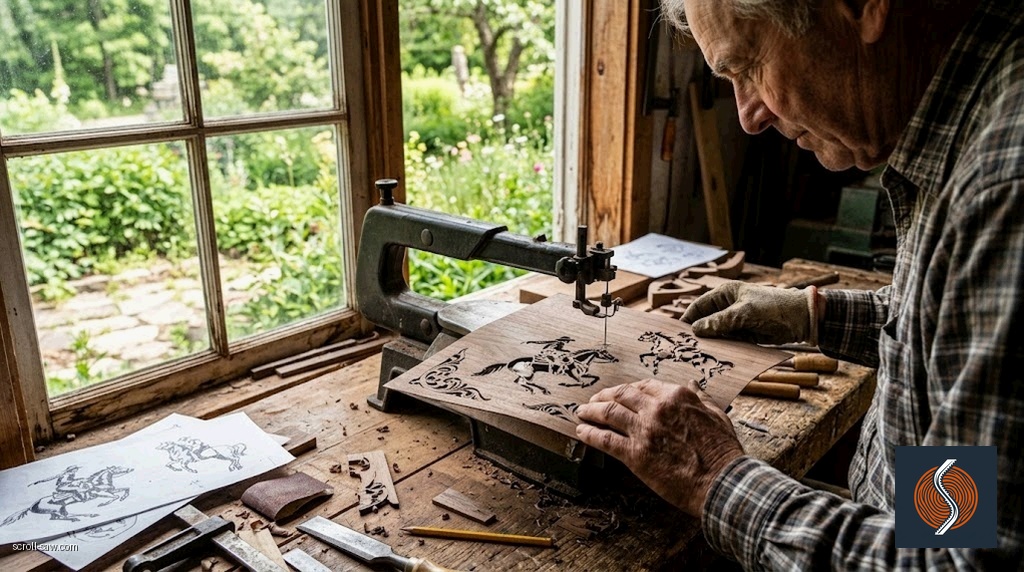
Western Scroll Saw and Inlay Patterns: Cowboy, Horse, and Ranch Motifs
Western-themed scroll saw work covers a specific aesthetic tradition: cowboys, horses, cattle, ranches, southwestern motifs, rodeo scenes, cactus and mesa landscapes. The category has a devoted audience in ranch communities, western-themed businesses, southwestern home decor markets, and rodeo culture. Craft shows in western regions consistently see western pieces move.
Within western patterns, two techniques dominate: silhouette cutting and inlay work. Silhouette pieces are the more common technique, cutting cowboys or horses as through-cut profiles. Inlay pieces use contrasting wood species set into recessed areas for a more sophisticated look with multiple colors visible on a single piece. Both techniques have their place, and understanding when to use each one is part of the craft.
Western pieces show up in ranch home decor, saloon or restaurant signage, gifts for cowboys and rodeo participants, southwestern gallery walls, and personalized pieces for people with western heritage.
Short answer: cut western silhouette patterns on 1/2-inch Baltic birch or hardwood, use a #5 reverse-tooth blade for outer profiles and a #3 for interior detail, plan inlay pieces with cutting on both the base piece and the inlay stock, and finish with wood tones matched to the western aesthetic (walnut for classic ranch, cherry for warm, cedar for southwest).
The rest of this guide covers western pattern work.
Western pattern subject categories
Cowboys and horses. Traditional cowboy on horseback silhouettes. Roping, riding, working. Iconic western imagery.
Rodeo scenes. Bull riders, barrel racers, calf ropers, saddle bronc riders. Action poses.
Cattle and ranch stock. Longhorn, angus, hereford cattle. Sheep and goats.
Southwest landscapes. Mesa, cactus, sunset silhouettes.
Cactus specific. Saguaro, prickly pear, agave.
Native American motifs. Kokopelli figures, Navajo geometric patterns, southwest textile designs. Handle with cultural respect.
Ranch signage. Family ranch names with brand marks and western typography.
Western wildlife. Coyote, roadrunner, jackrabbit, hawk.
Barbed wire and rope motifs. Decorative border and accent elements.
Cowboy hat and boot silhouettes. Simplified iconic imagery.
Silhouette vs. inlay technique choice
Silhouette cutting. One color of wood cut as a through-cut profile. Standard scroll saw technique. Beginner-friendly.
Inlay cutting. Base piece with a recess cut, plus inlay piece cut to fit exactly in the recess. Contrasting wood colors visible on the finished piece. Advanced technique.
When to choose silhouette: Simple designs, single-color pieces, beginner work, quick production.
When to choose inlay: Multiple wood colors, sophisticated aesthetic, gift-quality pieces, showcase work.
Most pattern designers publish both silhouette and inlay versions of popular western subjects.
Wood choice for western pieces
Walnut. Dark and traditional. Reads as classic ranch or leather aesthetic.
Cherry. Warm reddish-brown. Reads as saddle leather.
Cedar. Traditional southwestern wood. Aromatic. Reads as natural and rustic.
Mahogany. Rich red-brown. Formal western aesthetic.
Oak. Traditional and rugged. Grain visible on cut edges.
Contrasting inlay pieces. Different species set into recesses. Common pairings: walnut base with maple inlay, cherry base with dark walnut inlay.
Stock thickness: 1/2-inch for wall pieces. 3/4-inch for premium pieces or outdoor use.
Blade selection
Outer silhouette profiles: #5 reverse-tooth blade.
Interior detail: #3 reverse-tooth blade.
Fine detail (facial features, rope detail, cactus spines): #2/0 blade.
Inlay work (requires very precise kerf matching): Pégas Modified Geometry blades for consistent kerf.
Silhouette cutting sequence
Step one, cut interior detail on the pattern.
Step two, cut the outer profile with a #5 blade.
Step three, save fragile projections for last.
Step four, remove pattern paper.
Standard scroll saw technique. Detailed in single-layer pattern guides.
Inlay cutting technique
Inlay work is more involved than silhouette.
Step one, apply pattern to two pieces of contrasting wood: base piece and inlay piece.
Step two, cut both pieces simultaneously by stacking and cutting through both. This matches kerf between the two pieces so the inlay fits the base recess.
Step three, separate the cut pieces. The base has a recess. The inlay piece has the corresponding shape.
Step four, dry-fit the inlay in the base recess. Should fit snugly without gaps.
Step five, apply wood glue to the recess. Insert the inlay. Clamp lightly.
Step six, sand the assembled piece to flush surface after glue cure.
Inlay technique requires practice. First inlay attempts often produce visible gaps. Work through several practice pieces before attempting gift-quality inlay.
Rope and barbed wire border detail
Western pieces often use rope or barbed wire as decorative borders.
Rope borders. Repeating twist pattern around the piece edge. Cut with a #3 blade. Consistent rhythm creates the rope illusion.
Barbed wire borders. Straight lines with periodic barb detail. Cut with a #3 blade. Barbs are small triangular projections.
Chain link. Interlocking oval loops. Cut with fine blade for the intricate loop pattern.
Wagon wheel motifs. Circle with spokes. Standard geometric pattern.
Cactus and mesa detail
Saguaro cactus. Iconic tall cactus with side branches. Cut the branches as separate features from the trunk. Sharp points at branch tips.
Prickly pear cactus. Multiple flat pads with spines. Simplified spines at pad edges.
Agave. Spiky rosette. Cut spikes at consistent angles.
Mesa silhouette. Flat-topped mesa profile. Simple geometric cut.
Distant mountains. Layered mesa profiles for depth effect.
Finishing western pieces
Wipe-on oil. Danish oil on hardwood. Two coats. Preserves grain and warms color.
Antique glaze. Aged look for classic western pieces. Apply over base finish.
Stained. Water-based dye stain for pieces needing specific color. Southwestern turquoise, ranch red, weathered gray.
Painted accents. Color accents on specific features (red kerchief, blue jeans on cowboy). Apply before clear coat.
Wood-burned detail. Aged or brand-look detail applied before finishing.
Satin lacquer. Two coats for durable finish.
Avoid heavy glossy finishes on western pieces. Matte or satin reads as more authentic.
Mounting western pieces
Rustic mounting. Rope or leather hanger for authentic western feel.
Standard sawtooth or D-ring. For pieces mounted on standard walls.
Freestanding on wooden base. For pieces meant to stand on mantles or shelves.
Barn wood backing. Piece mounted on reclaimed barn wood for authentic western presentation.
Common failures on western patterns
Cowboy silhouette looks generic. Cause: pattern lacks distinctive cowboy features. Fix: choose patterns with clear cowboy hat, boots, and typical pose.
Horse proportions wrong. Cause: pattern designer drew horse loosely. Fix: verify horse pattern against reference photos.
Cactus arms too fragile. Cause: cactus arms cut too thin at final scale. Fix: increase pattern size or thicken cactus arms.
Inlay does not fit. Cause: kerf inconsistent between base and inlay cuts. Fix: stack-cut both pieces simultaneously for matched kerf.
Rope border rhythm irregular. Cause: cutting drift on repeating pattern. Fix: use consistent feed rate.
Piece looks kitsch. Cause: too many western elements combined. Fix: single strong subject reads better than combined motifs.
FAQ
What is the easiest western pattern for a first cut?
Cowboy hat or boot silhouette. Simple iconic shape with distinctive western reading.
Is inlay work worth learning?
Yes for gift-quality and premium pieces. Inlay pieces command significantly higher prices than silhouettes.
Can I make western pieces without southwestern elements?
Yes. Ranch-focused pieces (cattle, cowboys, horses) work without southwestern motifs. Southwestern-focused pieces (cactus, mesa, kokopelli) work without ranch elements.
Should Native American motifs be included?
Handle with cultural respect. Some Native American motifs are commercially adapted; others are ceremonial and inappropriate for craft use. Research before including.
Are western pieces good for craft shows in western regions?
Yes. Western pieces are one of the most reliable categories at craft shows in ranch and southwestern regions.
Should western pieces be sealed for outdoor use?
Only with weather-resistant wood and exterior finish. Most western pieces are indoor decor.
How long does a western piece take?
Simple silhouette: 3 to 6 hours. Complex silhouette with fine detail: 6 to 12 hours. Inlay piece: 12 to 25 hours depending on complexity.
References
-
Steve Good, Scrollsaw Workshop archive on western patterns
-
Wood Magazine, tutorials on western and southwestern scroll saw work
-
Fine Woodworking, inlay techniques for scroll saw
-
Reference photos of western imagery for pattern accuracy


