
DeWalt Scroll Saw: Real Assessment of the DW788 for Woodworkers
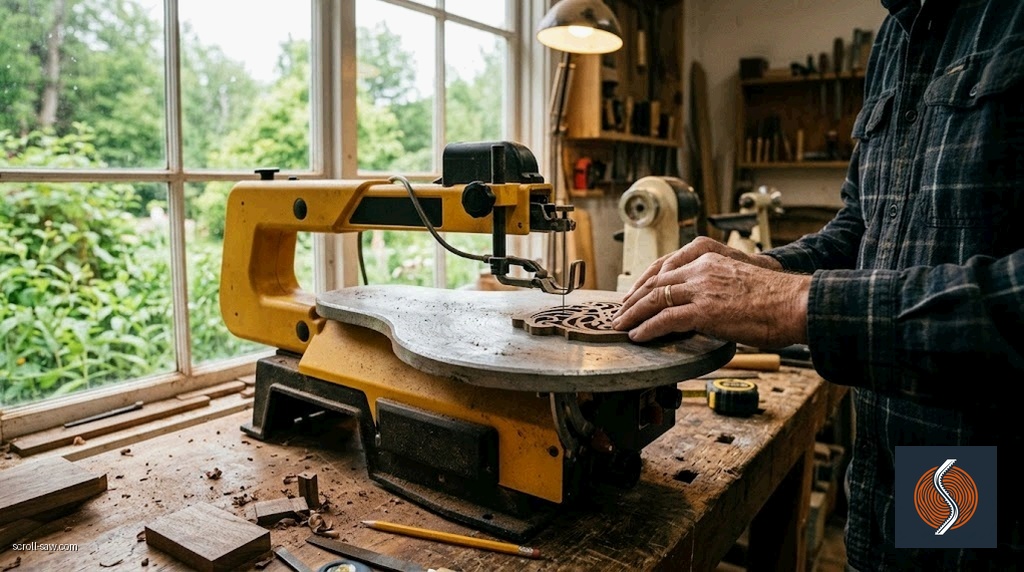
DeWalt Scroll Saw: Real Assessment of the DW788 for Woodworkers
DeWalt only makes one scroll saw. The DW788 has been in production for decades with minor updates. That single-model approach tells you something about the saw’s position in the market: it is a workhorse for people who want a scroll saw that runs, cuts, and lasts. Not a hobby-tier saw with basic features, not a specialty saw with exotic capabilities. Just a well-built 20-inch scroll saw that does one thing and does it consistently.
The DW788 shows up in professional shops, high-end hobbyist shops, and shops that have graduated from entry-level saws and want something that will hold up to daily use. It costs more than budget saws, but the pricing reflects build quality that lasts through years of scroll work. Owners often keep DW788s for 15 years or more without significant issues.
This assessment covers the DW788 based on published specifications, common owner reports, and the saw’s position relative to alternatives.
Short answer: the DeWalt DW788 scroll saw is a 20-inch variable-speed scroll saw with 1.3-amp motor, 3,000 strokes per minute maximum, tilting table to 45 degrees, and reputation for long-term reliability; it works well for intermediate to advanced sawyers who need a durable saw for regular use and can accept the higher price relative to entry-level alternatives.
The rest of this article covers what makes the DW788 what it is.
Core specifications
Throat capacity: 20 inches. Measures distance from blade to back of frame. Determines maximum workpiece width you can cut.
Maximum cutting thickness: 2 inches at 90 degrees. Adequate for most scroll saw work.
Table size: 16 by 24 inches cast aluminum.
Table tilt: 0 to 45 degrees left, 0 to 45 degrees right for bevel cuts.
Speed range: 400 to 1,750 strokes per minute (variable).
Motor: 1.3 amp, 120 volt.
Blade type: Both pinless and pin-end blades supported.
Weight: 56 pounds. Requires a sturdy work surface or dedicated stand.
What the DW788 does well
Vibration control. The parallel-arm design and heavy cast construction keep vibration low compared to lighter saws. This matters for detailed cutting where drift matters.
Speed range. Variable speed from 400 to 1,750 SPM covers all standard scroll work. Slow speeds for thick hardwood, fast speeds for thin work.
Blade tension consistency. The tensioning system holds blade tension across long cutting sessions without significant slack.
Table stability. The heavy cast aluminum table stays flat and does not flex during aggressive cuts.
Long-term durability. DW788s from 15 to 20 years ago still run well with basic maintenance. This is the saw’s defining reputation.
Blade change access. Blade change is straightforward compared to some competitors, but not as convenient as top-tier options (Pégas, Excalibur).
Where the DW788 has limits
Blade change speed. Not the fastest blade change on the market. Blade change requires access to lower and upper chucks, and takes 20 to 45 seconds for experienced users. This matters for intricate fret work with many blade changes.
Dust management. Basic dust blower directs air across the cut. No integrated vacuum port on the saw itself. Add-on solutions required for serious dust control.
Work light. No built-in work light on the standard saw. The DW7881 work light is a separate accessory.
Foot pedal. No foot pedal control. Some sawyers add aftermarket foot pedals.
Table lock precision. Table tilt lock works but is not always precise for repeated bevel cuts.
Weight. Sixty-plus pounds. Not portable. Requires dedicated shop space or a stand.
Common use cases
Intricate fret work. DW788 handles fine detail well. Combined with #2/0 or smaller blades, the saw cuts fine fretwork cleanly.
Portrait cutting. Detailed silhouette portraits benefit from the saw’s vibration control.
Puzzle cutting. Multi-piece puzzles cut consistently.
Inlay work. Precise cutting supports inlay technique where kerf matters.
Multi-layer work. Consistent cutting supports layered pieces where each layer must match.
Production work. Small-scale production of scroll saw pieces for craft show sale.
Accessories worth considering
DeWalt DW7880 scroll saw stand. Purpose-built stand for the DW788. Steel construction. Not needed if you have a solid workbench.
DeWalt DW7881 work light. Purpose-built work light for the DW788.
Dust collection. Add a small shop vacuum with a 4-inch hose reduction to the saw’s built-in dust port area.
Foot pedal. Aftermarket foot pedal switches allow hands-free saw on/off control.
Blade selection. Stock up on quality blades. Olson reverse-tooth blades work well in the DW788.
Extra bellows. The saw’s dust blower bellows can wear over years. Replacement bellows are available for older saws.
Setup and initial calibration
Out-of-box setup includes several verification steps.
Step one, verify table is square to blade (blade perpendicular to table surface). Adjust with allen wrench per manual.
Step two, verify table tilt scale reads zero when table is level.
Step three, verify blade tension per manual. New sawyers often under-tension.
Step four, run the saw at various speeds without workpiece to verify vibration acceptable.
Step five, cut a test piece to verify blade alignment.
Step six, adjust dust blower angle if needed.
Owners report that first-day setup takes 30 to 60 minutes.
Maintenance for long life
The DW788’s reputation for longevity depends on basic maintenance.
Blade replacement. Blades wear with use. Signs: burning smell during cut, drift, longer cutting time.
Bellows inspection. Check bellows every year. Replace if cracked.
Motor cleaning. Compressed air on motor housing yearly.
Table waxing. Paste wax on the aluminum table monthly. Reduces workpiece drag.
Chuck cleaning. Wipe blade chucks after each blade change. Sawdust accumulates.
Belt inspection. DW788 uses a belt drive. Inspect belt condition every 6 months.
Comparison with alternatives
| Consideration | DW788 | WEN 3922 | Rikon 10-600VS | Excalibur EX-21 |
| Throat depth | 20 inches | 16 inches | 16 inches | 21 inches |
| Speed range | 400-1,750 SPM | 550-1,600 SPM | 550-1,650 SPM | 400-1,550 SPM |
| Weight | 56 lbs | 40 lbs | 42 lbs | 78 lbs |
| Position | Professional durability | Budget-friendly | Value hobbyist | Premium tilting head |
Common failures and fixes
Excessive vibration. Cause: uneven work surface, loose motor mount. Fix: verify surface flat, tighten motor mounting.
Blade slip. Cause: chuck wear, insufficient tension. Fix: replace chuck jaws if worn, apply proper tension.
Drift during cut. Cause: dull blade, blade tension off, table not square. Fix: replace blade, verify tension, square table.
Dust blower weak. Cause: cracked bellows. Fix: replace bellows.
Motor overheating. Cause: extended continuous use without break, restricted airflow. Fix: allow cool-down periods, keep motor housing clear.
Table won’t tilt smoothly. Cause: sawdust in tilt mechanism. Fix: clean mechanism with compressed air.
FAQ
Is the DW788 worth the price over entry-level saws?
For serious hobbyists who use the saw regularly, yes. The DW788’s durability and vibration control justify the premium over the long term. For occasional hobbyists, entry-level saws may be adequate.
How does the DW788 compare to the Excalibur EX-21?
Excalibur EX-21 has tilting head instead of tilting table (advantage for bevel work), larger 21-inch throat, and premium features. DW788 has smaller footprint, lower cost, and simpler operation.
Can the DW788 handle production use?
Small-scale production yes. Continuous industrial production not the DW788’s use case; specialty industrial saws would be more appropriate.
How long does a DW788 last?
With basic maintenance, 15 to 20+ years. Many DW788s from the 1990s still run well.
Does the DW788 accept both pin and pinless blades?
Yes. Standard chucks accept both types.
Should I buy the stand?
Only if you don’t have a solid workbench. The saw is heavy enough that it stays put on a sturdy bench. The stand adds convenience for mobile setup.
Is the DW788 good for a first scroll saw?
Adequate but overkill for absolute beginners. Better to start with an entry-level saw and upgrade to DW788 after establishing that scroll saw work is a serious interest.
References
-
DeWalt DW788 product documentation and manual
-
Wood Magazine, tool reviews and long-term scroll saw assessments
-
Fine Woodworking, scroll saw tool reviews
-
Owner reports from long-term DW788 users in scroll saw communities


