
DeWalt DW788 20-Inch Variable-Speed Scroll Saw: The Standard
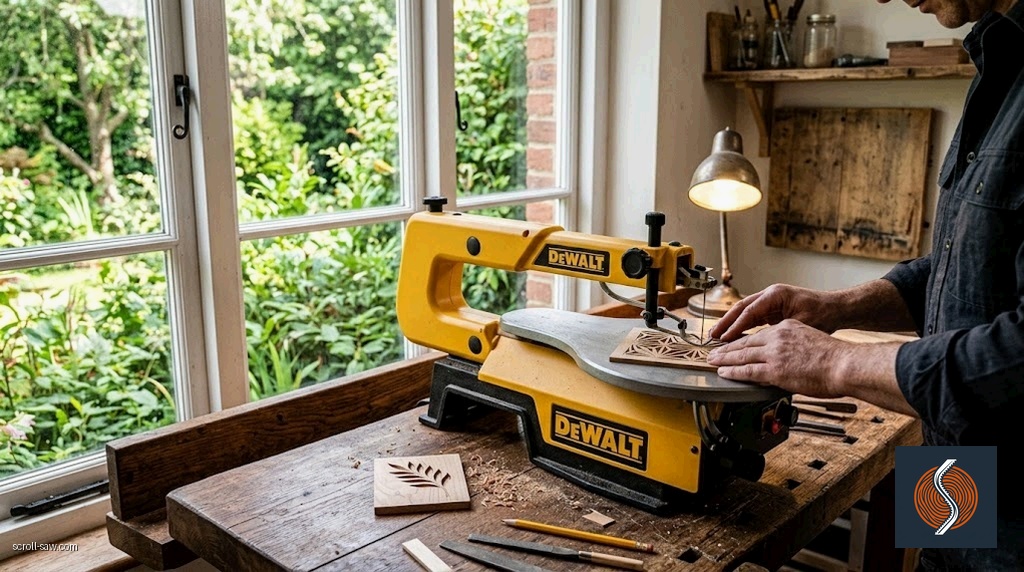
DeWalt DW788 20-Inch Variable-Speed Scroll Saw: The Standard
The DeWalt DW788 is a 20-inch variable-speed scroll saw that has been in continuous production for over 20 years. That production run tells you the essential fact about the DW788: it works, sells consistently, and lasts. A tool does not stay in production that long unless it delivers on user expectations.
What sets the DW788 apart from budget hobbyist scroll saws is not exotic features. It is fundamental construction, thoughtful engineering, and the parallel-arm design that keeps vibration under control through long cutting sessions. Combined with the 400 SPM low-speed capability, 20-inch throat capacity, and the multi-year DeWalt warranty, the DW788 has earned its reputation.
Serious hobbyists tend to gravitate to the DW788 after outgrowing entry-level saws. Professional users who need reliable long-term production capability often reach for it directly.
Short answer: the DW788 features 20-inch throat capacity, 400 to 1,750 SPM electronic variable speed, tilting cast aluminum table (0 to 45 degrees both directions), parallel-arm design for vibration control, and multi-decade durability record; it works well for serious hobbyists and small production shops.
Complete specifications
Throat capacity: 20 inches from blade to arm rear.
Maximum cutting thickness: 2 inches at 90 degrees.
Table size: 16 by 24 inches, cast aluminum.
Table tilt: 0 to 45 degrees left, 0 to 45 degrees right.
Speed range: 400 to 1,750 strokes per minute, electronic variable.
Motor: 1.3 amp, 120 volt.
Blade type: Both pinless and pin-end blades supported.
Weight: 56 pounds.
Warranty: Three-year limited manufacturer.
What separates the DW788 from budget alternatives
Parallel-arm design. Both arms move together in perfect parallel motion. This design produces less vibration than similar-priced scroll saws using different arm configurations.
400 SPM low speed. Most budget saws start at 550 SPM. The 400 SPM low speed on DW788 is critical for thick hardwood work and detailed cutting where slow speed matters.
Heavy cast aluminum table. The 16x24 inch cast table stays flat and provides solid work surface.
Tilt in both directions. 45 degrees left and 45 degrees right for versatile bevel work.
Speed dial (not stepped). Continuous electronic variable speed rather than stepped or belt-changed speeds.
Both blade types supported. Standard chucks accept pinned or pinless blades.
Bellows blower. Effective dust blower on cut line.
Robust base and motor housing. Multi-decade construction quality.
Where the DW788 has limits
Blade change speed. Takes 20 to 45 seconds for practiced users. Not the fastest on the market.
Work light. Not integrated. Purchased separately as the DW7881 work light.
Stand. Not included. Purchased separately as the DW7880 stand.
Dust collection. Basic blower only. No integrated vacuum port on the saw.
Weight and portability. 56 pounds. Not portable. Requires dedicated shop space.
Cast aluminum vs cast iron. Some premium alternatives use cast iron. Cast aluminum is lighter and adequate but transmits slightly more vibration.
Common use cases
Intricate fret work. DW788 handles fine detail.
Portrait cutting. Speed control and vibration management support portrait work.
Puzzle production. Consistent cutting for multi-piece puzzles.
Inlay work. Precise cutting supports inlay technique.
Multi-layer work. Consistent cutting for layered pieces (like layered wolf and wildlife scenes).
Craft show inventory production. Small-scale production runs.
Multi-hour continuous cutting. Motor handles extended sessions without fatigue.
Essential accessories
DeWalt DW7880 scroll saw stand. Purpose-built stand for the DW788.
DeWalt DW7881 work light. Purpose-built work light.
Dust collection. Aftermarket vacuum hose adapters.
Foot pedal. Aftermarket foot pedal switches.
Blade selection. Olson reverse-tooth blades. Pegas modified geometry for premium work.
Replacement bellows. For older DW788s.
Setup and initial calibration
Setup takes 30 to 60 minutes.
Step one, remove packaging and mount saw on stand or solid work surface.
Step two, verify table square to blade (blade perpendicular to table using square).
Step three, verify table tilt scale reads zero at level.
Step four, install blade and set proper tension per manual.
Step five, run saw briefly at various speeds without workpiece.
Step six, cut test piece at 3/4 inch to verify square cut.
Step seven, adjust dust blower angle.
Maintenance for long life
Blade replacement. Standard as blades wear.
Bellows inspection. Every year. Replace if cracks appear.
Motor cleaning. Yearly with compressed air.
Table waxing. Monthly paste wax.
Chuck cleaning. After each blade change.
Belt inspection. Every 6 months.
Comparison with alternatives
| Consideration | DW788 | WEN 3922 | Rikon 10-600VS | Excalibur EX-21 |
| Throat depth | 20 in | 16 in | 16 in | 21 in |
| Speed range | 400-1,750 SPM | 550-1,600 SPM | 550-1,650 SPM | 400-1,550 SPM |
| Weight | 56 lbs | 40 lbs | 42 lbs | 78 lbs |
| Tilts | Table | Table | Table | Head |
| Position | Professional durability | Budget-friendly | Value hobbyist | Premium tilting |
Common failures and fixes
Excessive vibration. Cause: uneven surface, loose motor mount. Fix: solid surface, tighten motor mount.
Blade slip. Cause: chuck wear, insufficient tension. Fix: service or replace chuck jaws.
Drift during cut. Cause: dull blade, tension off, table not square. Fix: replace blade, verify tension, square table.
Dust blower weak. Cause: cracked bellows. Fix: replace bellows.
Motor overheating. Cause: extended continuous use without break. Fix: allow cool-down periods.
Table won’t tilt smoothly. Cause: sawdust in tilt mechanism. Fix: clean with compressed air.
Foot doesn’t hold work down. Cause: worn foot. Fix: adjust or replace foot.
FAQ
Is the DW788 worth the price over entry-level saws?
For serious hobbyists who use the saw regularly, yes.
How does the DW788 compare to Excalibur EX-21?
Excalibur has tilting head (versus DW788’s tilting table) and larger 21-inch throat. DW788 has smaller footprint. Both are premium; different design philosophies.
Can the DW788 handle production use?
Small-scale production yes. Continuous industrial production not the DW788’s use case.
How long does a DW788 last?
With basic maintenance, 15 to 20+ years.
Does the DW788 accept both pin and pinless blades?
Yes. Standard chucks accept both.
Should I buy the DW7880 stand?
Only if you don’t have a solid workbench.
Is the DW788 good for a first scroll saw?
Adequate but overkill for absolute beginners. Better to start with an entry-level saw.
How does the DW788 handle 2-inch hardwood?
Well with the 400 SPM low speed, appropriate blade, and slow feed rate.
References
-
DeWalt DW788 product documentation and manual
-
Wood Magazine, tool reviews and long-term scroll saw assessments
-
Fine Woodworking, scroll saw tool reviews
-
Owner reports from long-term DW788 users


