
Craftsman 16 Inch Scroll Saw: The Sears Classic in Home Shops
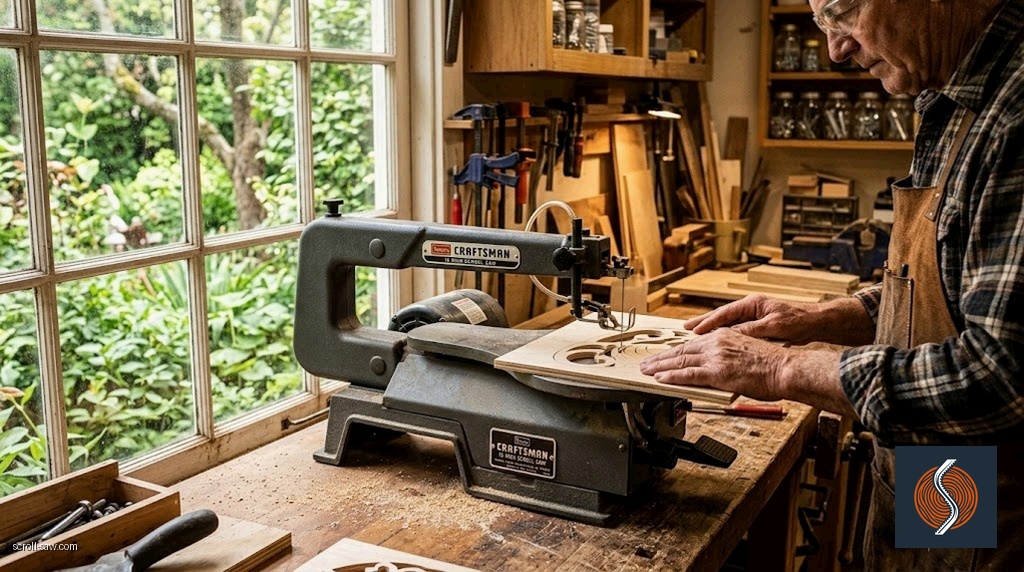
Craftsman 16 Inch Scroll Saw: The Sears Classic in Home Shops
The Craftsman 16-inch scroll saw was Sears’s home shop scroll saw for decades. During the era when Sears was the dominant American home tool retailer, Craftsman scroll saws were the most common scroll saws in home workshops. Millions of Craftsman 16-inch scroll saws were sold. Many are still in daily use.
Understanding a Craftsman 16-inch scroll saw means understanding which era it comes from. A 1980s Sears-era Craftsman has different construction than a 1990s Sears-era Craftsman. Both differ from 2000s and later Craftsman scroll saws sold after Sears’s decline and the brand’s transition to Stanley Black and Decker ownership.
For scroll saw buyers today, the Craftsman 16-inch scroll saw generally means a used unit purchased from an owner or estate sale. New Craftsman 16-inch scroll saws are limited in current availability. Assessing a used Craftsman 16 requires understanding the era and known issues for that generation.
Short answer: the Craftsman 16-inch scroll saw was Sears’s home shop scroll saw sold from the 1970s through the 2000s; vintage units remain in use in many home workshops today; current-generation Craftsman scroll saws are limited in availability, though replacement blades from third parties fit older Craftsman 16-inch scroll saws.
The generations of Craftsman 16-inch scroll saws
1970s-early 1980s. Basic scroll saws, often single or two-speed. Cast iron in key components. Pin-type blade chuck. Reliable but limited features.
Late 1980s. Variable-speed models appeared. Some tilting-head models.
1990s. Model numbers like 21600 and 21602 became common. Introduced pinless blade compatibility on some models.
2000s. Ownership transitions began. Craftsman brand quality varied.
2010s onward. Craftsman under Stanley Black and Decker. Scroll saw availability limited.
What older Craftsman 16-inch scroll saws offered
Cast iron construction. Many older models feature cast iron in table and critical components.
Straightforward operation. Basic scroll saw functions without complexity.
Long lifespan. Sears-era Craftsman scroll saws in good condition run 30+ years.
Wide availability when new. Sears distribution meant scroll saws were accessible.
Pin-type or pinless blade compatibility depending on model.
16-inch throat. Standard hobbyist size.
Where older Craftsman owners face challenges
Manufacturer parts. Sears no longer sells parts.
Third-party parts source. Amazon, eBay, and specialty parts retailers.
Missing manuals. Some available online through hobbyist archives.
Pin-type blade limitation. Older models require pinned blades.
Community expertise scattered. Owner forums vary in activity.
Bellows failure. Older bellows crack; replacement often needed.
Common maintenance issues on older Craftsman 16-inch
Blade replacement. Standard as blades wear.
Bellows replacement. Older bellows crack over time.
Motor brush wear. Some motors use brushes that wear.
Belt inspection. Belt-driven models need belt every 5+ years.
Chuck cleaning. Pin-type chucks accumulate debris.
Table cleaning and waxing. Cast iron tables need paste wax regularly.
Adjustment lock wear. Table tilt lock may wear.
Blade options
For pin-type chucks: Olson pinned blades fit.
For pinless chucks: Olson reverse tooth for general work. Olson skip tooth for softwood.
Modern Pegas blades also fit pinless Craftsman scroll saws.
Common cuts on Craftsman 16
Baltic birch plywood. Standard scroll saw use.
Hardwood pieces up to 2 inches thick. With appropriate blade.
Softwood pieces. With skip tooth blade.
Puzzles and hobbyist patterns. Standard scroll work.
Simple fret work. With appropriate blade.
Comparison with modern alternatives
| Consideration | Craftsman 16 (vintage) | WEN 3922 | Ryobi SC165VS | DeWalt DW788 |
| Throat depth | 16 in | 16 in | 16 in | 20 in |
| Build era | 1970s-2000s | Current | Current | Current |
| Availability | Used only | New | New | New |
| Parts availability | Third-party | Manufacturer | Manufacturer | Excellent |
| Long-term durability | Excellent (well-maintained) | Good | Good | Excellent |
Common failures and fixes
Blade slip in pin-type chuck. Cause: worn chuck. Fix: service chuck.
Bellows crack. Cause: age. Fix: replace bellows.
Cast iron table rust. Cause: humidity, missed waxing. Fix: sand rust, apply paste wax.
Motor bogs. Cause: worn brushes or dust. Fix: replace brushes, clean motor.
Belt slip. Cause: worn belt. Fix: replace belt.
Cut drift. Cause: dull blade, tension off. Fix: replace blade, verify tension.
Table won’t lock at angle. Cause: worn lock. Fix: replace lock hardware.
FAQ
Is a vintage Craftsman 16 scroll saw worth keeping?
If it runs well and you have access to parts, yes. Sears-era Craftsman scroll saws are durable.
Can I still find parts for older Craftsman 16 scroll saws?
Common wear parts through third-party parts sellers. Full assemblies harder.
Does the Craftsman 16 use pinned or pinless blades?
Depends on model year. Older models use pin-type. Newer models accept both.
How does Craftsman 16 compare to current WEN 3922?
A well-maintained vintage Craftsman 16 may last longer. Current WEN offers modern features and warranty.
Should I buy used Craftsman or new WEN?
Depends on used Craftsman condition and price. Used Craftsman in good condition often best value.
Where to find replacement blades for older Craftsman?
Olson and Pegas blades fit standard pinless Craftsman scroll saws.
Is the Craftsman 16 scroll saw good for beginners?
Yes if you find well-maintained used unit. New Craftsman scroll saws are limited.
References
-
Sears Craftsman scroll saw historical documentation
-
Wood Magazine, tool reviews of Sears Craftsman scroll saws
-
Owner reports from vintage Craftsman scroll saw users
-
Third-party parts retailer catalogs


