
Delta 2 Speed 16 Scroll Saw: The Two-Speed Classic
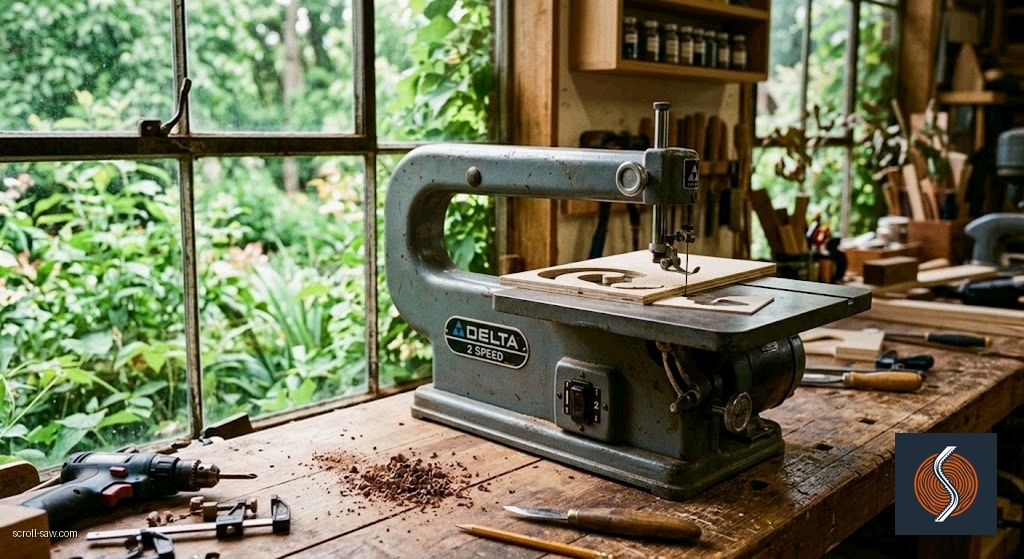
Delta 2 Speed 16 Scroll Saw: The Two-Speed Classic
Before variable-speed scroll saws became standard, two-speed scroll saws were common. Delta produced two-speed 16-inch scroll saws as entry-level options in its scroll saw lineup during the 1980s and early 1990s. These saws offered two motor speeds selected by a physical switch rather than the electronic variable speed of premium models.
Today two-speed Delta scroll saws are found on the used market. They represent a specific era of scroll saw design and offer certain advantages: simplicity, mechanical reliability, and straightforward operation. Trade-offs include less-precise speed control than variable-speed models and dated features by modern standards.
For owners of used two-speed Delta 16-inch scroll saws, parts sourcing follows the same pattern as other Delta scroll saws: third-party sellers on Amazon and eBay. For buyers considering used units, understanding what these saws deliver and where they have limits helps assess whether they meet your needs.
Short answer: Delta’s two-speed 16-inch scroll saws were entry-level Delta scroll saws with two motor speeds selected by a switch; they used cast iron construction and standard 5-inch pinless blades; they are used-market items today; parts sourced through third-party sellers on Amazon and eBay.
Delta two-speed 16 specifications (typical)
Throat capacity: 16 inches.
Maximum cutting thickness: 2 inches at 90 degrees.
Table: Cast iron, tilting 0 to 45 degrees.
Speed: Two speeds, typically slow (around 800 SPM) and fast (around 1,700 SPM).
Motor: Standard 120 volt scroll saw motor.
Blade type: Standard 5-inch pinless.
Weight: Around 45 to 55 pounds.
Status: Used market only. Not in current retail.
What the Delta two-speed 16 offered
Two-speed selection. Slow for hardwood and precision. Fast for softwood and rougher cutting.
Cast iron construction. Solid table and critical components.
Standard blade compatibility. Accepts common Olson and Pegas blades.
16-inch throat. Standard hobbyist size.
Mechanical simplicity. No variable-speed electronics to fail.
Delta brand quality. Consistent with Delta’s earlier reputation.
Reasonable operating footprint. Fits in home shops.
Where two-speed owners face challenges
Limited speed choices. Only two speeds vs. variable-speed alternatives.
Parts availability. Third-party sellers today.
No modern electronic features. Dated by comparison.
Community knowledge scattered. Small owner base for specific model years.
Common wear parts
Blades. Olson reverse tooth for general cutting.
Bellows. Rubber accordion for dust blower. Cracks with age.
Motor brushes. Some Delta motors use carbon brushes.
Drive belts. On belt-driven models.
Blade chucks. Upper and lower blade grip.
Speed switch. The physical switch that selects between two speeds.
Foot / hold-down. Workpiece hold-down.
Table lock hardware. Table tilt lock.
Blade recommendations
Olson reverse tooth. General cutting.
Olson skip tooth. Softer wood.
Olson spiral. Intricate fret cutting.
Pegas modified geometry. Premium cutting.
Common cuts on Delta two-speed 16
Baltic birch plywood. Standard scroll saw material.
Hardwood pieces. Slow speed with double tooth blade.
Softwood pieces. Fast speed with skip tooth blade.
Puzzles. Standard puzzle work.
Simple fret work. Suitable for basic to moderate patterns.
Layered pieces. Multi-layer wildlife or design.
Setup and maintenance
Blade replacement. As blades wear.
Bellows check. Every year.
Motor cleaning. Yearly compressed air.
Table waxing. Monthly paste wax.
Chuck cleaning. After blade changes.
Belt inspection. Every 6 months on belt-driven.
Speed switch check. Verify smooth transition between speeds.
Buying used Delta two-speed 16
Motor operation. Runs smoothly at both speeds?
Speed switch. Transitions smoothly between speeds?
Vibration. Excessive vibration signals problem.
Bellows. Are they intact?
Table. Flat? Free of major rust?
Chuck. Holds blades securely?
Comparison with alternatives
| Consideration | Delta 2-Speed 16 | WEN 3922 | Ryobi SC165VS | DeWalt DW788 |
| Speed control | Two speeds | Variable | Variable | Variable |
| Availability | Used only | New | New | New |
| Parts | Third-party | Manufacturer | Manufacturer | Excellent |
| Long-term durability | Good | Good | Good | Excellent |
Common failures and fixes
Speed won’t switch. Cause: worn speed switch. Fix: replace switch if part available.
Blade slip. Cause: chuck jaw wear. Fix: service chuck.
Bellows crack. Cause: age. Fix: replace bellows.
Cast iron table rust. Cause: humidity. Fix: sand, wax monthly.
Motor bogs at fast speed. Cause: worn brushes or dust. Fix: replace brushes, clean.
Belt slip. Cause: worn belt. Fix: replace belt.
Table won’t lock. Cause: worn lock. Fix: replace lock hardware.
FAQ
Is a Delta two-speed 16 scroll saw worth buying used?
If it runs well and price is reasonable, yes for basic scroll work.
How does the two-speed 16 compare to modern variable-speed?
Modern variable-speed offers more speed control precision. Two-speed is mechanically simpler with fewer electronics to fail.
Where do I find replacement parts?
Third-party sellers on Amazon and eBay.
What blades fit?
Standard 5-inch pinless. Olson or Pegas.
How long does a Delta two-speed 16 last?
With proper maintenance, 15 to 20+ years.
Is the two-speed 16 good for beginners?
Yes if well-maintained used unit found.
Should I buy used two-speed or new variable-speed?
Modern variable-speed has more flexibility. Well-maintained used two-speed offers value.
References
-
Delta Machinery scroll saw historical documentation
-
Owner reports from Delta two-speed scroll saw users
-
Third-party parts retailer catalogs
-
Wood Magazine, Delta scroll saw assessments


