
WEN 16 Inch Variable Speed Scroll Saw: Setup by Material and Thickness
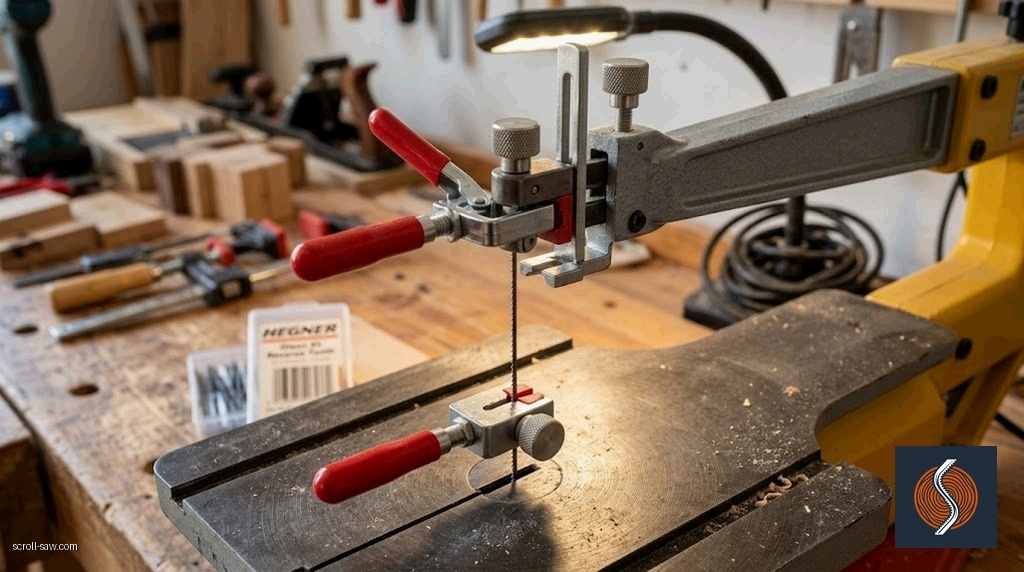
WEN 16 Inch Variable Speed Scroll Saw: Setup by Material and Thickness
A scroll saw is one of the few tools where the same machine will feel like a toy in the morning and like a precision instrument by afternoon, and the only thing that changes is who is running it and how they set it up. The WEN 16-inch variable speed scroll saw is a perfect example. Straight out of the box it will happily cut fuzzy, wandering lines through pine. Twenty minutes of proper blade and speed selection later, the same saw will follow a pattern line into hardwood cleanly enough to make you second-guess how cheap the machine was.
This is a working setup guide for the WEN, model 3921 or the easy-access 3922 and 3923, arranged by what you are actually cutting rather than by manual section. The saws share the same 550 to 1,600 stroke per minute range, the same 16-by-10-inch table, and the same 2-inch cutting capacity at 90 degrees. Setup rules are effectively identical across them.
The three settings that decide every cut
Before any material chart is useful, three things need to be right on the saw itself.
Tension. Install the blade and tighten the top clamp with the arm at rest. Then raise the tension knob until you can pluck the blade like a guitar string and hear a clear high note, not a dull thud and not a shriek. Under-tensioned blades wander and bow out of the cut. Over-tensioned blades snap at the clamp. A properly tensioned #5 blade on this saw deflects only about an eighth of an inch under moderate finger pressure at the middle of the blade.
Square. The 16 by 10 cast-iron table on these WEN saws is flat, but the factory tilt zero is a starting point, not a promise. Set an engineer’s square against the blade with the table at zero, then adjust the tilt lock until the blade sits flush along the square. Do this once and mark it with a paint pen. Your bevel cuts will thank you.
Hold-down foot. Set the presser foot to just touch the top of the workpiece at the highest point of the stroke. It should not press hard, only prevent lift. Too much pressure and the material fights the feed. Too little and the wood chatters upward on every stroke, which is what turns clean lines into fuzzy ones.
Setup by material
Softwood, 1/4 inch to 3/4 inch (pine, poplar, basswood, cedar)
This is the easiest scrolling category and the one most tutorials assume. Softwoods forgive imperfect blade choice, but they also fuzz badly if you push a dull blade or run too fast.
-
Blade: #5 skip-tooth or #5 reverse-tooth. Reverse-tooth if bottom-edge cleanliness matters.
-
Speed: 1,200 to 1,500 SPM.
-
Feed: Light. Let the blade pull itself through. If you have to lean on the work, the blade is dull.
-
Notes: Basswood at 1/4 inch is the easiest material to cut cleanly on this saw. Pine sap can gum blades. Wipe blades with mineral spirits between long cuts to keep them cutting freely.
A reasonable starter blade for this range is the Olson FR49400 skip-tooth assortment, which covers #5, #7, and #9 blades in one box and lets you feel the difference as thickness changes.
Hardwood, 1/4 inch to 1/2 inch (oak, maple, walnut, cherry, birch)
Hardwoods punish two things: dull blades and too much speed. Both cause burning, and burned hardwood is nearly impossible to sand out of tight curves.
-
Blade: #5 or #7 skip-tooth. Prefer PGT (precision ground) blades if you have them, which cut hardwood noticeably cooler.
-
Speed: 900 to 1,200 SPM.
-
Feed: Very light. Any burning smell means slow down or change the blade.
-
Notes: Oak splinters on the underside. Reverse-tooth blades solve this. Walnut cuts beautifully but hides burn marks under dark grain, so watch the smoke, not the wood.
Hardwood, 3/4 inch to 1-1/2 inch
This is where the WEN starts to earn its 2-inch capacity. You can cut it, but the machine feels like it is working.
-
Blade: #7 or #9 skip-tooth. Fresh blade only. Do not try to reuse a blade that has already been through thinner hardwood.
-
Speed: 800 to 1,000 SPM.
-
Feed: Slow and consistent. Let the blade set the pace. If you hear the arm laboring, you are pushing too hard.
-
Notes: Vibration climbs at this thickness on any 16-inch saw. Bolt the base to a solid surface. Take breaks so the motor cools.
For thicker hardwood, the Olson DT49300 double-tooth blades leave a cleaner finish than a standard skip-tooth in oak and maple, at the cost of slightly slower feed.
Plywood and MDF, 1/4 inch to 3/4 inch
Plywood glue lines are essentially fine sandpaper for scroll saw blades. Expect blade life to be shorter than in solid wood.
-
Blade: #5 reverse-tooth for plywood, #7 for MDF.
-
Speed: 1,000 to 1,300 SPM.
-
Feed: Steady. The alternating hardness across a glue line will pull the blade off the line if you slow down unevenly.
-
Notes: MDF dust is fine and cumulative. Wear a respirator and keep dust collection running.
Acrylic and plastic sheet, 1/8 inch to 3/8 inch
Acrylic is the material that teaches you speed matters. Run too fast and the friction melts the plastic back onto the blade, welding a plug into the kerf.
-
Blade: #3 or #5 skip-tooth, or a blade rated specifically for plastics.
-
Speed: 550 to 800 SPM. Slower is safer.
-
Feed: Slow. Let the chips clear.
-
Notes: Leave the protective paper on the acrylic while cutting. It reduces chipping and gives you a surface to draw on. If the acrylic starts to gum, stop, let it cool, and reduce speed further.
Non-ferrous metal, 1/16 inch to 1/8 inch (brass, aluminum, copper sheet)
A scroll saw can do light metalwork with the right blade and speed. It cannot do heavy metal work.
-
Blade: Metal-cutting blade with a high TPI (24 to 30 TPI).
-
Speed: 400 to 700 SPM.
-
Feed: Very light, and use a wax lubricant. Beeswax works.
-
Notes: Sandwich thin sheet between two pieces of scrap plywood to prevent chatter. Clamp firmly. Watch the blade temperature.
Spiral cuts and tight radius work (any material)
When a normal blade cannot turn tight enough, spiral blades cut in every direction without turning the workpiece. This is how portrait scrolling gets done.
-
Blade: Olson SP46500 spiral blades for general work, SP46100 for finest detail.
-
Speed: Reduce by about 20 percent from normal for the material.
-
Feed: Very light. Spiral blades have far less directional stability and will bow out of the cut under any real feed pressure.
Which WEN, and which one to add later
The WEN 3922 is the current mainstream pick in this family. The side panel that flips open for easy-access blade changes is the single feature that most first-time scrollers appreciate after their tenth blade break. The WEN 3923 adds a work light that is actually usable, which sounds like a small thing until you spend a winter cutting at your bench after sunset.
Honest drawbacks worth naming: the flexible dust blower on the WEN 3922 is stiff and hard to aim precisely, and the stock work-light gooseneck on some units loses its grip after a year. The blade tension knob has a wide sweet spot but also a wide dead zone at the bottom of its travel, so a first-time user can spend twenty minutes wondering why their blades keep bowing before they realize the knob simply needs another turn. None of these things are dealbreakers, they are small annoyances you learn around.
Who should skip the WEN entirely: anyone who wants to cut 1-1/2-inch hardwood daily for production work, and anyone who is planning to spend many hours a week doing hair-fine detail on portraits. Those users belong on a DeWalt DW788 or a Rikon, and no amount of setup on the WEN will change that. For everyone else, this is one of the best learning saws sold anywhere.
The small upgrades that matter more than you expect
One magnifier lamp, one better blade set, and one hold-down technique separate the frustrated WEN owner from the delighted one.
A task-and-magnifier combination like the Neatfi Elite XL LED magnifying lamp clamps to any bench edge and puts real light plus 2.25x magnification exactly where your blade meets the workpiece. On a saw class where the built-in light is decorative, this is not optional if you want to cut fine detail without eye strain.
A sensible working blade shelf is one 100-pack of skip-tooth in a range of sizes, one pack of reverse-tooth in #5, one pack of spirals, and one pack of PGT blades for hardwood. That is under thirty dollars total and will last most hobbyists a year.
Hold-down technique: use painter’s tape on the underside of the workpiece to hold sacrificial backing, and use spray adhesive like 3M Super 77 to bond the pattern paper cleanly. Pull the pattern off with an application of odorless mineral spirits when done.
A short comparison against the two obvious alternatives
The WEN 3922 lives in the same neighborhood as the Central Machinery 16-inch variable speed sold at Harbor Freight and the Shop Fox W1872. Compared with the Central Machinery, the WEN’s blade change design is meaningfully better and the arm feels more rigid at speed. Compared with the Shop Fox W1872, the WEN is lighter and easier to move, but the W1872 has a slightly better dust blower and a foot switch that saves your hands during long sessions. If your bench is fixed, the W1872 is a small step up in fit and finish. If you move the saw or share the space, the WEN wins on convenience.
FAQ
What speed should I run for hardwood on the WEN scroll saw? Around 900 to 1,200 SPM for hardwoods up to 1/2 inch. Drop to 800 to 1,000 for stock over 3/4 inch. Any burning smell is a signal to slow down or change the blade.
Can the WEN 16-inch variable speed scroll saw cut 2-inch hardwood? It is rated for 2 inches at 90 degrees, and it can do that occasionally, but it is not the saw’s comfort zone. Expect to work slowly, use a fresh #9 blade, and give the motor cooling breaks.
Does the WEN 3922 accept pinless blades? Yes. The blade holder natively accepts pinned, pinless, and spiral 5-inch blades without an adapter. This is one of the reasons it is worth the small price premium over strictly pin-end machines.
Why is my WEN scroll saw vibrating? Almost always because the base is not anchored. Bolt or clamp it to a heavy bench and vibration drops sharply. Also check that all four rubber feet are seated and the arm’s pivot bolts are not loose.
Which blade should I start with? A #5 skip-tooth for general work in 3/4-inch and thinner wood. Add reverse-tooth #5 for cleaner bottom edges and spiral blades for tight curves and portrait work.
How do I tell when a blade is dull? Cutting takes noticeably more feed pressure, edges start to burn or fuzz, and the blade drifts off the line even at correct tension. Change blades often, they are consumable.
Can I cut plastic on the WEN scroll saw? Yes, at low speed. Keep speed below 800 SPM and feed slowly. Leave the protective film on the plastic while cutting.
Does the WEN scroll saw come with blades? Yes, typically three 5-inch blades in the box. They are usable to start, but you will want to replace them with better-quality blades within your first project or two.
How thick a hardwood can I comfortably scroll? For clean, controlled cuts, stay at 3/4 inch and below. The saw will go thicker but the cut quality and blade life drop off quickly beyond 1 inch of hardwood.
Is the WEN 3921 different from the 3922? Both are 16-inch variable speed at the same speed range. The 3922 adds a side panel that opens for easier bottom-blade access, which is the main practical difference. Choose the 3922 or 3923 if you can, the blade-change convenience is worth it.
References
-
Olson Saw scroll saw blade selection chart — official material-and-TPI matrix used throughout this guide.
-
WEN 3922 manufacturer manual — factory specs referenced for capacity, speed range, and blade types.
-
Popular Mechanics scroll saw guide — independent comparison of scroll saws in this price class.


