
A Practical Selection Guide to Dremel Scroll Saw Blades
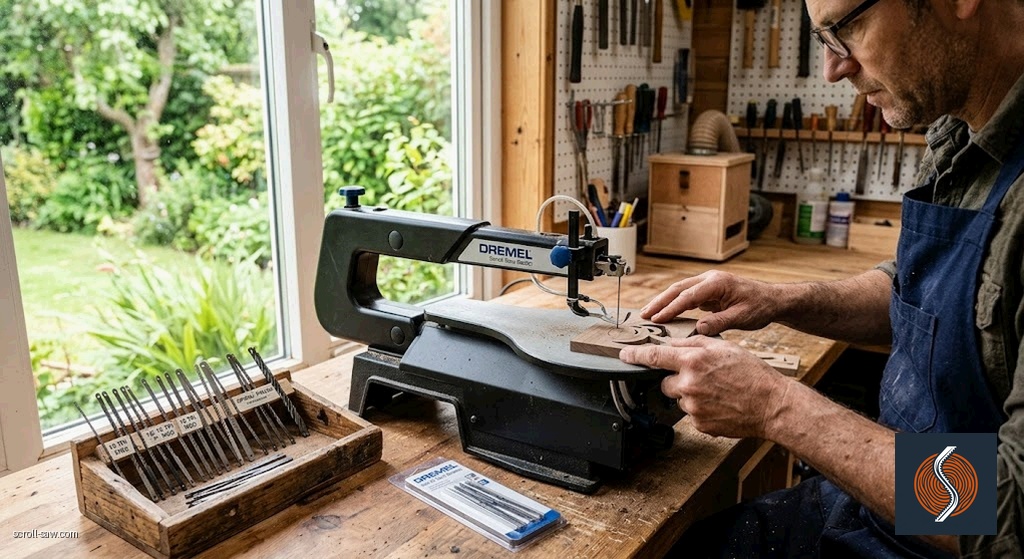
A Practical Selection Guide to Dremel Scroll Saw Blades
A Dremel scroll saw is one of those tools that outlives every catalog it was ever printed in. The 1671, the 1672, the 1695, the older Moto-Saw variants, all of them share the same basic reality: the machine still runs, it still cuts, but the blade world around it has changed. Walking into a hobby store and asking for “Dremel scroll saw blades” today gets you either a shrug or a small display of overpriced blister packs. This is the plain guide to what actually fits, what actually cuts well, and how to buy blades for a Dremel without paying a brand tax you do not need to pay.
What blade fit means on a Dremel scroll saw
Dremel scroll saws over the years have used pin-end blades almost exclusively. The clamps on the arm are sized for the pin, and the saw was designed around it. That is the important fact, because it means you are not buying “Dremel blades,” you are buying universal 5-inch pin-end blades, and Dremel is one brand of many that stocks them. Olson, Pégas, Flying Dutchman, and Hitachi all make universal pin-end blades that fit the same slot.
One small exception. A handful of newer Dremel Moto-Saw variants use a shorter proprietary blade, not a standard 5-inch scroll blade. If your Dremel is a handheld scroll saw or a countertop compact scroll saw sold in the last decade, check the blade length before ordering. If your Dremel is the classic 15-inch or 16-inch table-top scroll saw, standard 5-inch pin-end blades fit.
The blade sizes that matter, in plain terms
Scroll saw blade numbering runs by width, from the very fine 2/0 up through the coarse #12. On a Dremel scroll saw, most owners never need the extremes. A working blade set covers the middle range.
-
#3 pin-end (roughly 18 to 20 TPI): fine detail in wood up to 1/4 inch, small ornaments, thin plywood letters.
-
#5 pin-end (roughly 15 TPI): the everyday blade. Wood up to 3/4 inch, general scrolling in both softwoods and hardwoods.
-
#7 pin-end (roughly 12 TPI): hardwood up to 1 inch, faster cuts in softwood.
-
#9 pin-end (roughly 11.5 TPI): thick hardwood, up to about 1-1/2 inch. Slower feed required.
-
Metal-cutting pin-end (24 to 30 TPI): thin non-ferrous sheet, brass, aluminum, occasional light steel.
The honest truth for a Dremel owner is that a single pack of #5 skip-tooth pin-end blades handles at least three-quarters of everything the saw is ever asked to cut. Everything else is a specialty case.
What to actually buy
A general-purpose assortment. Start with the Olson FR49400 5-inch skip-tooth pin-end blade assortment. It covers #5, #7, and #9 blades in one box. This is the everyday blade shelf for a Dremel scroll saw.
Reverse-tooth for cleaner undersides. Reverse-tooth blades cut the bottom edge upward, which removes the fuzz that pin-end scroll saws are famous for producing. The Olson FR49202 5-inch reverse-tooth pin-end assortment is the single upgrade that changes the look of a Dremel-cut edge more than any other.
Specialty single sizes. For thin material where you want the finest detail your Dremel can produce, add a pack of Olson FR44802 fine reverse-tooth blades. For thicker hardwood, add Olson DT49300 double-tooth blades, which leave a cleaner finish in oak and maple at the cost of slightly slower feed.
What to walk past: the small Dremel-branded blister packs at big-box stores. The blades inside are fine but cost roughly double per blade compared with an Olson bulk pack of the same size and quality. You are paying a shelf-space premium for a name.
Speed and blade match for a Dremel
Most Dremel scroll saws are two-speed or fixed-speed machines. If yours is variable, treat these as guides.
-
Softwoods, 1/4 to 3/4 inch: #5 skip-tooth, higher speed (1,200 to 1,500 SPM if variable).
-
Hardwoods, up to 1/2 inch: #5 skip-tooth, medium speed (900 to 1,200 SPM). Reverse-tooth if underside cleanliness matters.
-
Hardwoods, over 1/2 inch: #7 or #9 pin-end skip-tooth, lower speed (800 to 1,000 SPM).
-
Plywood: #5 reverse-tooth, medium speed. Expect shorter blade life due to glue lines.
-
Plastic and acrylic: #3 or #5 skip-tooth, lowest available speed. Leave protective film on.
-
Non-ferrous metal: metal-cutting pin-end, lowest speed, light feed with wax lubricant.
Blade change technique that saves broken blades
Most people break blades on Dremel scroll saws for the same three reasons.
First, over-tension. The tension knob on these saws has a wide travel and beginners tend to crank it. A properly tensioned #5 blade rings a clear high note when plucked. A shrill note means you are on the edge of snapping.
Second, forcing feed. A Dremel scroll saw wants to be fed light. If the blade is not pulling itself through the wood, the blade is either dull or wrong for the material. Change one variable at a time.
Third, poor blade seating in the clamp. The pin has to sit flat in the slot, not on an angle. If a blade lands crooked, it will snap within minutes. Look at both ends of the blade before you tension.
The upgrade that most changes what your Dremel can do
If your projects have started to demand tight interior curves or 360-degree cuts that a pin-end blade cannot make, a universal pin-to-pinless conversion adapter drops into most Dremel scroll saw blade holders. Once installed, the saw accepts plain-end 5-inch blades, which opens the entire premium blade catalog including spiral blades. Olson SP46500 spiral blades cut in every direction without turning the workpiece, which is how portrait scrolling is done on any saw that will accept them.
One honest note on the conversion. The adapter adds a small amount of stack-up height above the blade holder, which reduces your usable blade length by a fraction. On thick material this is not a problem. On very thin stock at the top of the stroke, you may need to shim the workpiece slightly. This is a small inconvenience compared with the blade world it unlocks.
Comparison: Dremel vs modern equivalents
A Dremel scroll saw in good running condition, running quality universal blades, is a capable hobby machine. It is not a modern DeWalt DW788 and it is not a WEN 3922, and the honest comparison is with the modern saws you might replace it with.
Compared with a WEN 3922, the Dremel has more mass and a smoother stroke on average, but the WEN’s side-panel blade change is dramatically faster and its native pinless-plus-spiral capability skips the adapter step entirely. If blade selection matters more to you than sentimental machine value, the WEN is the modern successor. If you already have a working Dremel scroll saw with the right blades, the Dremel is a fine machine and there is no reason to replace it.
Who should skip Dremel scroll saw blades entirely: anyone whose Dremel is a compact Moto-Saw variant using proprietary short blades. For those saws, order the proprietary blades directly from Dremel or upgrade the saw itself. The universal pin-end blade world is not compatible with them.
FAQ
Are Dremel scroll saw blades universal? The classic Dremel table-top scroll saws use standard 5-inch pin-end blades. Any universal pin-end blade fits. Some compact Moto-Saw variants use a proprietary shorter blade that is not universal, so check your model.
Which Dremel scroll saw blade is best for hardwood? A #5 or #7 skip-tooth pin-end blade for hardwood up to 3/4 inch. For thicker hardwood, step up to a #9. Use reverse-tooth versions if bottom-edge cleanliness matters.
Can I use pinless blades on a Dremel scroll saw? Yes, with a universal pin-to-pinless conversion adapter. It fits into the existing pin-end blade holders and lets you use plain-end blades.
Why does my Dremel scroll saw keep breaking blades? The three usual causes are over-tension, forcing feed, and blades that are not seated square in the clamps. Fix each one systematically.
What TPI should I use for detail work? For fine detail in thin wood, 20 TPI or higher (a #3 blade). For portrait-level detail, spiral blades in a conversion adapter give the tightest turns.
Do Dremel-brand blades cut better than Olson or Pégas? No. They are the same category of universal pin-end blade. Olson and Pégas cost less per blade for equivalent or better quality.
Can I still buy blades for the Dremel 1671 and 1695? Yes, any universal 5-inch pin-end blade fits. Original Dremel-branded blade packs are increasingly rare, but the standard size means you are not dependent on the brand.
What is the difference between skip-tooth and reverse-tooth blades? Skip-tooth blades have gaps between teeth for chip clearance and cut faster. Reverse-tooth blades have some teeth pointing upward at the bottom of the blade, which cuts the underside cleanly and eliminates bottom-edge tearout.
Can I cut metal with a Dremel scroll saw? Thin non-ferrous metal like brass or aluminum sheet, yes, at the slowest speed with a metal-cutting pin-end blade and light feed. Steel occasionally. The saw is not a metal production machine.
What is the best all-around Dremel scroll saw blade? A #5 reverse-tooth pin-end blade. It cuts most hobby materials cleanly with the fewest surprises on the underside.
References
-
Olson Saw scroll saw blade selection chart — the reference for TPI and material match used throughout this guide.
-
Dremel manufacturer support — official product manuals and compatibility notes for current and legacy Dremel scroll saw models.
-
Scroll Saw Village and Sawmill Creek archived Dremel scroll saw threads — practical field notes from owners on blade fit and setup.


